
How to Maximize the Life of Your Filter Cloths
Filter presses need regular maintenance to continue operating at optimal performance levels. An important part of this care is servicing the filter cloths.
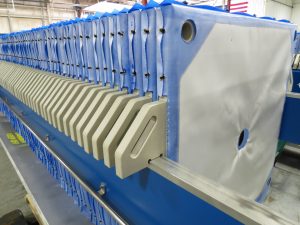
As the initial barrier that removes solids from liquid in the filtration process, filter cloths experience a great deal of wear and tear. It’s important that they stay porous to achieve good filtration rates. When fine particles become lodged deep within the fabric, filtration rates can become compromised. Cleaning must be done on a regular basis to maintain full functionality of the filter press.
Filter cloth life can be shortened by certain chemicals in the slurry, mechanical wear, abrasion and blinding. Mechanical wear can be reduced by using a more durable cloth. Blinding (clogging of the cloths) often comes from “slamming” sludge into the press.
Preventative Measures
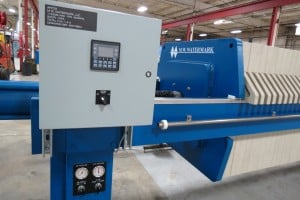
Automatic Feed Pump Control System (AFPCS)
Consider an Automatic Feed Pump Control System (AFPCS) to automatically and gradually increase pump pressure during the filtration cycle. High initial feed pump pressures can build a tightly packed layer of solids on the filter cloth. By reducing the initial feed pressure, a soft layer of slurry particles can be deposited on the cloth. Because this layer then becomes the filtering media, the filterability of the incoming slurry is enhanced.
An AFPCS can be retrofit to any filter press. Learn more about how an AFPCS allows your filter press to run at its optimum efficiency.
Pre-Coat
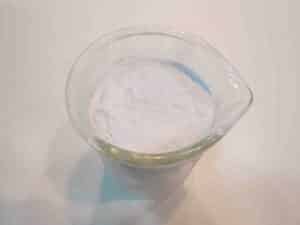
Pre-coat material is any porous substance that allows liquid to pass through. The substance should be fine enough to mix with water but not so fine as to be impassable. It is the gaps within the substance that will provide much of the actual filtration.
“Pre-coating” a filter press with perlite, diatomaceous earth or similar products can also add substantial life to cloths. This coating protects against wear and minimizes blinding.
Learn more about pre-coat and how it is applied in a filter press.
Cloth Additions
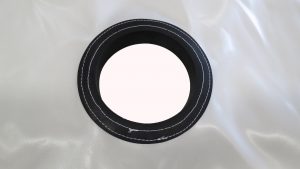
If your filter cloths are wearing out prematurely at the center feed, a latex-reinforced cloth barrel neck can help. In cases of an especially high amount of abrasion at the neck, a rubber barrel neck can help protect that area.
Cleaning Methods
Using a Pressure Sprayer
When filtration cycles become too long or the initial filtration pressure is too high, it’s time to clean the cloths. One of the easiest ways to accomplish this is by using a portable cold water pressure sprayer, as the plates do not need to be removed from the filter press. However, care must be taken when using a pressure sprayer to ensure that the cloths are not damaged. By using a fan-shaped spray pattern and staying back a few feet from the surface, the cleaning process can be accomplished without accidentally cutting the cloths. Keeping the spray pressure under 1,000 PSI is recommended as well.
Acid Washing
Polypropylene filter cloths can handle both caustic and acidic solutions, and acid washing has become a popular cleaning method for this type of cloth for specialized applications. For example, when working with sludge from metal finishing, even the best-matched cloths can blind (become clogged) after a short period of time.
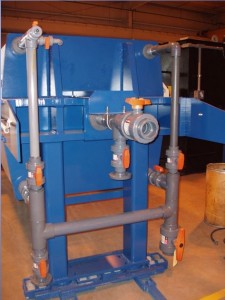
In cases where frequent cleaning is required, acid washing can become the most practical method of cleaning cloths. Plates do not need to be removed from the filter press, and a filter press can be equipped with a special manifold and system for cloth washing.
However, other filter cloth materials such as nylon, polyester and felt cloths may become damaged by using chemical cleaners.
Also, it’s important to note that acid washing is only an option if the chemistry of the sludge is reversible. Therefore, acid washing is not effective in situations that include laundry, food waste and biological applications.
M.W. Watermark has filter cloth experts on staff that can help you determine the best cleaning method for your particular application, and also talk through important safety precautions.
Read more about options for cleaning your filter cloths.
Filter Cloths – Serving as the Front Line
Filter cloths serve as the “front line” in a dewatering process, providing the foundation needed to build a filter cake, so it’s important to keep them in peak operating condition. The guidelines above should help you with this critical aspect of maintaining your filter press.
Contact M.W. Watermark to learn more about prolonging the life of your filter cloths and other filter press maintenance topics.
About M.W. Watermark
M.W. WATERMARK wants to make a difference. We are passionate about the world’s water. We are innovative, focused on customer service and always try to exceed expectations. We are an environmentally conscious company with people who are energized, encouraged and inspired to make a difference on our planet by helping to keep our shared, finite water supply clean and usable for generations to come. We build amazing, custom water and wastewater treatment equipment. Together, we can make a difference.
© 2021 M.W. Watermark, L.L.C.
M.W. Watermark is a trademark owned by M.W. Watermark, L.L.C. All rights reserved.
The product names, logos, brand names, and other trademarks listed above are the intellectual property of their respective trademark owners; M.W. Watermark is not affiliated with such trademark owners in any way.