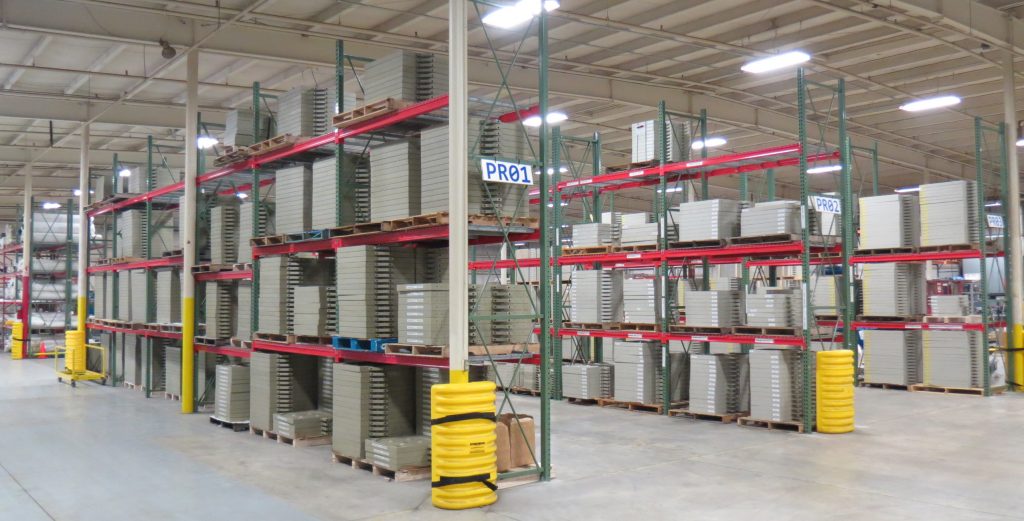
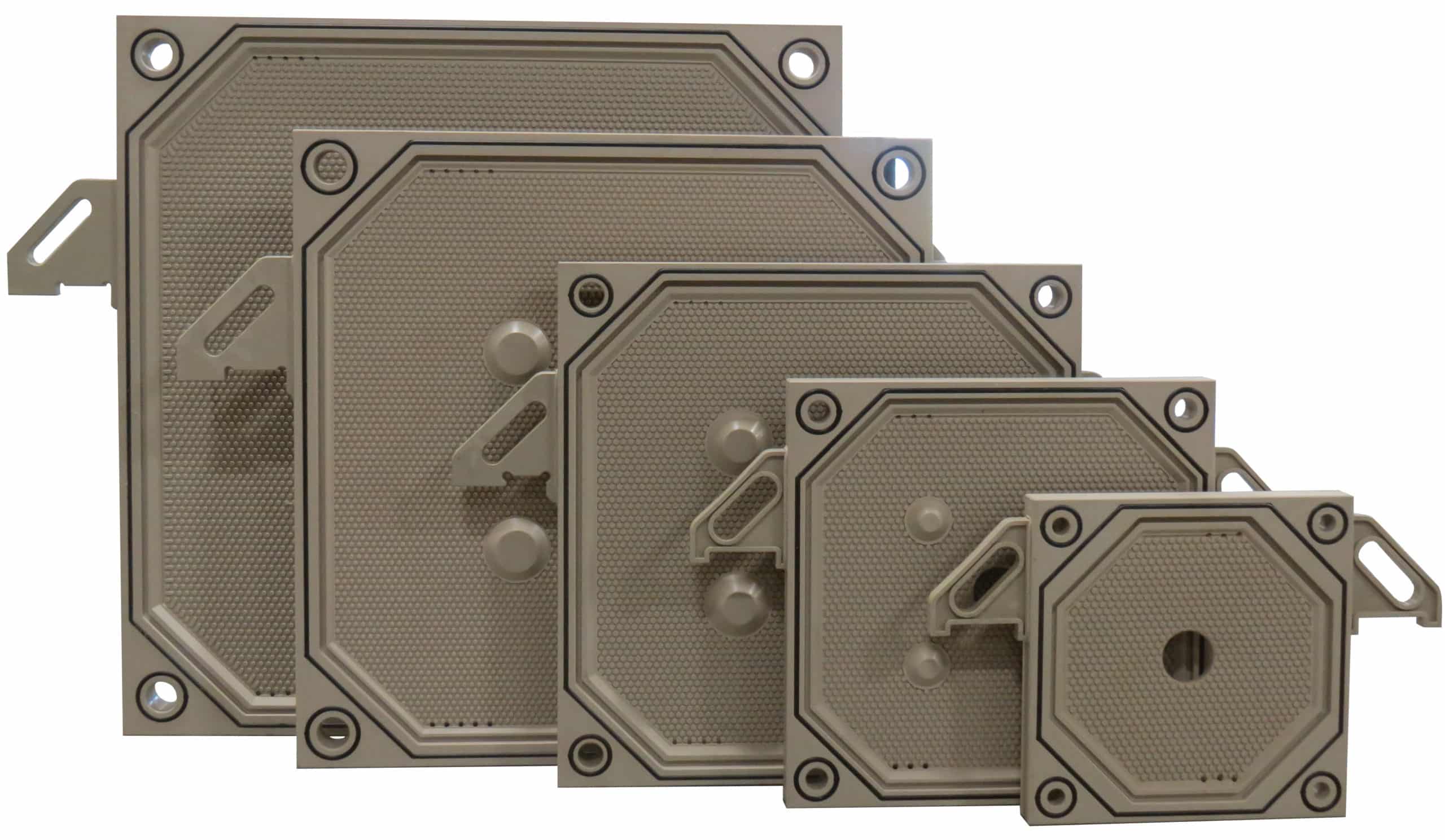
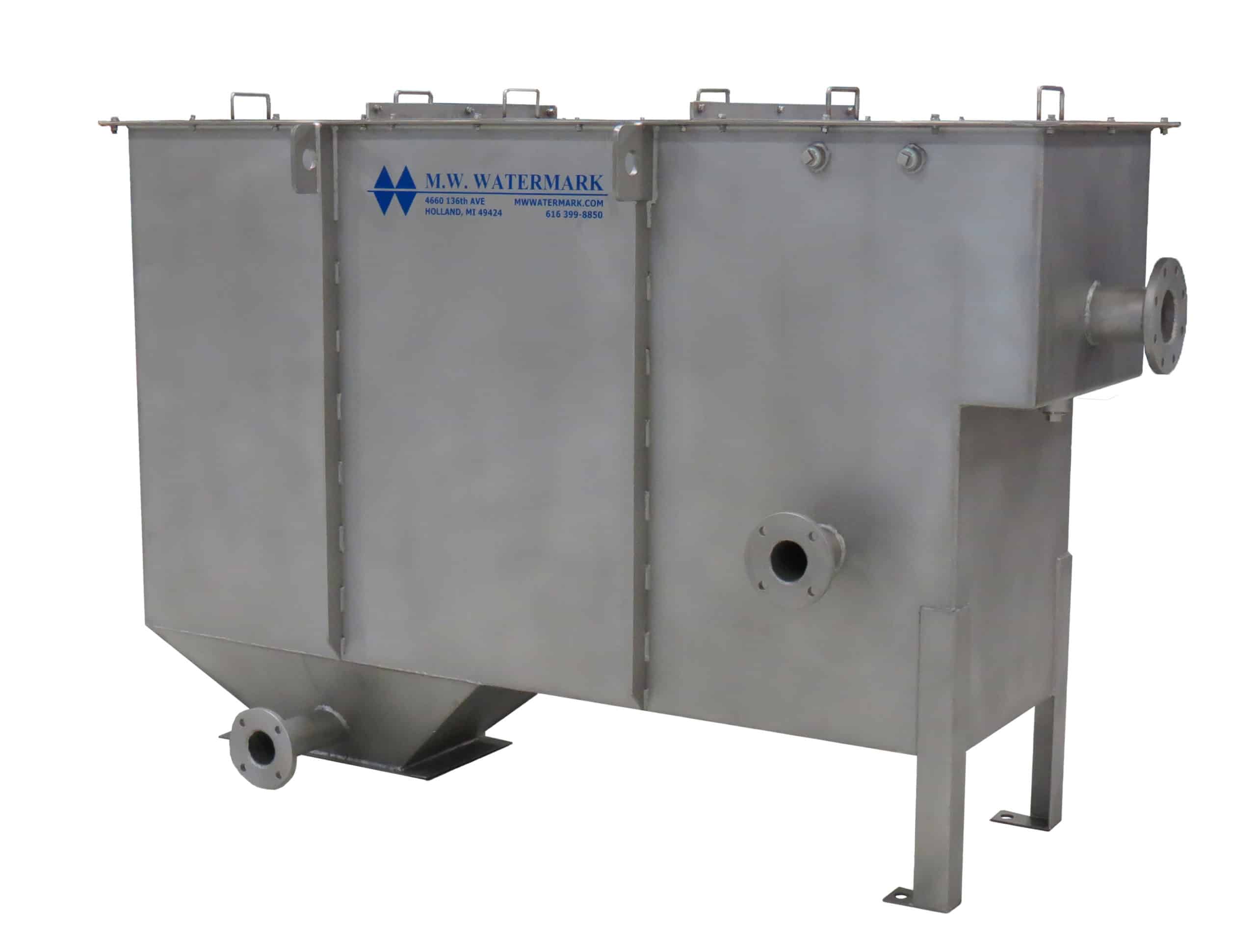
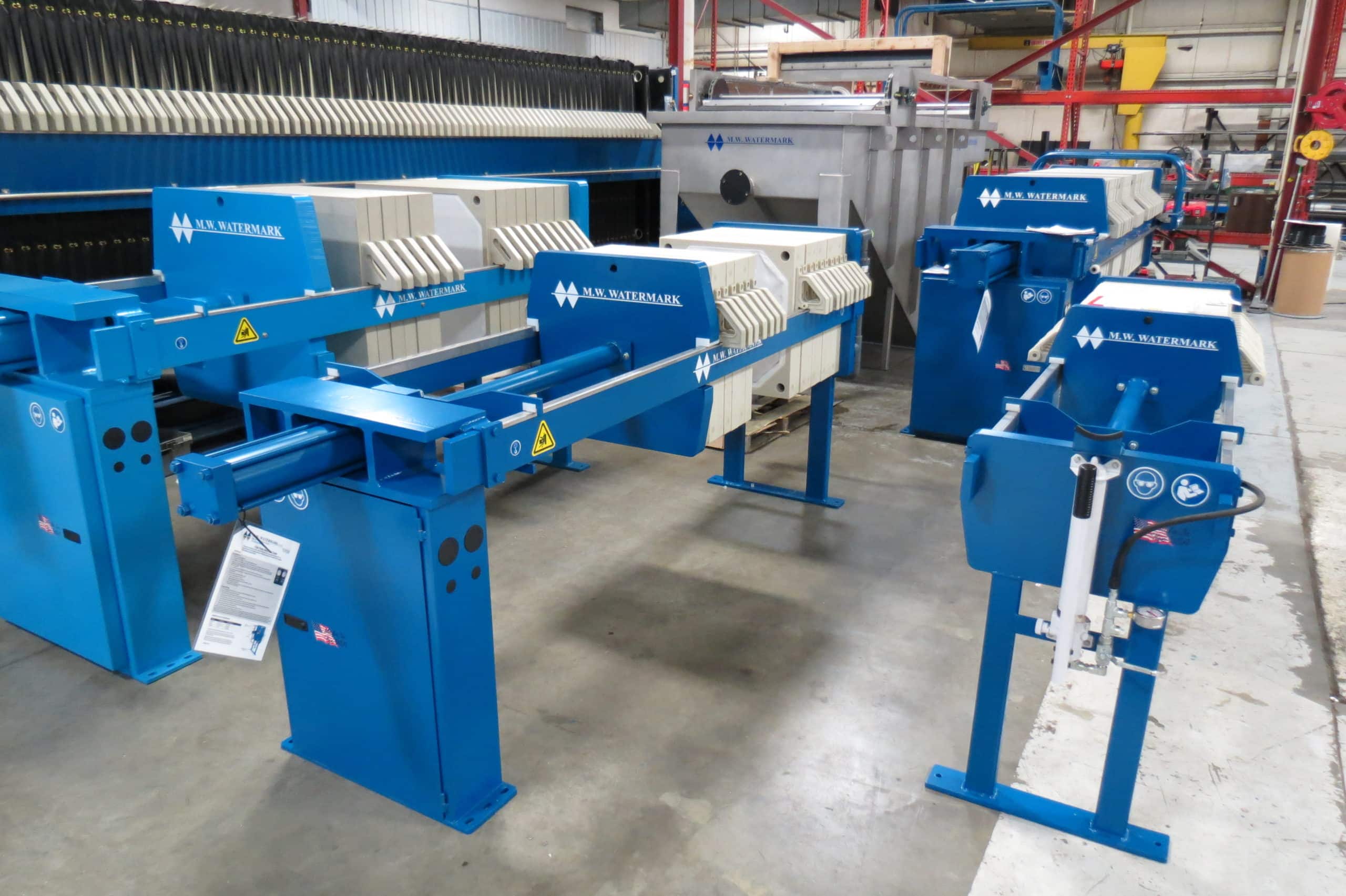
At M.W. Watermark, purchasing new filter plates couldn’t be easier. When it comes time to replace your filter plates, we understand you can’t afford much downtime – waiting weeks or months for a new set of plates to arrive for your filter press. That’s why we stock an extensive inventory of high-density polypropylene filter plates that are compatible with many makes and models of filter presses.
M.W. Watermark Stocks an Extensive Inventory of Filter Plates to Get You Up and Running Quickly
When you order from us, you can expect great service and a speedy turnaround. We offer the following types of plates to our customers:
Gasketed
Non-Gasketed
Centerfeed
Cornerfeed
Membrane
Plate and frame
Customized plates based on your specifications
Gasketed (CGR) Filter Plates
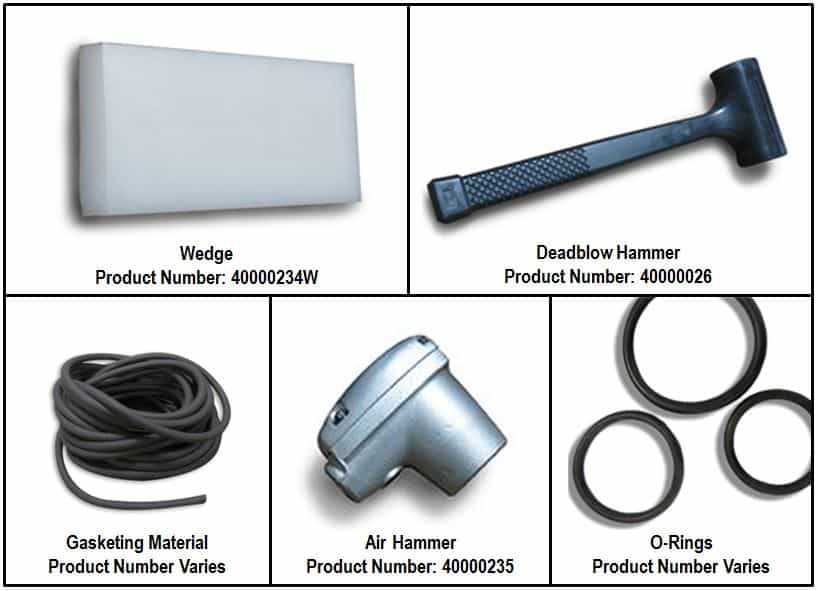
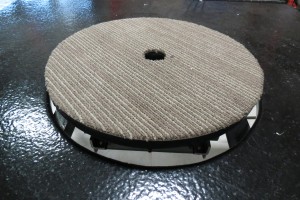
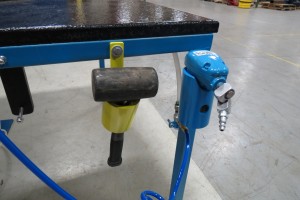
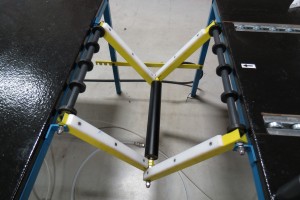
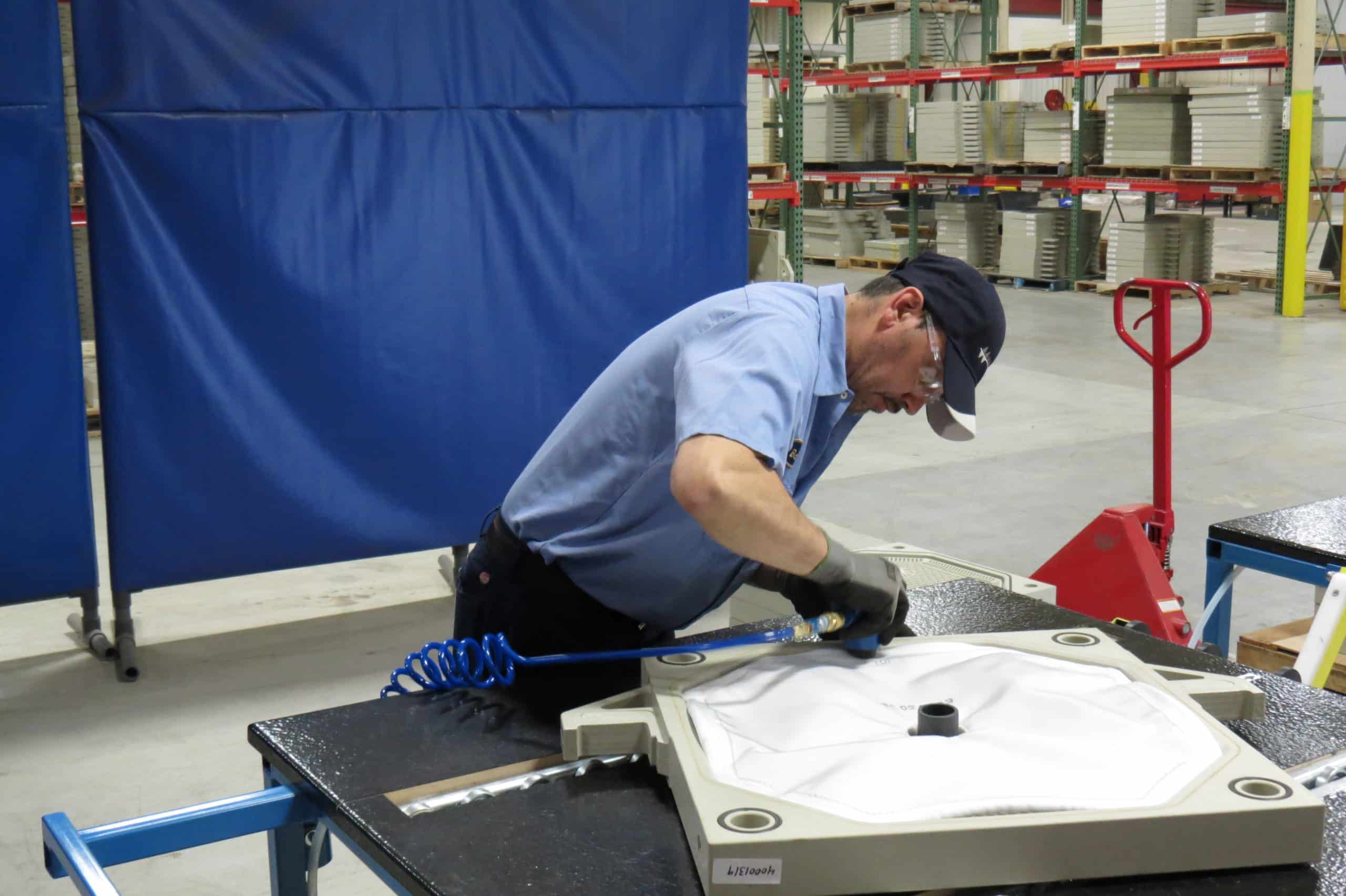
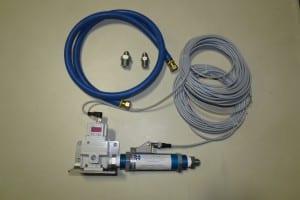
M.W. Watermark also provides tools to help you install gasketing in your filter plates, including a lightweight air hammer with over 1,000 blows per minute that replaces cumbersome mallets.
M.W. Watermark’s Specialized Tools Make Gasketing Installation Easy
Also, be sure to watch our Filter Plate Gasketing how-to videos, including “How to Remove and Replace a Periphery Gasket” and “How to Remove and Replace an O-Ring.”
“How to Remove and Replace a Periphery Gasket” How-To Video
You can learn more about the filter plates we supply at M.W. Watermark and watch videos of how to maintain your filter plates by visiting our Filter Plates Product Page on our website.
Also, be sure to visit our additional blog posting to learn more about the different types of filter plates being used for dewatering today and the applications and strengths of each type.
Need Filter Cloths to Go with Your Filter Plates?
In case you hadn’t heard, M.W. Watermark also provides filter cloths for virtually all makes and models of filter presses. Filter cloths can be cut and sewn to the specifications of your filter press.
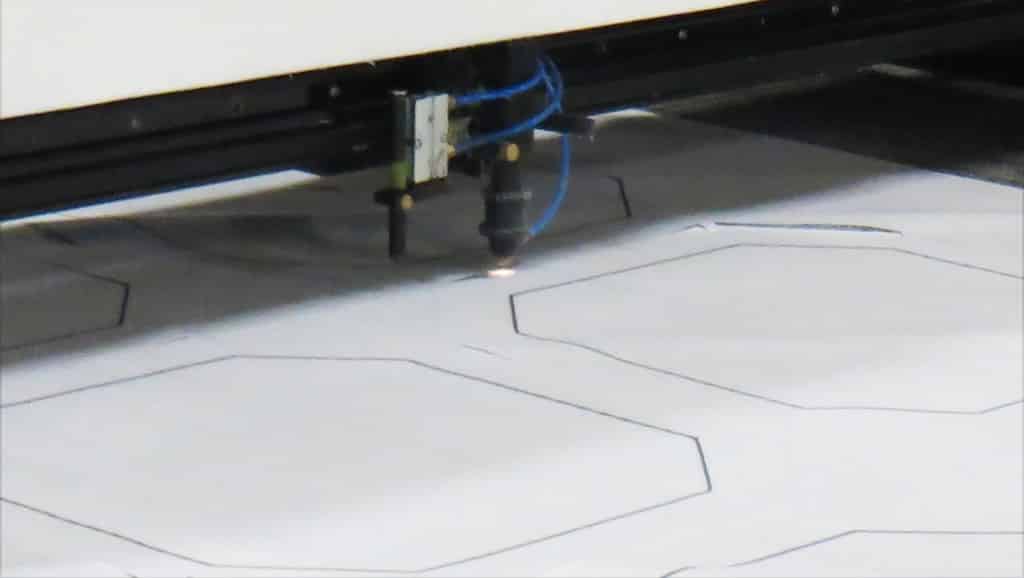
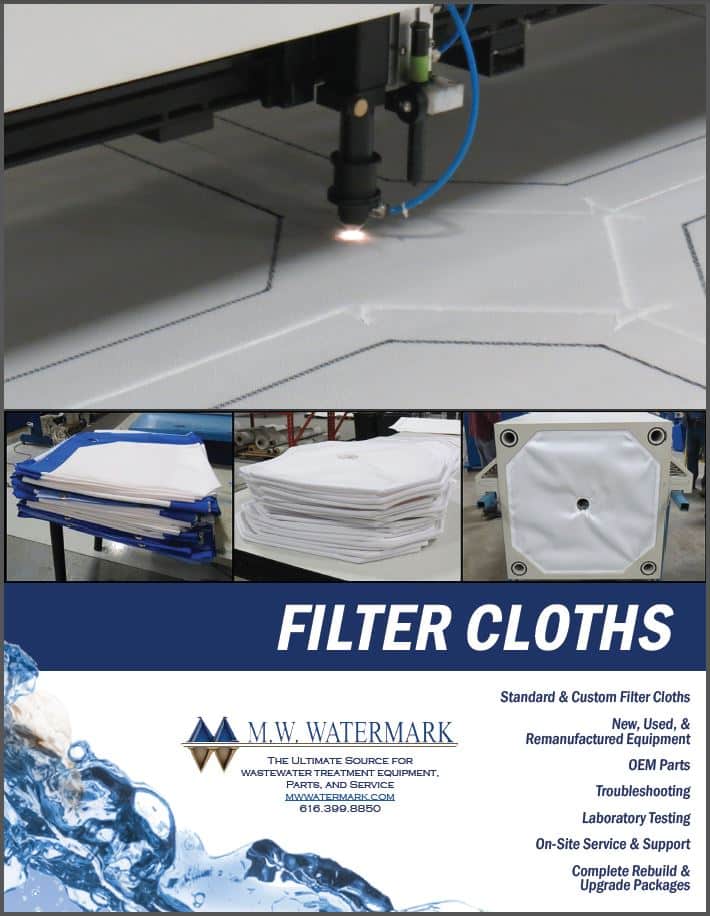
All cloths are made right here in the U.S.A. in our facility in Holland, Michigan, utilizing two laser cutting tables. Using lasers to cut cloth enables us to provide consistent, high-quality cloths with lower pricing, while at the same time providing faster turnaround on custom requests.
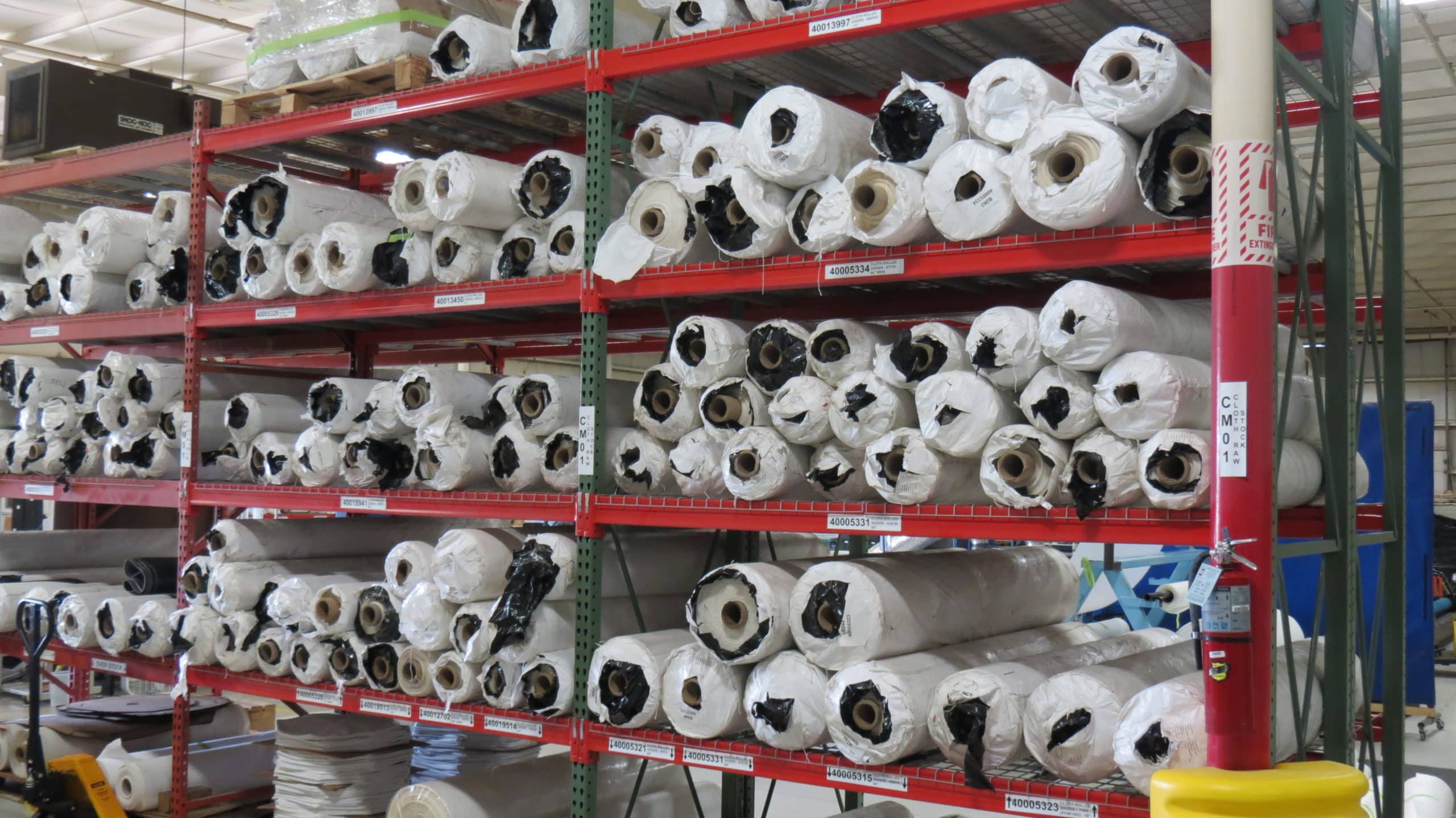
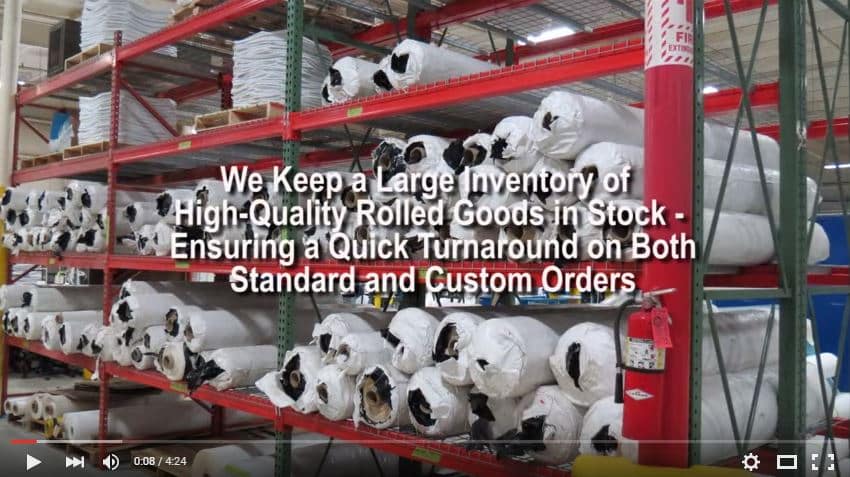
M.W. Watermark Utilizes Laser Cutting Tables for a Quick TurnaroundA High Volume of Rolled Goods are Stocked for Faster Shipping on Both Standard and Custom Orders
Contact our Sales and Service Team of experts for a quote or to discuss your specific application – and learn how M.W. Watermark can help with your filter plate or filter cloth needs.
For regular updates from M.W. Watermark, follow us on LinkedIn.
About M.W. Watermark
M.W. Watermark wants to make a difference. We are passionate about the world’s water. We are innovative, focused on customer service and always try to exceed expectations. We are an environmentally conscious company with people who are energized, encouraged and inspired to make a difference in the water business, and as a result, make a positive difference to our planet by helping to keep our shared, finite water supply clean and usable for generations to come. We build amazing, custom water and wastewater treatment equipment. We also specialize in rebuilding used water treatment equipment. Together, we can make a difference.
M.W. Watermark is a trademark owned by M.W. Watermark, L.L.C. All rights reserved.
Any third party trademarks referenced on this site are the trademarks of their respective owners, and M.W. Watermark makes no claim to such marks and is not affiliated with such companies.
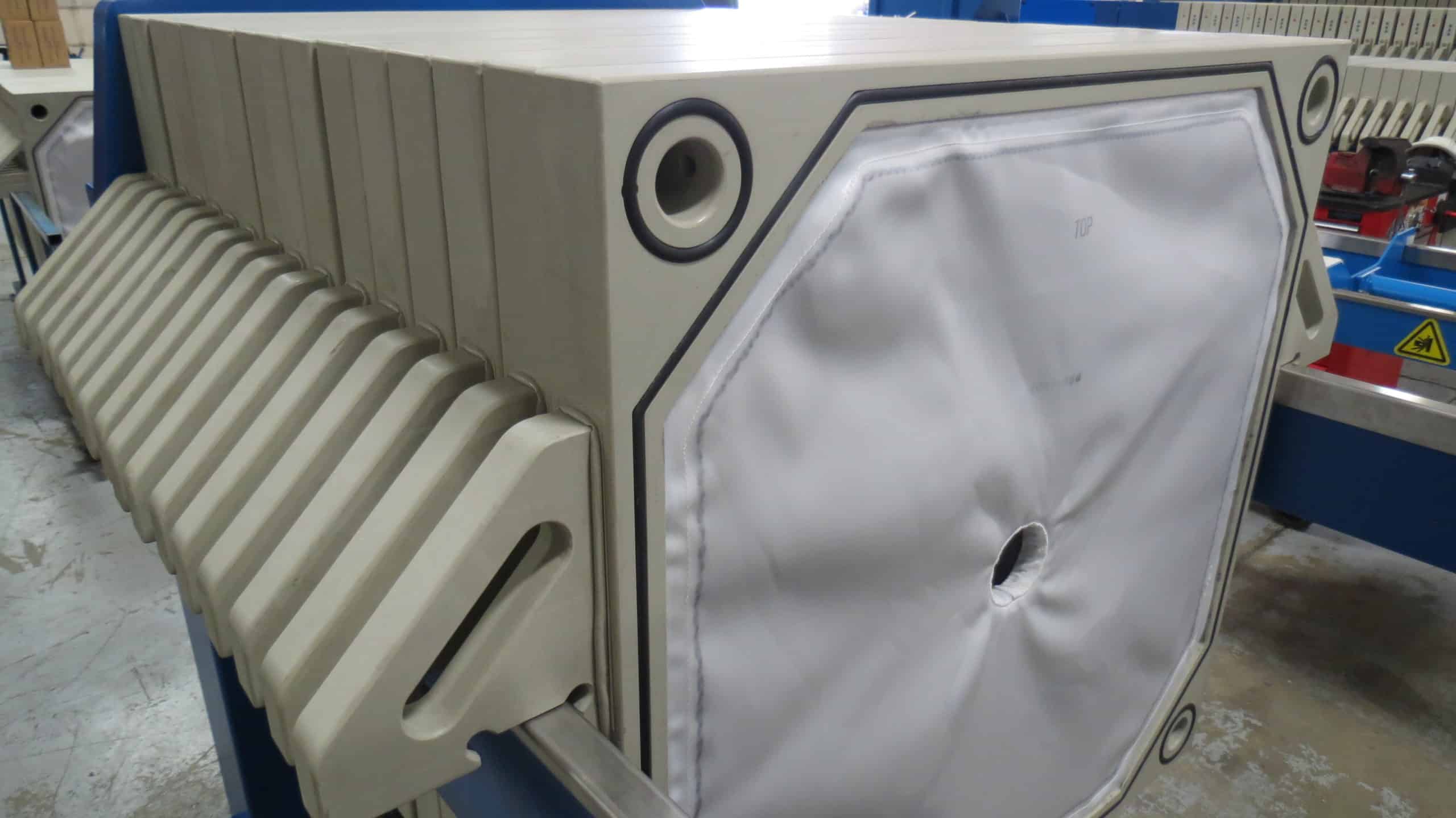
Polypropylene Filter Cloths Installed in a CGR Plate (Caulked, Gasketed, Recessed Chamber)
Why Clean Filter Press Cloths?
Proper care of filter cloths is an important part of maintaining the performance of a filter press.
The filter cloths serve as the “front line” or initial barrier that works to separate solid particles from the liquid portion of the slurry.
During normal operation of the filter press, the filter cloths may begin to accumulate microscopic particles over time, and eventually become plugged, or “blinded.” This in turn causes a lower rate of filtration and a wet filter cake, which dramatically reduces the efficiency of the filter press.
If you are experiencing a wet filter cake or longer than normal filtration cycles, it may indicate your filter cloths have become blinded, and washing the cloths may be in order.
How to Clean Filter Cloths Without Removing Them from the Filter Plates
Filter cloths can be cleaned without having to remove them from the filter plates or remove the plates from the press.
A general procedure for cleaning filter cloths is by using a portable cold-water pressure sprayer. Take care not to get too close with the spray tip, or use the sprayer in anything other than a “fan” spray pattern, slowly moving the nozzle over the cloths. Keeping spray pressure under 1,000 PSI is also recommended, to avoid damaging the cloths.
Acid Wash as an Option for Specialized Applications
When working with sludge from metal finishing, or a lime-based slurry where even the best-matched cloths can blind after a short period of time, the most practical method of cleaning your cloths without removing them from the press may be acid washing. Note: Acid washing is only an option if the chemistry of the sludge is reversible. Therefore, acid washing is not effective in situations that include laundry, food waste, and biological applications.
The preferred choice for an acid wash cleaning solution is hydrochloric (muriatic) acid.
Sulfuric acid is not recommended if calcium is present, as gypsum will form, permanently blinding the cloths. Nitric acid is not appropriate, as it is an oxidizing agent. Phosphoric acid is also not the ideal choice, as it is cost prohibitive. A cleaning solution that is from 5 to 10% hydrochloric acid, with the remainder being water, should be used as a starting point.
Cloths made of polypropylene can be safely cleaned in hydrochloric acid. This type of cloth material can handle a variety of acidic cleaning solutions. However, cloths made of other materials, such as nylon, should not be exposed to very low pH levels.
The process of cleaning filter cloths using acid wash requires having a system in place that can handle this procedure, as well as several safety precautions. Please refer to your filter press operation manual if your press is already equipped with a manifold and system for cloth washing. If you are interested in learning more about filter presses with cloth washing capabilities, including acid wash, contact the M.W. Watermark™ Sales and Service Team for more information.
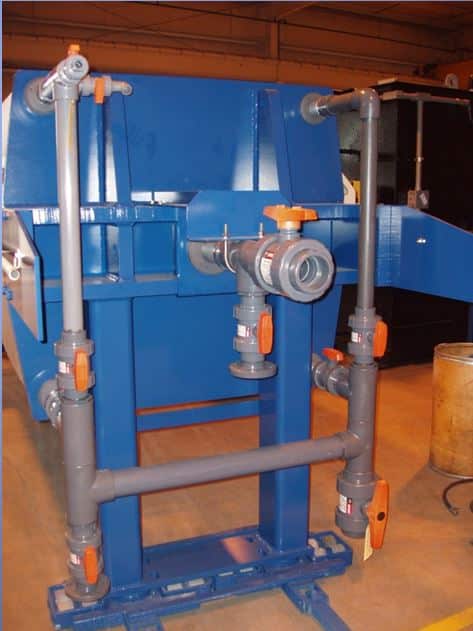
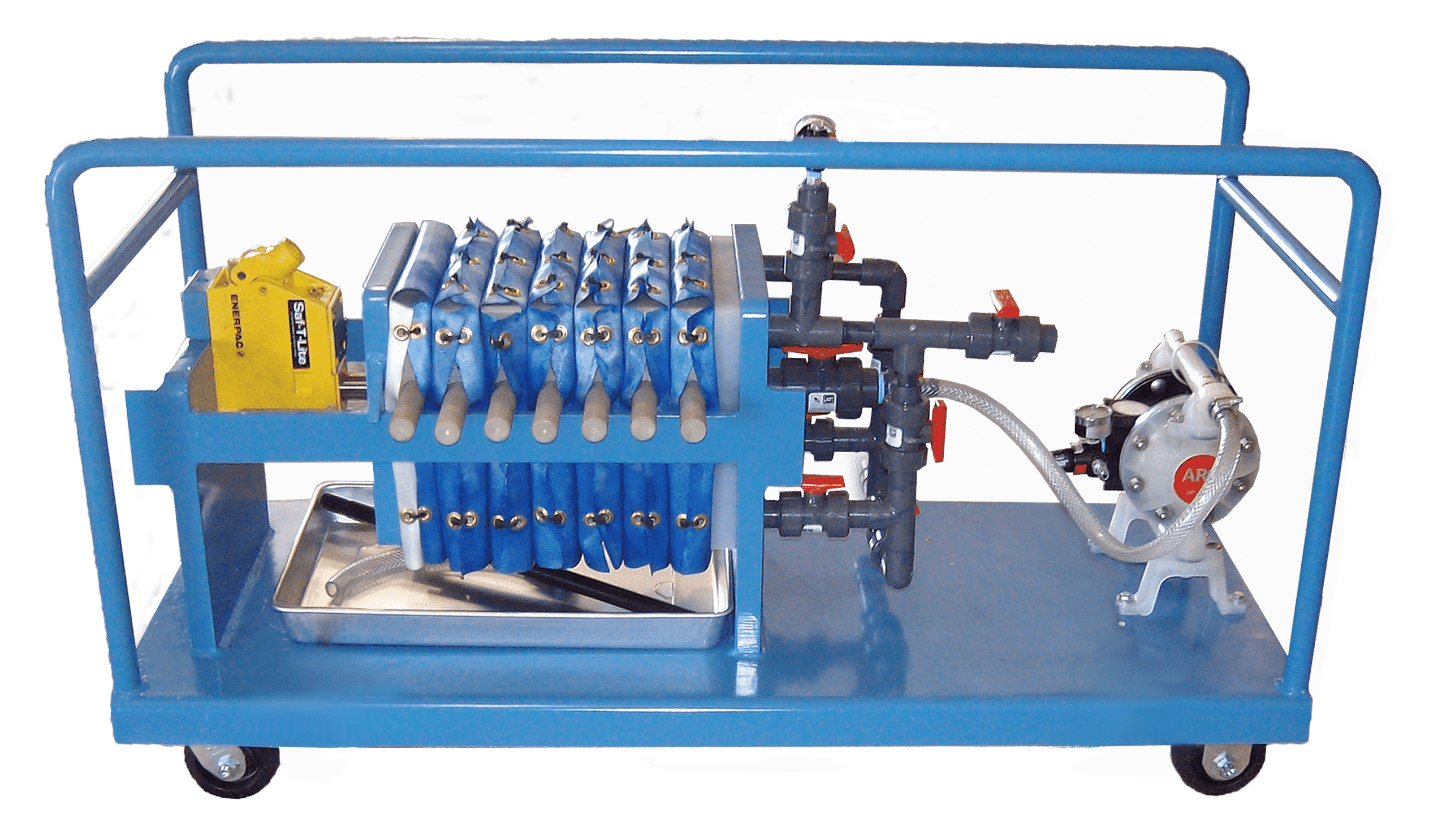
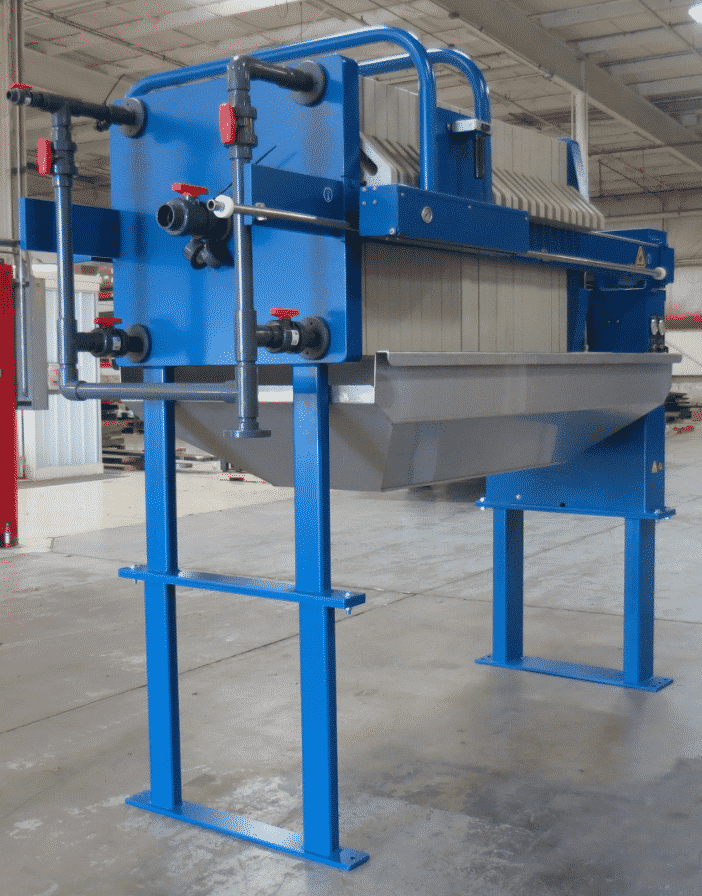
M.W. Watermark Filter Press with Acid Cloth Washing Manifold
For regular updates, follow M.W. Watermark on LinkedIn.
About M.W. Watermark
M.W. Watermark wants to make a difference. We are passionate about the world’s water. We are innovative, focused on customer service and always try to exceed expectations. We are an environmentally conscious company with people who are energized, encouraged and inspired to make a difference in the water business, and as a result, make a positive difference to our planet by helping to keep our shared, finite water supply clean and usable for generations to come. We build amazing, custom water and wastewater treatment equipment. We also specialize in rebuilding used water treatment equipment. Together, we can make a difference.
M.W. Watermark is a trademark owned by M.W. Watermark, L.L.C. All rights reserved.
Any third party trademarks referenced on this site are the trademarks of their respective owners, and M.W. Watermark makes no claim to such marks and is not affiliated with such companies.
M.W. Watermark™ understands that when your filter cloths need to be replaced, every day that you have to wait for new cloths is costing you. That’s why we make ordering filter cloths as easy and as streamlined as possible, allowing you to get your operation back up and running quickly, with minimal downtime.
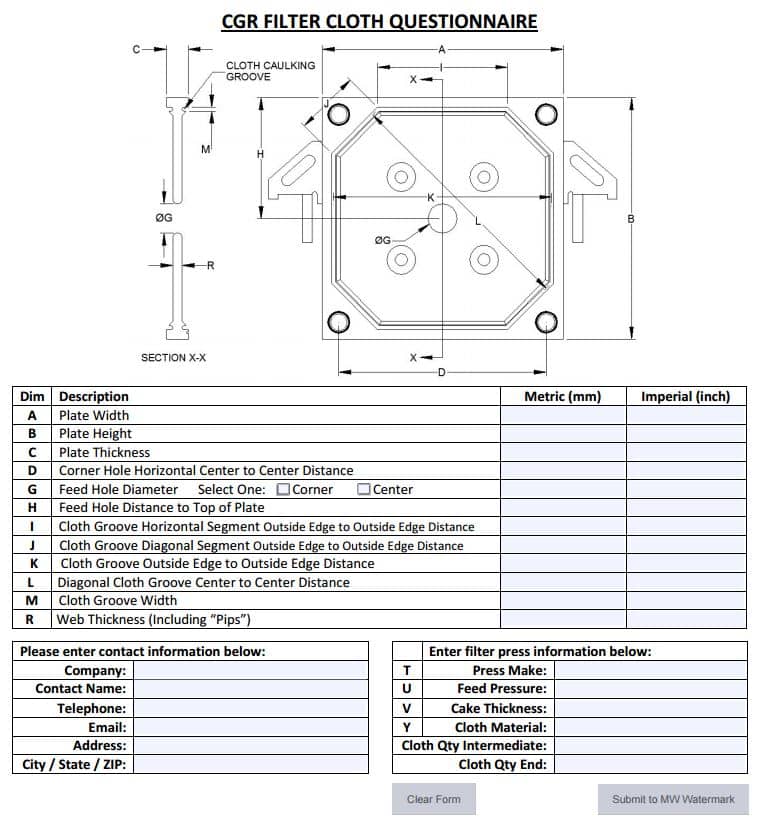
One way we do this is by providing template forms on our website that allow you to quickly communicate the specs and requirements of your filter cloths to M.W. Watermark. Or, if you prefer, simply give us a call or request to be contacted and our Sales and Service Team of experts will talk it through with you to quickly determine what you need.
Also, be sure to download our Filter Cloths Product Guide, which includes an overview of our filter cloth offering – including filter cloth types, common materials, and filter cloth terms.
M.W. Watermark – Filter Cloths Product Guide
If the filter cloths you require are a standard size, there’s a good chance we have them in stock, and we can get them out the door and delivered to you quickly.
If you are in need of custom cloths, M.W. Watermark keeps a large inventory of rolled goods on hand to meet most custom needs. We now have two laser cutting tables in-house. Using lasers to cut cloth enables us to deliver consistent, high-quality filter cloths with lower pricing, while at the same time providing faster turnaround time on custom requests.
All of our cloths are made right here in the U.S.A. in our facility in Holland, Michigan. We have an experienced cloth production team that can sew cloths to the exact specifications of your filter press, guaranteeing a perfect fit.
Contact our Sales and Service Team of experts for a quote or to discuss your specific application – and learn how M.W. Watermark can help with your filter cloth needs.
For regular updates from M.W. Watermark, follow us on LinkedIn.
About M.W. Watermark
M.W. WATERMARKwants to make a difference. We are passionate about the world’s water. We are innovative, focused on customer service and always try to exceed expectations. We are an environmentally conscious company with people who are energized, encouraged and inspired to make a difference on our planet by helping to keep our shared, finite water supply clean and usable for generations to come. We build amazing, custom water and wastewater treatment equipment. Together, we can make a difference.
M.W. Watermark is a trademark owned by M.W. Watermark, L.L.C. All rights reserved.
Any third party trademarks referenced on this site are the trademarks of their respective owners, and M.W. Watermark makes no claim to such marks and is not affiliated with such companies.
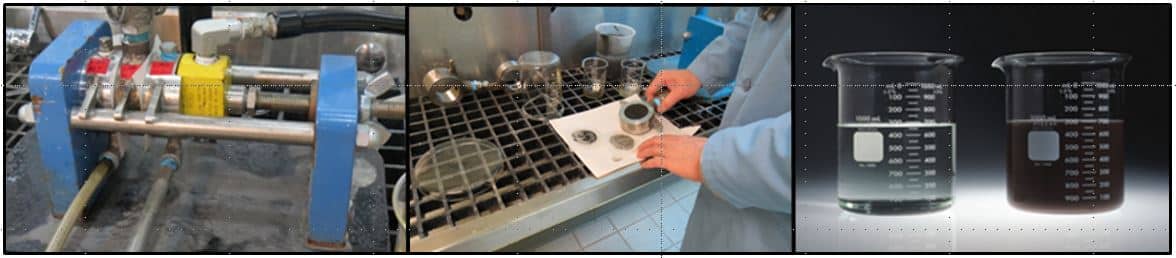
M.W. Watermark has recently re-modeled and updated our in-house laboratory facility, offering a range of dewaterability laboratory services.
Laboratory services can help determine the most effective filter press equipment, equipment sizing, filtration media required, and dewatering techniques for your specific application. This includes the recommended treatments, chemicals, and dosages required to form an ideal filter cake in a filter press.
Services range from feasibility testing of your materials to offering portable pilot units for on-site testing. Using our specialized testing equipment, we can determine the effective feed pressures, fill times, filter media and sludge conditioning.
Lab results can help you ensure a better informed equipment purchase, or maintain maximum performance of your current filter press, including most makes and models.
Simply download and submit the M.W. Watermark Lab Form or contact the Sales and Service Team. A trained service expert will then review your form with you and discuss your specific application.
Or, if you have questions or are not yet ready to fill out the lab form, simply give us a callor request to be contacted and an M.W. Watermark expert will be in touch.
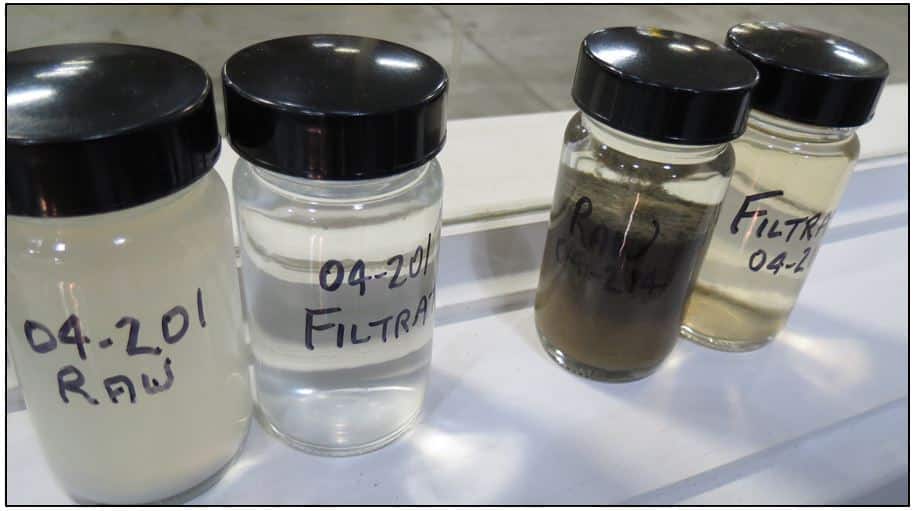
A sludge sample will need to be sent to us. After treatment, we can provide you with the clean water (filtrate) and filter cake, along with an analytical report of our findings. Lab cake sizes are available ranging from .75 to 2 inches.
For regular updates, follow M.W. Watermark on LinkedIn.
About M.W. Watermark
M.W. Watermark wants to make a difference. We are passionate about the world’s water. We are innovative, focused on customer service and always try to exceed expectations. We are an environmentally conscious company with people who are energized, encouraged and inspired to make a difference in the water business, and as a result, make a positive difference to our planet by helping to keep our shared, finite water supply clean and usable for generations to come. We build amazing, custom water and wastewater treatment equipment. We also specialize in rebuilding used water treatment equipment. Together, we can make a difference.
Every business and every member of a community needs infrastructure to survive and thrive. Investing in infrastructure is necessary for long-term economic growth. Once every four years, the ASCE (American Society of Civil Engineers) provides a report card for various categories in America’s infrastructure. The ASCE uses a basic A to F school report card format, and also provides a comprehensive assessment of current conditions and needs along with recommendations for how to improve the grades.
The latest ASCE Report Card was published in 2013. In the infrastructure category of Wastewater, the ASCE gave our nation a “D” grade. The ASCE estimates the capital investment needs for our nation’s wastewater and stormwater systems are estimated to total $298 billion over the next twenty years. Pipes represent the largest capital need, making up three quarters of total needs. However, stormwater needs are still small compared with sanitary pipes and treatment plants. Since 2007, the federal government has required cities to invest more than $15 billion in new pipes, plants, and equipment to eliminate overflows.
Photo Source: www.infrastructurereportcard.org
There are between 700,000 and 800,000 miles of public sewer mains in the U.S. Many of these pipes were installed after World War II, which means they are now near the end of their useful life. Capital investments in those aging pipes account for around 80% of all wastewater system investment requirements in the United States.
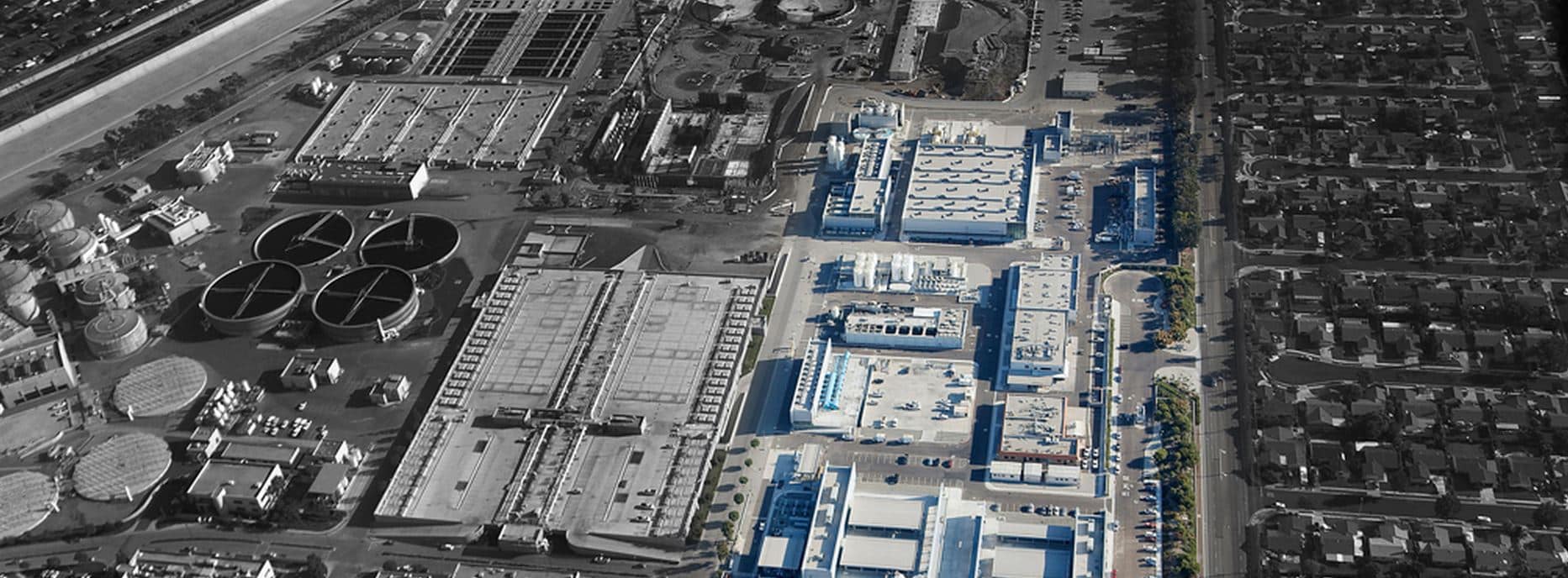
Aerial View of Wastewater Treatment Plant in Orange County, CA. Photo Source: www.infrastructurereportcard.org
The U.S. has about 15,000 wastewater treatment plants and 20,000 wastewater pipe systems as of 2008. The aging condition of these systems, along with inadequate capacity, is leading to the discharge of about 900 billion gallons of untreated sewage each year. One example can be seen in the city of Indianapolis, where an outdated sewage system has been dumping close to 8 billion gallons of sewage and storm water into creeks and rivers each year. In an effort to fix this problem, the city is now implementing a $3.1 billion sewage infrastructure project designed to trap and purify most of its sewage before it washes into the city’s rivers and streams.
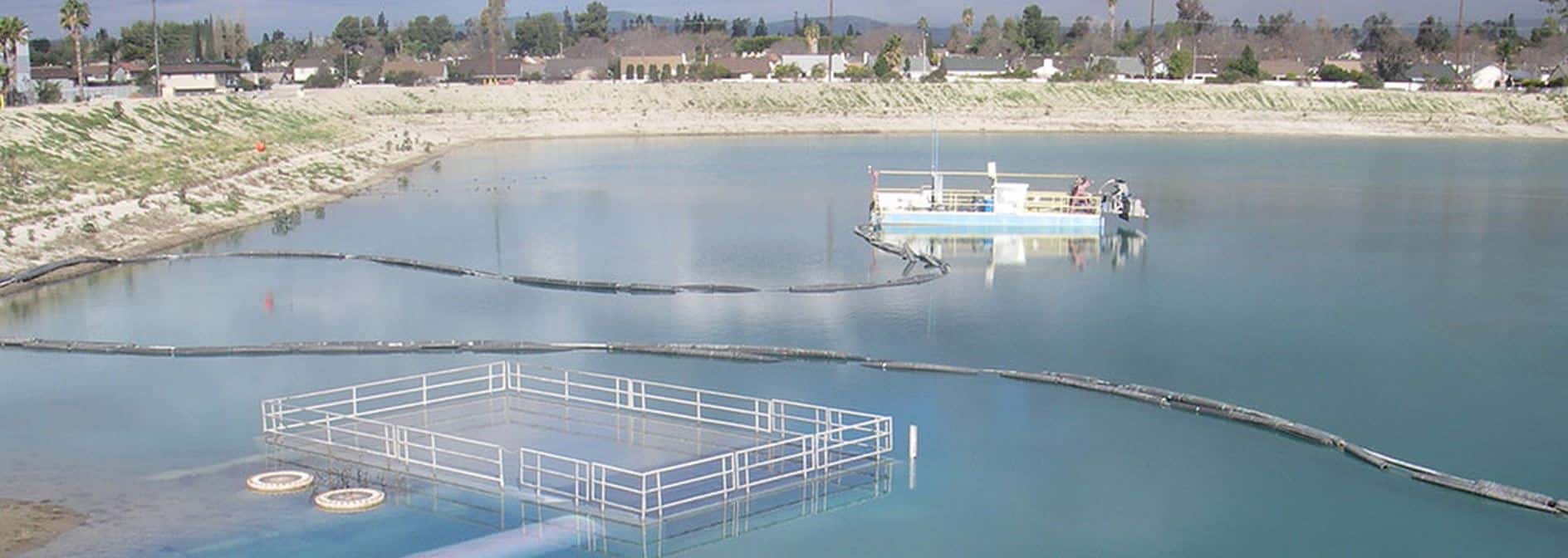
The Groundwater Replenishment System (GWRS) takes treated wastewater that would have been discharged into the Pacific Ocean and purifies it using a 3-step advanced treatment process. Photo Source: www.infrastructurereportcard.org
When grading the category of drinking water, the ASCE also gives our nation’s infrastructure a “D” grade. It is estimated that more than one million miles of water mains are in place in the U.S., with about 240,000 water main breaks per year. Some pipes dating back to the Civil War era and are not assessed until there is water main break. The Environmental Protection Agency (EPA) estimates that around 4,000 to 5,000 miles of drinking water mains are being replaced annually. In the meantime, pipes installed during the mid-20th century are projected to begin to fail in large numbers. According to the American Water Works Association (AWWA), costs to replace these pipes over the next few decades could reach more than $1 trillion.
Photo Source: www.infrastructurereportcard.org
Even though new pipes are being added to expand service areas, the useful life of drinking water system components ranges from 15 to 95 years. Therefore, in older cities in the U.S., the majority of drinking water systems are old and in need of replacement. Drinking water infrastructure failures can cause water disruptions, including damaged roadways, which can hinder emergency response and fire-control efforts.
Crews pump water from the NYC metro track bed and restore train service after a 36-inch water main broke in Feb. 2013. Photo Source: www.infrastructurereportcard.org
When hearing about the aging infrastructure of wastewater treatment and drinking water systems in the U.S. and the extent of these issues, it makes us think about aging equipment on the industrial side of things. Industrial wastewater equipment averages a useful lifespan of about 30 years. In addition to equipment that was installed in the 70’s and 80’s going defunct, environmental regulations and rising sewer disposal costs are driving the need for capital equipment to be upgraded or replaced.
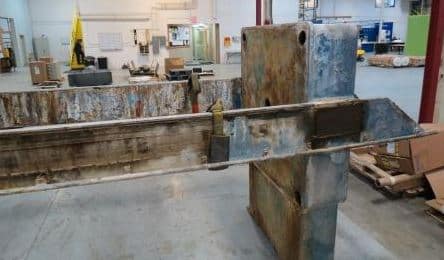
A Defunct Filter Press with Sidebar Corrosion. Source: M.W. Watermark Filter Press Service Blog; wordpress-444785-1393133.cloudwaysapps.com/blog/clean-your-filter-press-plates
About 43 years ago, the Clean Water Act was passed to protect the nation’s waters in the midst of a national concern about untreated sewage, industrial and toxic discharges, destruction of wetlands and contaminated runoff. Other acts followed, including the Safer Drinking Water Act of 1977, which put national drinking water standards into effect for the first time. Also for the first time, all public water suppliers were required to test their public water routinely and notify their customers if water was not up to EPA standards. Several other environmental policies have since been put into place, including additional standards for the disposal of industrial wastes into drain systems, such as effluent from metal hydroxide plating operations.
This need for upgrades in aging equipment, as well as increasing levels of environmental compliance has in turn led to an increased interest in industrial dewatering equipment, such as filter presses, clarifiers and sludge dryers. This increased need has also led to several innovations in wastewater equipment, such as automatic plate shifters and cloth washers on filter presses, and sludge dryers with user-friendly PLC touch screens and a fully automatic processing cycle.
Now that you’ve learned more about the ASCE and EPA’s outlook on the water and wastewater systems throughout the U.S., does it make you think more about the status of your industrial wastewater treatment system? What letter grade would you give your current equipment? If you would like to learn more about how M.W. Watermark can help you with your water treatment equipment, aftermarket parts or service needs, give us a call today, or request to be contacted and an M.W. Watermark expert will be in touch.
Visit wordpress-444785-1393133.cloudwaysapps.com to Learn More
About M.W. Watermark
M.W. Watermark wants to make a difference. We are passionate about the world’s water. We are innovative, focused on customer service and always try to exceed expectations. We are an environmentally conscious company with people who are energized, encouraged and inspired to make a difference in the water business, and as a result, make a positive difference to our planet by helping to keep our shared, finite water supply clean and usable for generations to come. We build amazing, custom water and wastewater treatment equipment. We also specialize in rebuilding used water treatment equipment. Together, we can make a difference.
At M.W. Watermark, our customer service is unmatched. We are proud to offer unique and effective solutions at the best value for all customers. With the support of trained field service technicians, M.W. Watermark industrial water filtration products continually perform. We maintain a large inventory of replacement parts to minimize time lost. M.W. Watermark is family owned and environmentally focused, and we let those principles guide us in everything we do.
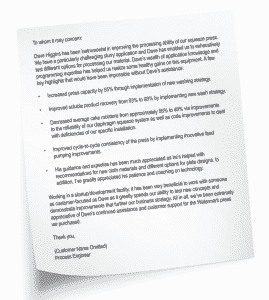
Filter Press Customer Service Testimonial Letter
We received some feedback from a customer regarding the performance of one of our trained field service technicians, David Higgins. If you feel you could also benefit from the assistance of one our experienced technicians, or are in need of another type of customer service, please give us a call today or request to be contacted.
In the meantime, click here to learn more about our Field Services.
Click on Letter to Enlarge
Click on Letter to Enlarge
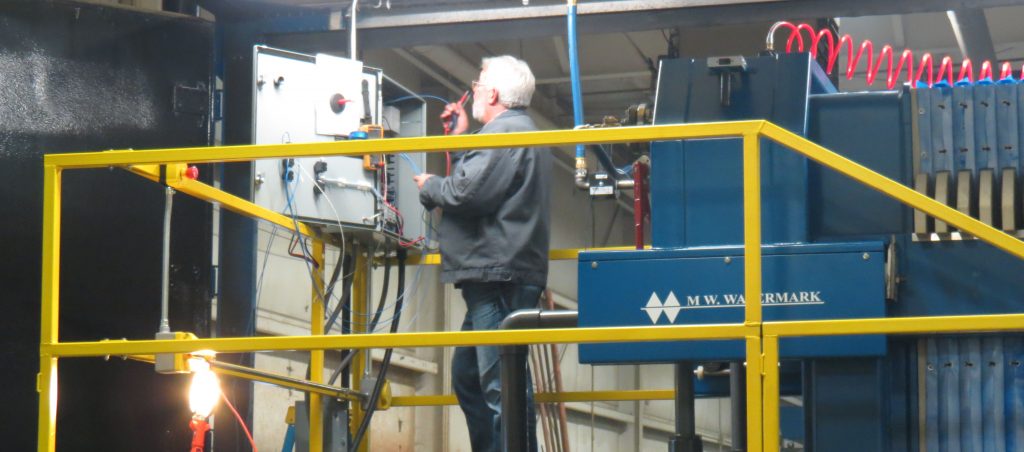
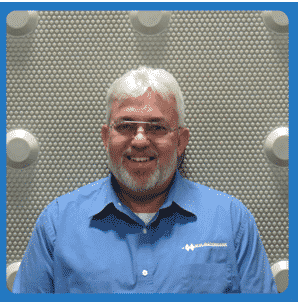
David Higgins, M.W Watermark Product Development Engineer
About M.W. Watermark
M.W. WATERMARKwants to make a difference. We are passionate about the world’s water. We are innovative, focused on customer service and always try to exceed expectations. We are an environmentally conscious company with people who are energized, encouraged and inspired to make a difference on our planet by helping to keep our shared, finite water supply clean and usable for generations to come. We build amazing, custom water and wastewater treatment equipment. Together, we can make a difference.
M.W. Watermark is a trademark owned by M.W. Watermark, L.L.C. All rights reserved.
Any third party trademarks referenced on this site are the trademarks of their respective owners, and M.W. Watermark makes no claim to such marks and is not affiliated with such companies.
In order to better serve our customers, M.W. Watermark maintains a comprehensive inventory of replacement parts for most filter press manufacturers. Please visit our filter press parts web page to learn more about the parts we offer, along with retrofit options for filter presses.
Below is a list of our main categories of filter press parts and retrofit components.
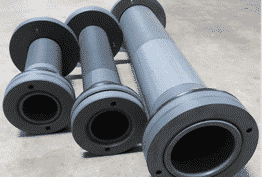
Filter Plates and Custom ClothsM.W. Watermark Semi-Automatic Plate ShifterM.W. Watermark Hydraulic ModulePVC Centerfeed Pipes Fit Most Makes and Models
The expertise of our sales staff, engineers, and technicians serves to make M.W. Watermark an industry leader. Our large selection of filter press parts is regularly replenished to minimize our customers’ downtime and reduce potential waste.
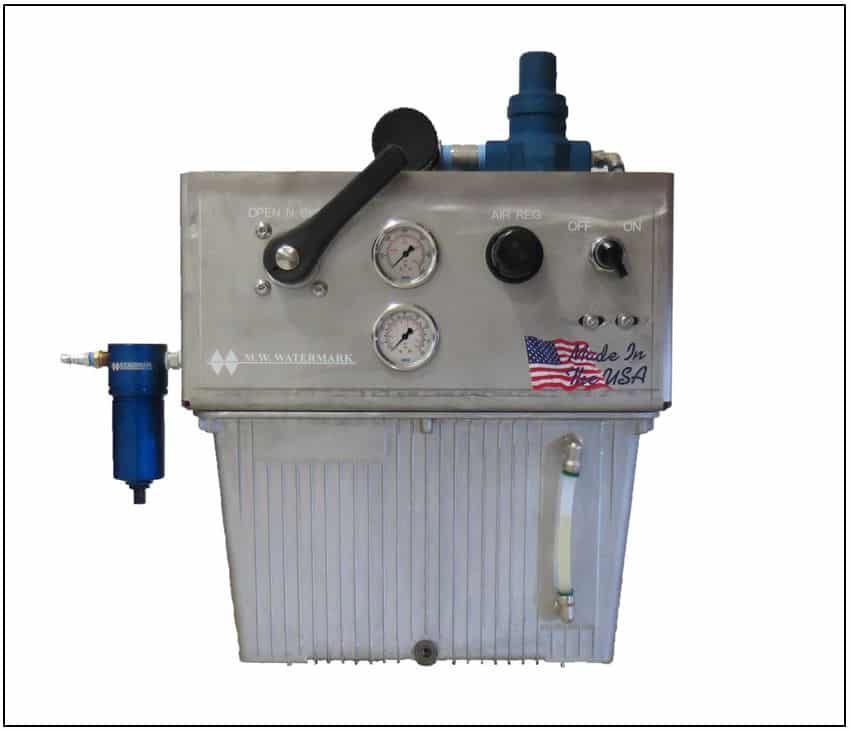
M.W. Watermark Retrofit Hydraulic Power Unit (HPU)
Another way that we work to get you back up and running quickly is through innovations in equipment. If you are in need of an emergency fix for your hydraulic pumping system, then M.W. Watermark has a great solution for you.
M.W. Watermark Hydraulic Power Unit (HPU)
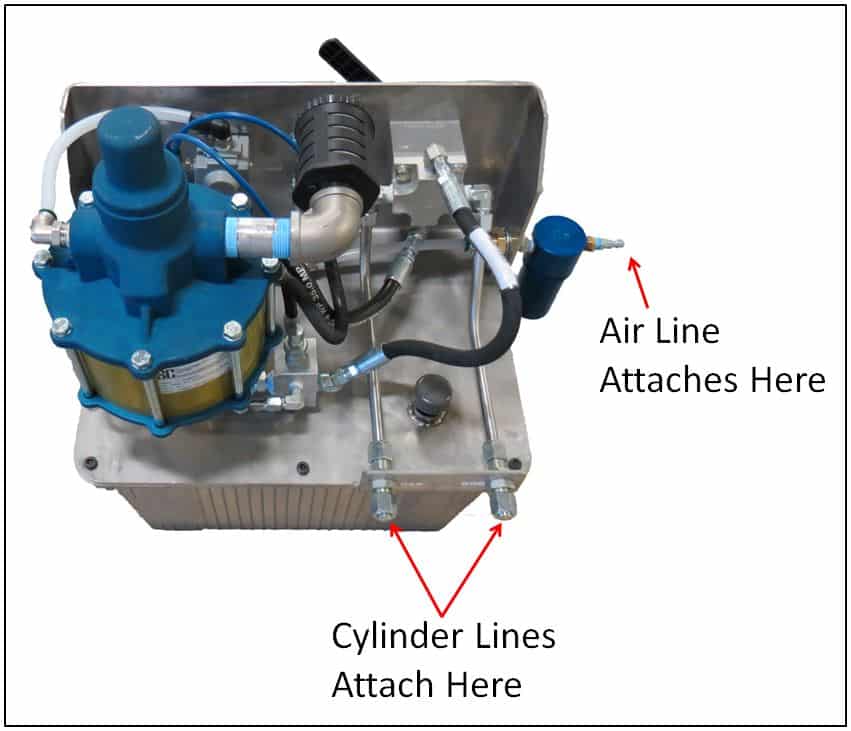
M.W. Watermark has designed a stand-alone Hydraulic Power Unit (HPU) which serves as a universal retrofit for older-style filter presses. The HPU is available with either a 7 or an 11-gallon reservoir. These two size options should cover most types of filter presses, from 630mm to 1200mm in filter plate size. Simply attach a supply airline and two hydraulic cylinder lines to the HPU to get your filter press back up and running. As always, we will continue to stock all air over oil hydraulic parts for JWI and other manufacturer’s presses.
Contact us today for more information on retrofits or replacement filter press parts.
For regular updates, follow M.W. Watermark on LinkedIn.
About M.W. Watermark
M.W. Watermark wants to make a difference. We are passionate about the world’s water. We are innovative, focused on customer service and always try to exceed expectations. We are an environmentally conscious company with people who are energized, encouraged and inspired to make a difference in the water business, and as a result, make a positive difference to our planet by helping to keep our shared, finite water supply clean and usable for generations to come. We build amazing, custom water and wastewater treatment equipment. We also specialize in rebuilding used water treatment equipment. Together, we can make a difference.
If you are looking for a short-term solution for a dewatering project, or a pilot unit to help you determine equipment specifications before making a purchase, M.W. Watermark offers equipment rental units that may be exactly what you need.
M.W. Watermark offers in-house Laboratory Services that can help you determine the most effective equipment, equipment sizing, filtration media, and dewatering techniques for your specific application. As part of this range of services, M.W. Watermark can provide a 250mm portable pilot filter press for on-site testing. Pilot presses are available for rental and also for purchase.
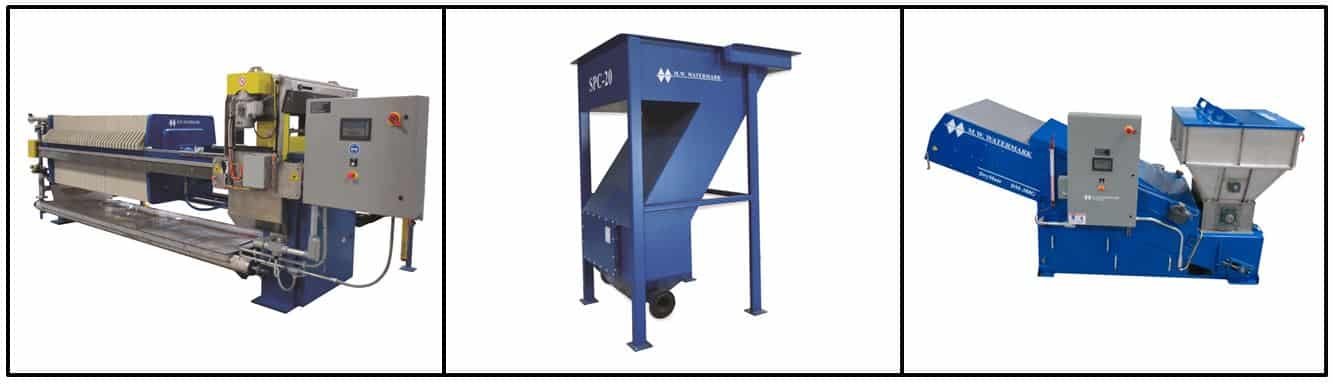
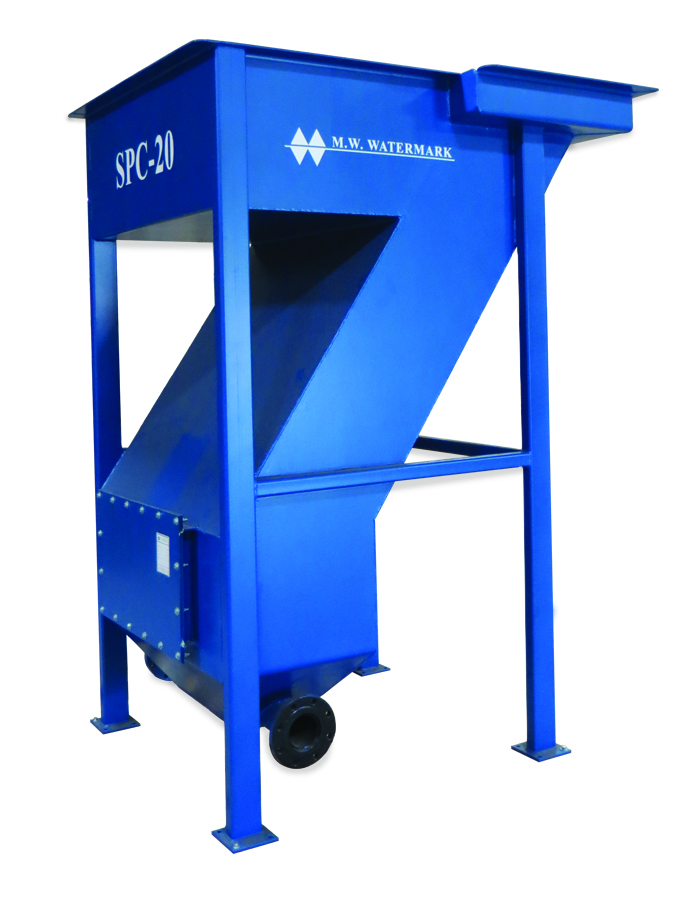
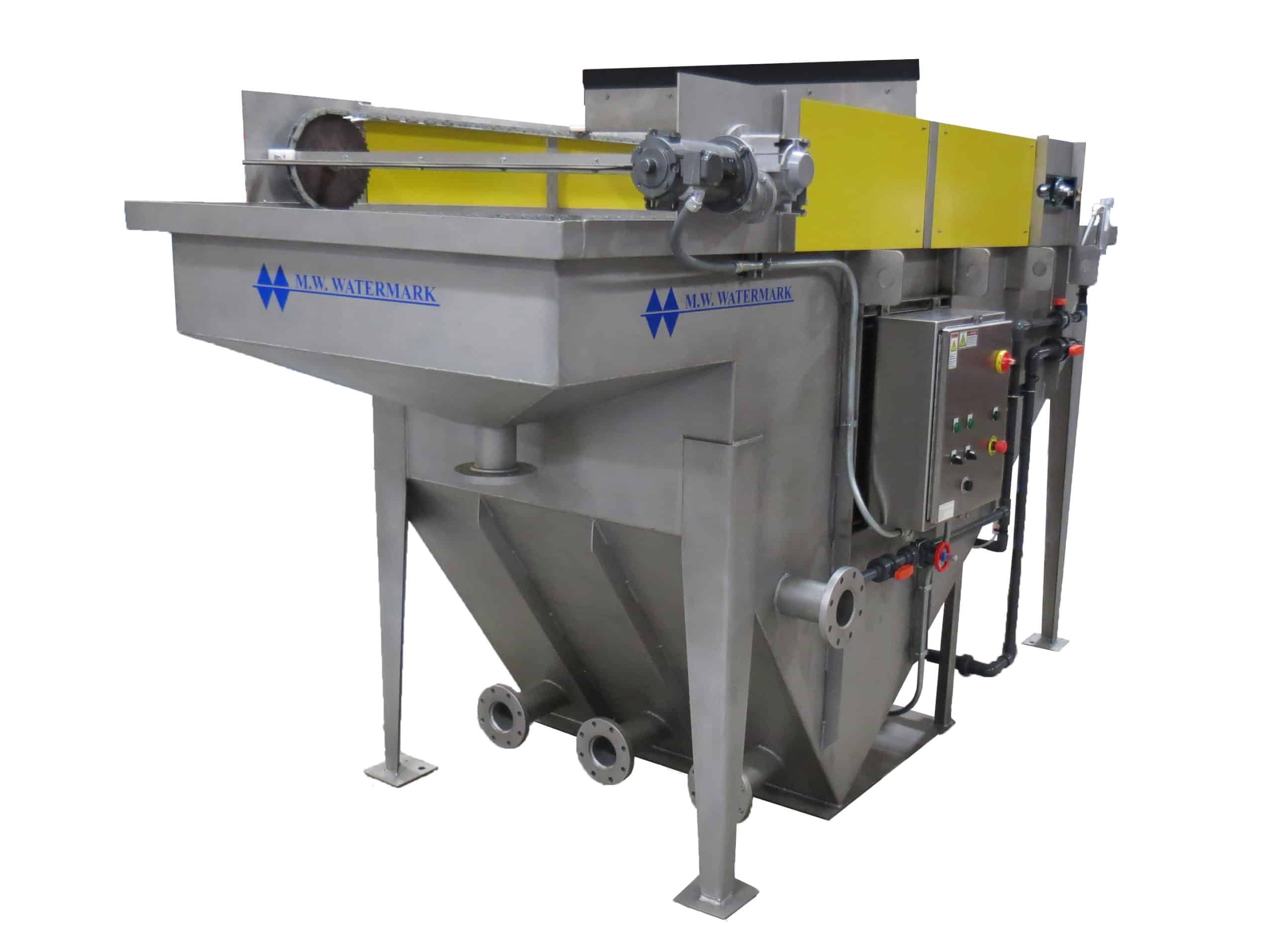
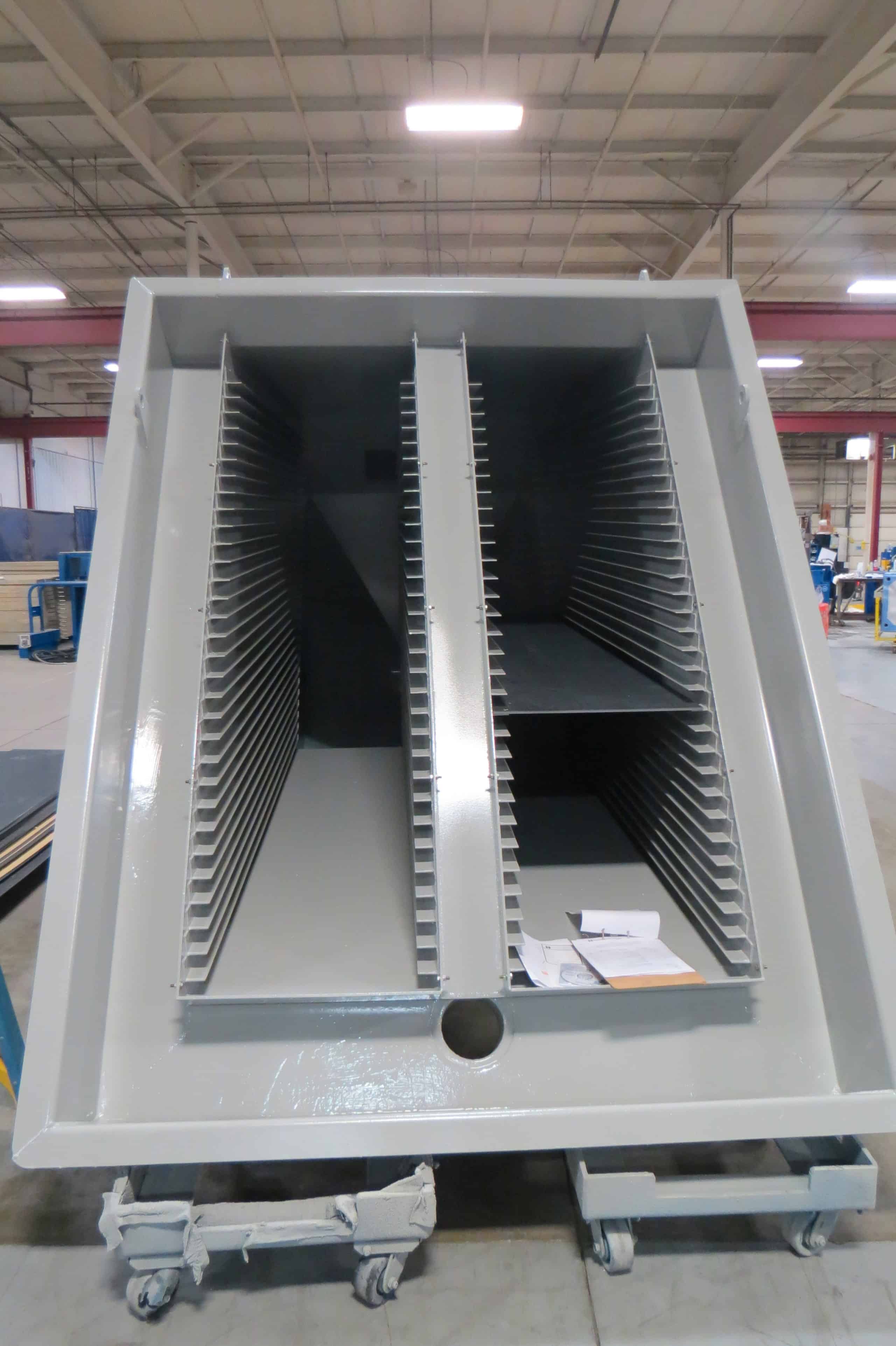
M.W. Watermark also offers equipment rentals on select models of slant plate clarifiers. Our Slant Plate Clarifier (SPC) series is designed for extremely efficient solids removal from a wide range of waste and process streams. The use of inclined plates is a highly efficient method for achieving powerful performance without sacrificing floor space.
Our SPC-20 model provides a design flow maximum of 20 gallons per minute, a flash tank mix volume of 38 gallons, and a flocculation tank volume of 62 gallons – allowing for a total pre-treatment volume of 100 gallons in a 70” x 60” footprint.
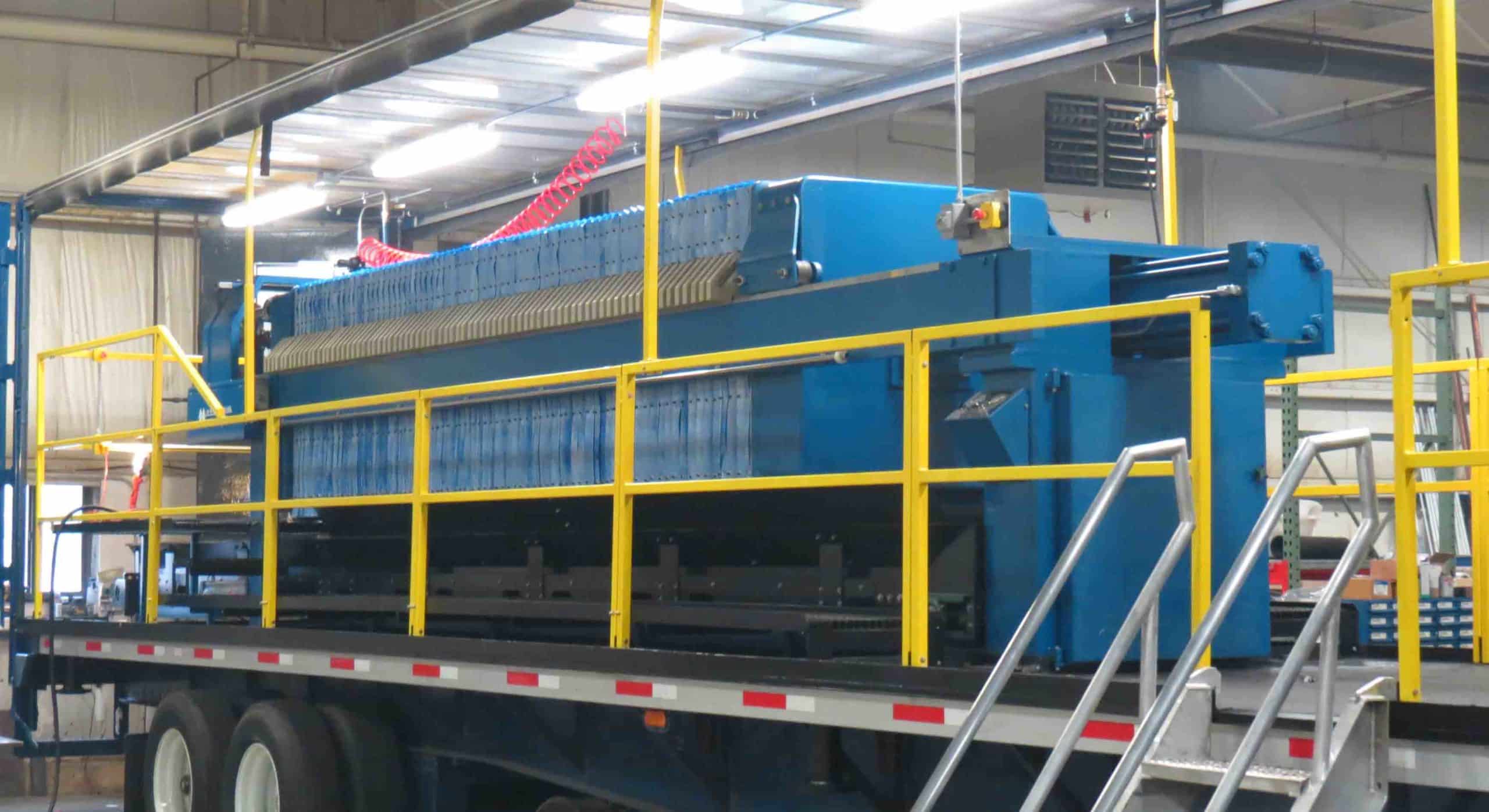
Another popular equipment rental item is a trailer-mounted filter press from our fleet. If you have an application that requires the dewatering power of a large capacity filter press, but portability is also important, then an M.W. Watermark trailer press may be the best option. Our customers have found that a trailer-mounted filter press can serve as the ideal option for remote projects, such as dewatering a lagoon.
For example, one of our trailer press units is a refurbished JWI press featuring 1200mm filter plates with a capacity of 100 cu. ft., and a semi-automatic plate shifter. Filter cloths are included. The manifold design is air blowdown/even fill, and is constructed of PVC.
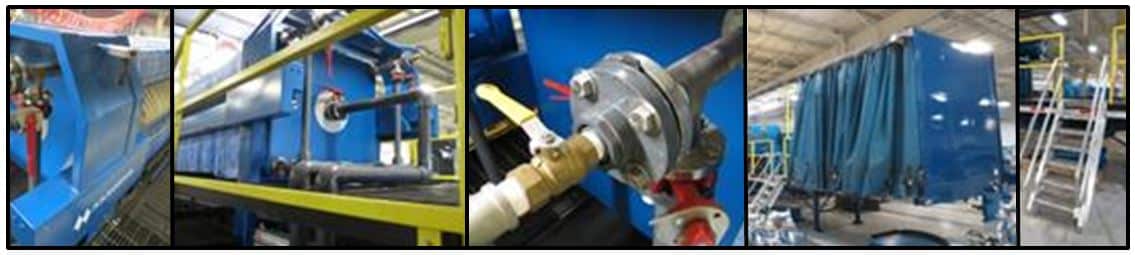
The trailer itself includes several options, such as flexible side curtains, independently adjustable trailer levelers, stainless steel cake chutes, extendable slider belt conveyer, walkways/railings/stairs, electrical control panel, water wash-down deck, and mounted overhead lighting.
Contact a Sales and Service team member today to learn more about how M.W. Watermark can help you with your dewatering project, and find out if equipment rental is the best option for you.
For regular updates, follow M.W. Watermark on LinkedIn.
About M.W. Watermark
M.W. Watermark wants to make a difference. We are passionate about the world’s water. We are innovative, focused on customer service and always try to exceed expectations. We are an environmentally conscious company with people who are energized, encouraged and inspired to make a difference in the water business, and as a result, make a positive difference to our planet by helping to keep our shared, finite water supply clean and usable for generations to come. We build amazing, custom water and wastewater treatment equipment. We also specialize in rebuilding used water treatment equipment. Together, we can make a difference.
It’s not the prettiest word in the English language, but sludge is a fact of modern life. According to a recent report, the United States produces about 7 million dry tons of it each year! Local governments are now required to treat waste water before the leftovers—sewer sludge—are safely recycled, incinerated, or buried in landfills. Here are the most common methods sewage treatment plants use for treating sewage sludge.
Sludge Thickening
With the help of gravity, sludge solids can be concentrated and removed from waste water. By increasing the solid content of the mixture to 5 or 6 percent, some of the contaminants in the water can be removed or destroyed. Because it does not reduce the mixture to a pure solid, thickening is generally used early on in the treatment process.
Sludge Dewatering
As its name implies, the dewatering process removes much of the liquid in the mixture and increases the solid content 15 to 30 percent. Air-drying, centrifugation, and belt processing (filtration) are also used to reduce the amount of contaminants.
Anaerobic Digestion
When waste water is kept in an oxygen-free environment for several weeks, anaerobic bacteria are encouraged to feed on the sludge. The natural result is a mixture that contains a higher concentration of solids, fewer pathogens, and the same amount of plant nutrients. As such, this treated sludge is more likely to be recycled and used as fertilizer.
Aerobic Digestion
By exposing waste water to oxygen, aerobic bacteria are allowed to feed on the sludge, decreasing volatile solids. The technique also increases solids content and reduces pathogens.
Alkaline Stabilization
Adding alkaline-rich materials, such as lime, to the mixture for several hours increases its pH level—which has numerous benefits. Not only does the technique reduce volatile solids, but it also decreases ammonia content.
Composting
After sludge dewatering takes the mixture closer to a solid state, an organic material high in carbon, such as sawdust, is added to the mixture. It is then composted for several days in an oxygen-rich environment. This technique helps reduce sludge volume and stabilize the remaining organic matter.
All of the aforementioned techniques help reduce the environmental impact of sewage sludge. M. W. Watermark provides equipment for sludge dewatering and solid/liquid separation, including filter presses, sludge dryers, and slant plate as well as dissolved air flotation clarifiers.
Contact an M.W. Watermark Sales and Service team member today to learn more about sludge dewatering and management techniques for your particular application.
For regular updates, follow M.W. Watermark on LinkedIn.
About M.W. Watermark
M.W. Watermark wants to make a difference. We are passionate about the world’s water. We are innovative, focused on customer service and always try to exceed expectations. We are an environmentally conscious company with people who are energized, encouraged and inspired to make a difference in the water business, and as a result, make a positive difference to our planet by helping to keep our shared, finite water supply clean and usable for generations to come. We build amazing, custom water and wastewater treatment equipment. We also specialize in rebuilding used water treatment equipment. Together, we can make a difference.
As part of our range of Laboratory Services, M.W. Watermark has been offering a 250mm portable pilot filter press for on-site testing. The 250mm pilot press has been a great help to many of our customers working to determine the most effective filtration media and dewatering techniques for their particular applications. The 250mm press is simple to use, and features non-gasketed filter plates and filter cloths, which are very straightforward, easy to change-out, and can be utilized with most types of slurry.
However, several of our customers have asked us if we can provide a pilot press with gasketed plates and cloths, which are useful in preventing a slurry from leaking from the plates when being pumped through the press. Leakage, or “wicking” can be an issue when a slurry is of a high temperature, or particularly acidic or basic in nature, and it’s important to keep the liquid contained.
In response to customer requests, M.W. Watermark is pleased to offer a 320mm portable filter press as part of our pilot program.
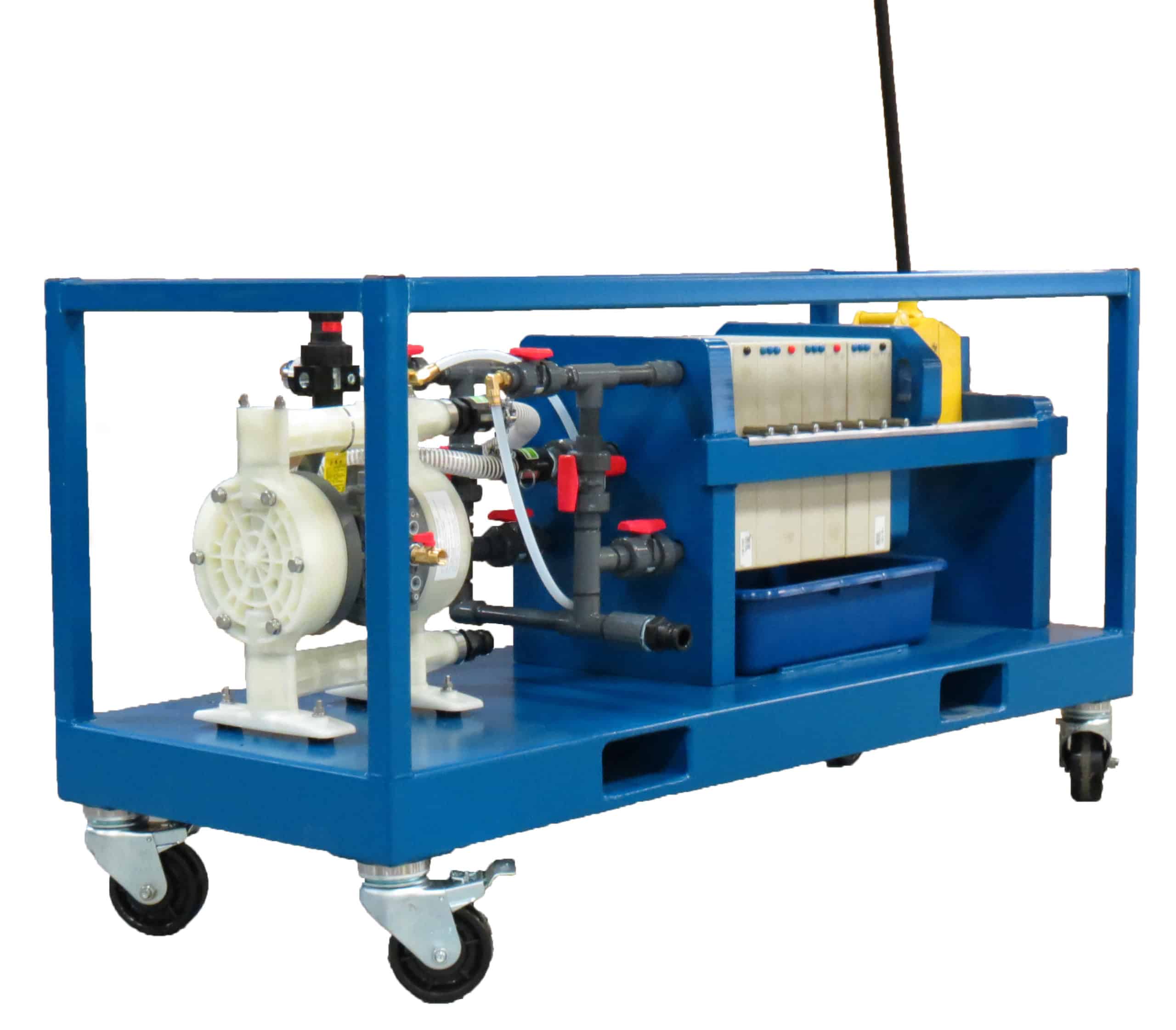
The 320mm pilot filter press features a small filter press footprint like the 250mm press, but also includes the option for gasketed plates and cloths for even greater versatility. (The type of cloth can be specified based on your application). In addition to caster wheels, the 320mm press also includes additional portability features, including forklift pockets in the base for ease of moving around the plant. In addition to the 250mm pilot filter press, the 320mm is now available for rental or purchase, and can also be utilized alongside M.W. Watermark Laboratory Services.
M.W. Watermark 320mm Portable Pilot Filter Press
320mm Pilot Filter Press Specs:
6 chambers
32mm cake chambers
0.3 cubic ft.
8 square ft. filtration area
Standard PVC Manifold with Air Blowdown, Evenfill, and Cake Wash – Process options
Because it is often less expensive and greener than most other separation technologies, membrane filtration is widely used in industries today. Defined as the mechanical or physical process of separating substances, filtration has a broad range of applications, including wastewater treatment, water treatment, solvent recovery, metal and catalyst recovery, gas separation, and many others. No matter where or how it is used, there are several different types of membrane filtration that are based on relative particle size.
What Is Microfiltration?
Along with ultrafiltration, microfiltration is the most commonly used method of membrane filtration. It is used to remove particles that range in size from approximately 0.05 to 10 micrometers. As with every other type of filtration, particles are removed or retained after passing through the filter medium because they are larger than the pores of the filter. It should be noted that chemical interactions and fluid viscosity play a role in how quickly and effectively the microfiltration process removes undesirable particles.
Driving Force
For fluid to pass through a filter, removing particles in the process, some outside force is needed. On an extremely small scale, such as a laboratory experiment, gravity is often a sufficient driving force to complete microfiltration. But on a larger, industrial scale, gravity filtration is simply too slow. As such, a stronger driving force is needed to expedite the filtration process. In most cases, that means using a vacuum to suck or push the fluid through the filter. Another fairly common separation process is membrane distillation, which uses temperature differences as a driving force.
Dead-end vs. Crossflow
Microfiltration can be achieved with either dead-end or crossflow modes. The former uses perpendicular movements of the feed stream (the flowing liquid to be filtered) across the membrane surface for successful separation, while the latter uses parallel movements of the feed stream. Because it is considered by many to be more efficient, crossflow filtration mode is more popular in large-scale industrial applications.
Microfilter Membranes
A pressure-driven process, microfiltration removes suspended solids and colloids, while macro-molecules and dissolved solids are allowed to pass through the membrane. Microfilter membranes are specifically designed to remove suspended solids, bacteria, and flocculated materials from the fluid solution. Because the particles that must be removed are relatively large, compared with other types of filtration, the microfiltration process operates at low pressure, typically 10 PSI or lower.
Modern Applications
Water treatment, sterilization, petroleum refining, dairy processing, and biochemical processing are just a few of the ways microfiltration is used today. Because it relies on a physical means of separation (the membrane) instead of a chemical one, microfiltration can accomplish both filtration and disinfection in a single step, making it an efficient, cost-effective option. Microfiltration is one of the most widely used methods of removing undesirable particles from industrial fluids.
M.W. Watermark wants to make a difference. We are passionate about the world’s water. We are innovative, focused on customer service and always try to exceed expectations. We are an environmentally conscious company with people who are energized, encouraged and inspired to make a difference in the water business, and as a result, make a positive difference to our planet by helping to keep our shared, finite water supply clean and usable for generations to come. We build amazing, custom water and wastewater treatment equipment. We also specialize in rebuilding used water treatment equipment. Together, we can make a difference.
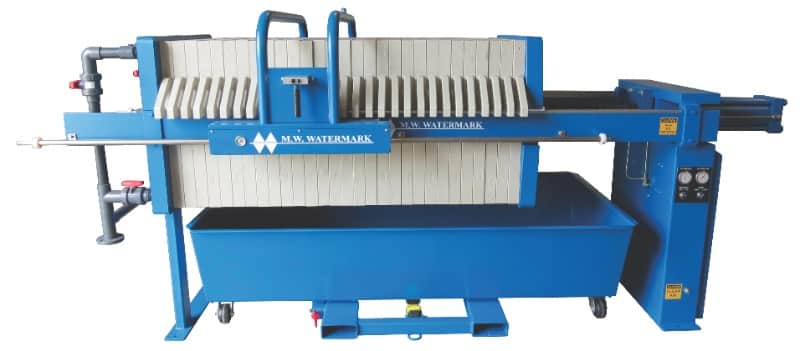
M.W. Watermark™ offers a variety of options for the management and disposal of sludge. These options are designed to work with a filter press and include leg extensions, discharge chutes, platforms, cake hoppers, screw conveyors and drip trays.
The sludge management option that will work best for your application depends on several factors, including the size of your filter press, the layout of your facility, and the amount of filter cake (sludge) for disposal.
Leg Extensions, Discharge Chutes and Platforms
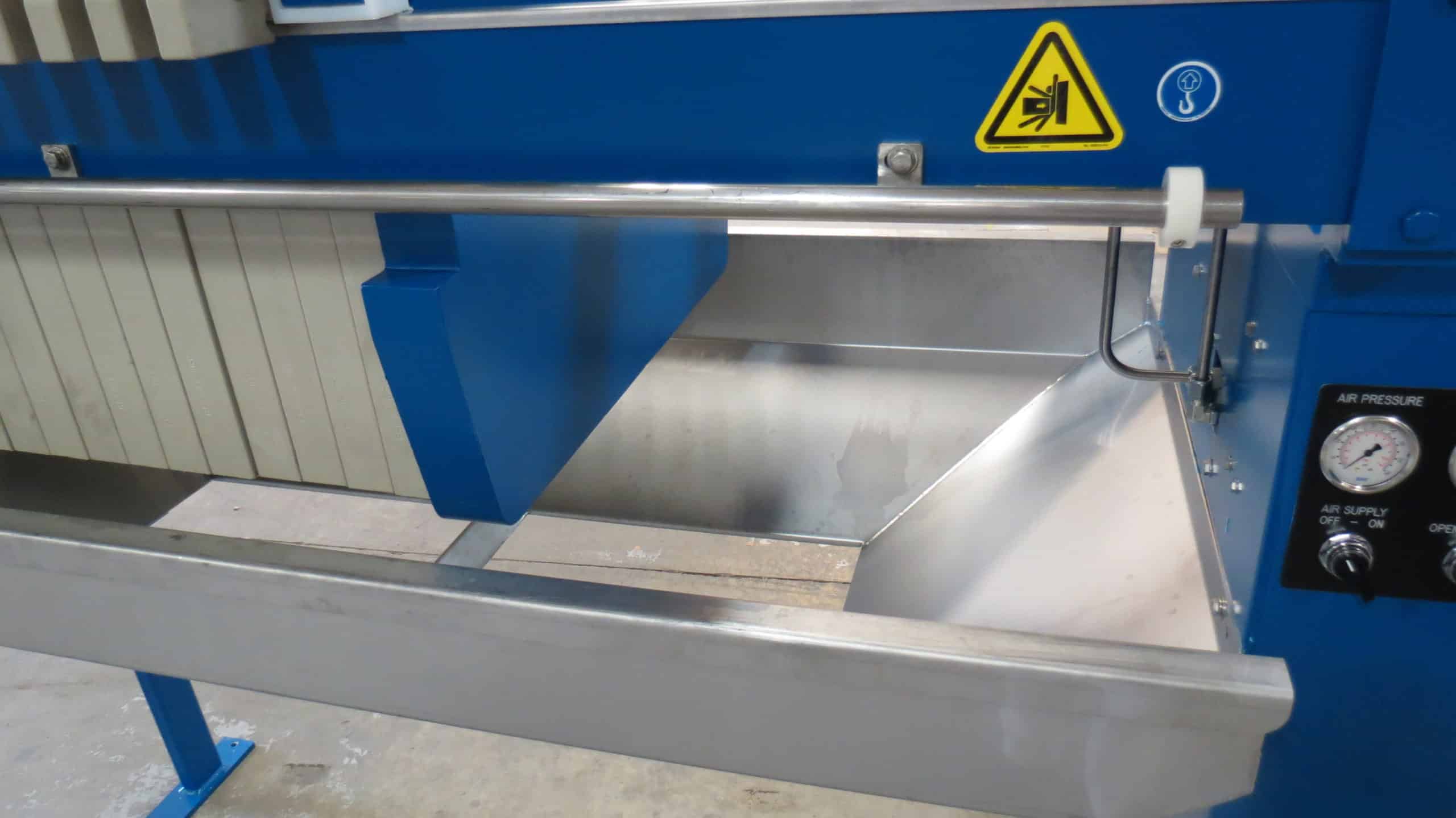
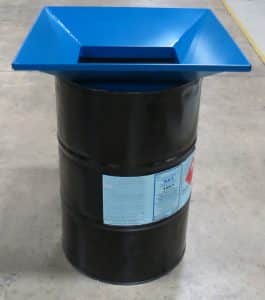
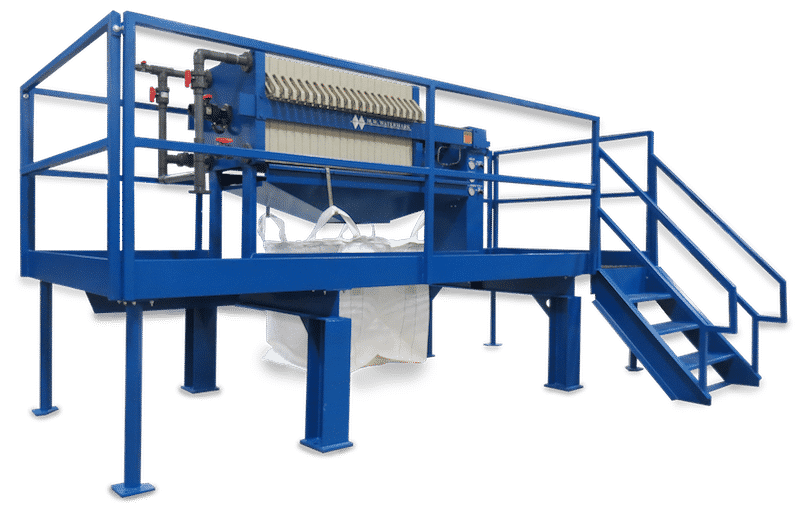
For example, if you are utilizing a smaller press, M.W. Watermark offers leg extensions, discharge chutes and platforms allowing filter cake to be discharged directly to a drum or bulk bag. The extended legs (or platform) serves to raise the press, providing room for single or multiple barrels to catch the filter cake when the press is opened – and the cake is released.
M.W. Watermark 800mm Filter Press with Leg Extensions and Stainless Steel Discharge ChuteInside View of Stainless Steel Discharge ChuteDischarge Chute Designed to Mount on a 55-Gallon DrumM.W. Watermark Filter Press with Discharge Chute, Elevated Platform and Bulk Bag
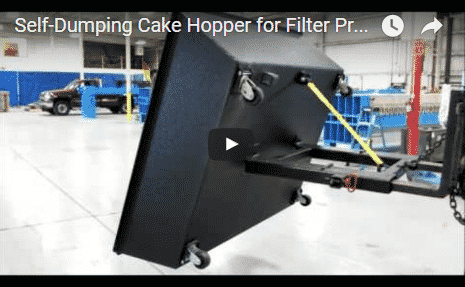
Self-Dumping Cake Hopper
Regardless of the size of the press you are working with, a self-dumping cake hopper is very useful for easily handling discharged solids.
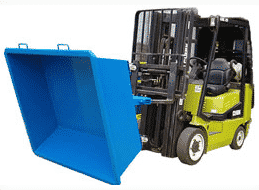
M.W. Watermark Self-Dumping Cake Hopper
Also referred to as a dumpster, these hoppers are furnished with large ball-bearing casters for quick positioning under a press, either manually or by using a lift truck. Once filled, the operator picks up the hopper using a fork-lift truck and positions it over a larger container. The hopper is easily emptied by pulling the spring-loaded self-dump pin.
800mm Filter Press with Self-Dumping Cake Hopper
To learn more about our self-dumping cake hopper, click here to watch a video.
Utilizing Conveyors for Sludge Management
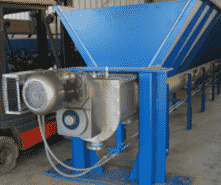
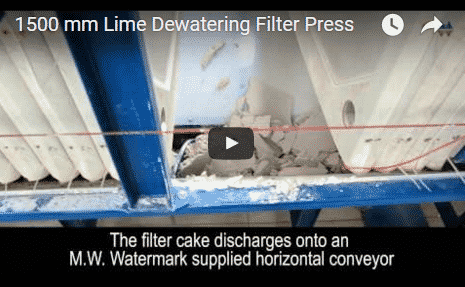
Another option that allows for the transporting of sludge to single or multiple discharge locations is by utilizing an integrated screw conveyor. A screw conveyor can eliminate the need for a forklift or platform while minimizing operator time handling the filter cake. By including an optional inclined conveyor, the filter cake can be moved to a nearby location for temporary storage or directly to a truck/trailer to be hauled away for disposal.
Filter Press with Screw Conveyor
Watch a video about a lime softening application that utilizes an M.W. Watermark 1500mm filter press and supplied horizontal conveyor to transfer filter cake to an inclined conveyor, which in turn transports the dewatered lime cake to a storage area.
Automatic Drip Trays
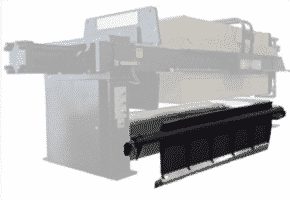
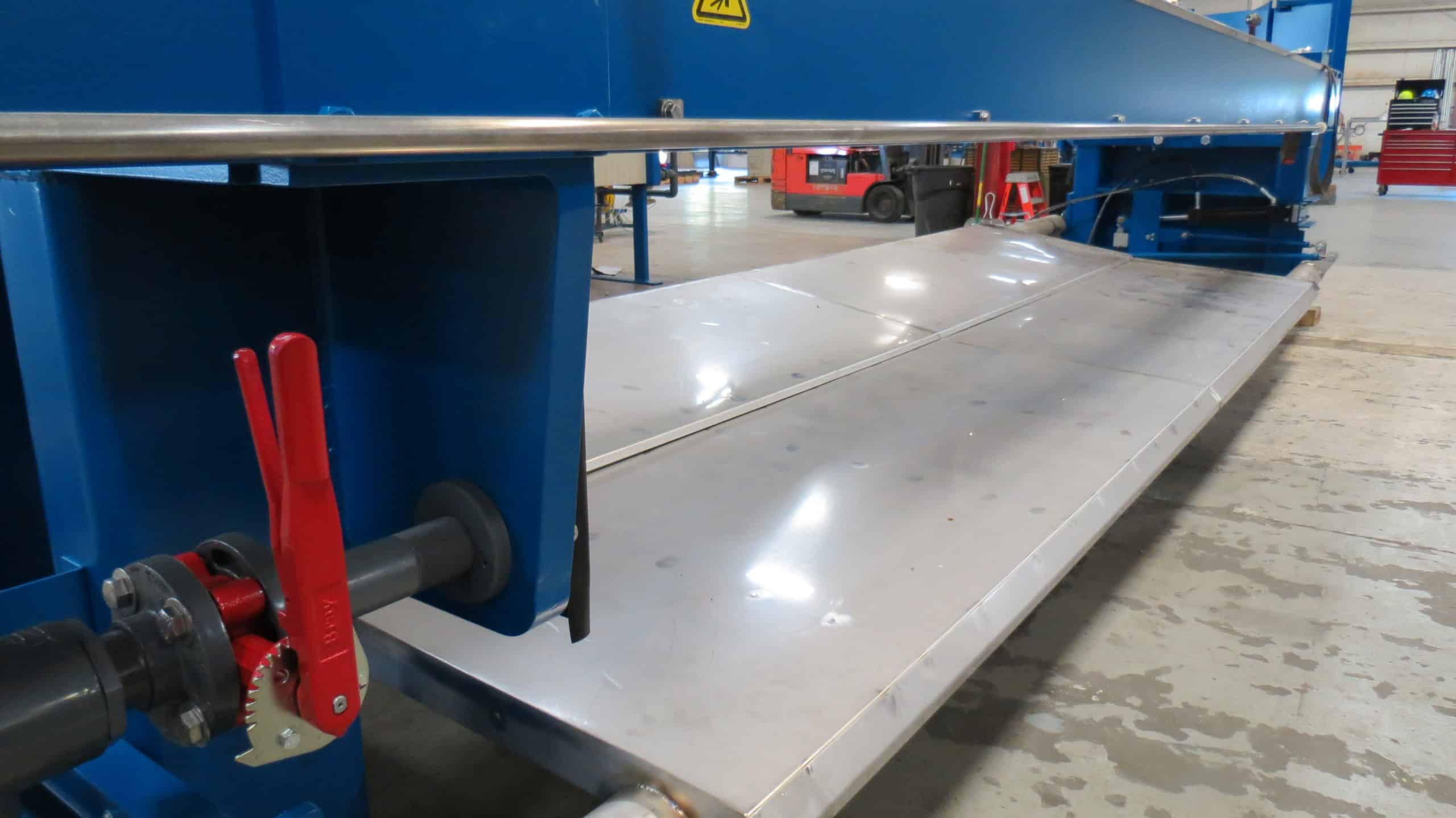
The addition of automatically actuated drip trays helps catch any filtrate that escapes from between the filter plates during the dewatering process or when power-washing filter plates and cloths. The trays are held in the horizontal position during dewatering or cloth washing and rotated to the vertical position for cake discharge. Actuation of the trays is accomplished by either air or hydraulic cylinders.
The trays slope toward the centerline of the press, where a single trough directs the flow toward a catch basin, which is located beneath the press hydraulic cylinder. The catch basin can be piped for recycling, or to a drain depending on project requirements.
Filter Press with Automatic Drip Trays – Open PositionFilter Press with Automatic Drip Trays – Closed Position (Stainless Steel)
Contact our Sales & Service Team to learn more about how M.W. Watermark can help you with sludge management for your specific application.
About M.W. Watermark
M.W. WATERMARKwants to make a difference. We are passionate about the world’s water. We are innovative, focused on customer service and always try to exceed expectations. We are an environmentally conscious company with people who are energized, encouraged and inspired to make a difference on our planet by helping to keep our shared, finite water supply clean and usable for generations to come. We build amazing, custom water and wastewater treatment equipment. Together, we can make a difference.
M.W. Watermark is a trademark owned by M.W. Watermark, L.L.C. All rights reserved.
Any third party trademarks referenced on this site are the trademarks of their respective owners, and M.W. Watermark makes no claim to such marks and is not affiliated with such companies.
Polymer blending systems may sound simple and straightforward on the surface. However, this process can be more complicated than it seems. These synthetic properties do not always combine without issues. In fact, often combining these materials causes significant changes that disrupt the chemical makeup of both. To understand how this works, we need only to understand a little bit about thermodynamics.
Thermodynamics is a branch of physics concerned with heat and temperature and their relation to energy and work. It defines macroscopic variables—such as internal energy, entropy, and pressure—that partly describe a body of matter or radiation.
The First Law of Thermodynamics
This rule states that a change moves things from a status of more energy to a status of less energy. When executing polymer blending systems and observing this rule, it is necessary to force the chemicals to have less energy after mixing them than they would each contain separately.
The Second Law of Thermodynamics
This rule dictates how things change. After combining two polymers, the change can bring about a state of disorder in both chemicals known as entropy. In simple terms, it is easier to move from a state of order to a state or disorder than it is to instill more order. It is easier to incorporate less entropy than to incorporate more entropy. Mixing polymers causes their already disordered states to become more chaotic.
Polymer Blending Process
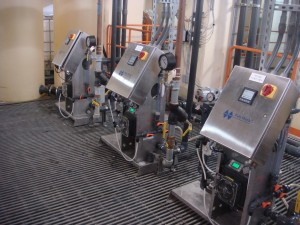
M.W. Watermark’s PolyMark™ blends an undiluted or “neat” liquid emulsion polymer with a water stream, while accurately dosing the correct amount of polymer per the application, metering the appropriate flow of water, and efficiently activating the polymer at a molecular level.
The PolyMark™ Polymer Blending System integrates the best features and designs developed and refined from decades of proven experience. M.W. Watermark offers a complete line of blending units ranging from 25 gph to 2400 gph solution flow rates with 0.05 gph to 60 gph neat polymer flow rates to meet all of your process, dewatering, and flocculation needs.
Contact a member of our Sales and Service Team to learn more.
About M.W. Watermark
M.W. Watermark wants to make a difference. We are passionate about the world’s water. We are innovative, focused on customer service and always try to exceed expectations. We are an environmentally conscious company with people who are energized, encouraged and inspired to make a difference in the water business, and as a result, make a positive difference to our planet by helping to keep our shared, finite water supply clean and usable for generations to come. We build amazing, custom water and wastewater treatment equipment. We also specialize in rebuilding used water treatment equipment. Together, we can make a difference.
Not everyone uses a water filter pitcher in the fridge at home, but a commercial water filtration system is essential for many production processes. There are many negative ramifications for the business or property owner when the water supply becomes contaminated. No matter the industry, installing industrial filtration equipment is the best way to keep the pipelines pollutant free and preserve a valuable, limited resource.
Which Businesses Benefit from Industrial Filtration Equipment?
Just about any business or institution that processes large amounts of water or wastewater throughout the day would benefit from industrial filtration equipment. According to some sources, 12 gallons per minute is a good minimum for opting for a commercial-grade system. Water bottling plants, distilleries, restaurants, hotels, and schools are a given, because consuming polluted water or eating off dishware washed with polluted water is dangerous to the health.
However, the food and beverage industry is only the tip of the iceberg. No matter the industry, certain contaminants can cause crippling corrosion in boilers, pipes, and other infrastructural components. The ensuing breakdowns are time-consuming and costly to repair. Campgrounds, car washes, apartment complexes, medical centers, office buildings, spas, metal finishing plants, recycling centers, and pretty much any sizable public, private, or commercial space can use water and wastewater filtration equipment to facilitate safe and productive practices.
Types of Water Filtration Equipment that is Commonly Used in Industrial and Commercial Applications
As the need for water and wastewater filtration has become more prevalent, a few key types of equipment have risen to the top based on cost effectiveness and proven ability to handle solid/liquid separation projects. Click on each product link below to learn more:
In addition to helping both industrial and commercial establishments stay safe, cut costs, and function smoothly, filtering and reusing water is a sustainable practice that helps the entire planet. Many companies place particular importance on sustainable practices. Installing such a system can be a great way to help not only business processes but also the planet.
About M.W. Watermark
M.W. Watermark wants to make a difference. We are passionate about the world’s water. We are innovative, focused on customer service and always try to exceed expectations. We are an environmentally conscious company with people who are energized, encouraged and inspired to make a difference in the water business, and as a result, make a positive difference to our planet by helping to keep our shared, finite water supply clean and usable for generations to come. We build amazing, custom water and wastewater treatment equipment. We also specialize in rebuilding used water treatment equipment. Together, we can make a difference.
When considering a purchase of industrial water filtration equipment, the materials of construction are always an important factor. The nature of the slurry, including temperature, pressure, pH, chemical compatibility and abrasiveness can play an important role when selecting the type of coating for your equipment.
M.W. Watermark utilizes a Pratt & Lambert® polyamide epoxy as a standard exterior coating that protects steel in industrial environments. A high-solids formula ensures protection of sharp edges, corners and welds. This high-build mastic epoxy coating also features excellent adhesion and chemical and abrasion resistance, and is suitable for use in USDA inspected facilities.
Contact M.W. Watermark to learn more about the best type of coating for your specific application.
Enduroliner™ Coating
A coating solution that M.W. Watermark offers for enhanced resistance to corrosion and wear is the Enduroliner™ coating. EnduroLiner™ is a polyurea/polyurethane spray-on coating that exhibits excellent adhesion for seamless protection from wear and abrasion. EnduroLiner™ also provides excellent UV light, chemical, and moisture resistance necessary for demanding applications.
Click here for a full Enduroliner™ specifications sheet, including a chemical compatibility chart.
Corotech® Polyamid Epoxy – M.W. Watermark’s Standard Interior Clarifier Coating
Corotech® V400 Polyamide Epoxy Coating is designed for use in Food and Beverage Processing, Industrial Maintenance, General Metal Finishing and Fabrication, Chemical Processing, Industrial and Commercial Flooring and other areas requiring maximum impact and abrasion resistance. It’s highly cross-linked film resists many chemicals and solvents, and exhibits excellent chemical and moisture resistance. It is also resistant to dilute acids and alkali attack and does not support the growth of mold, fungi or other micro-organisms.
M.W. Watermark Clarifier with Corotech® Interior Coating and Pratt & Lambert® Exterior Coating
Contact M.W. Watermark to learn more about Corotech® as a standard interior coating for clarifiers.
Tnemec Series 61 – Specialized Exterior and Interior Clarifier Coating
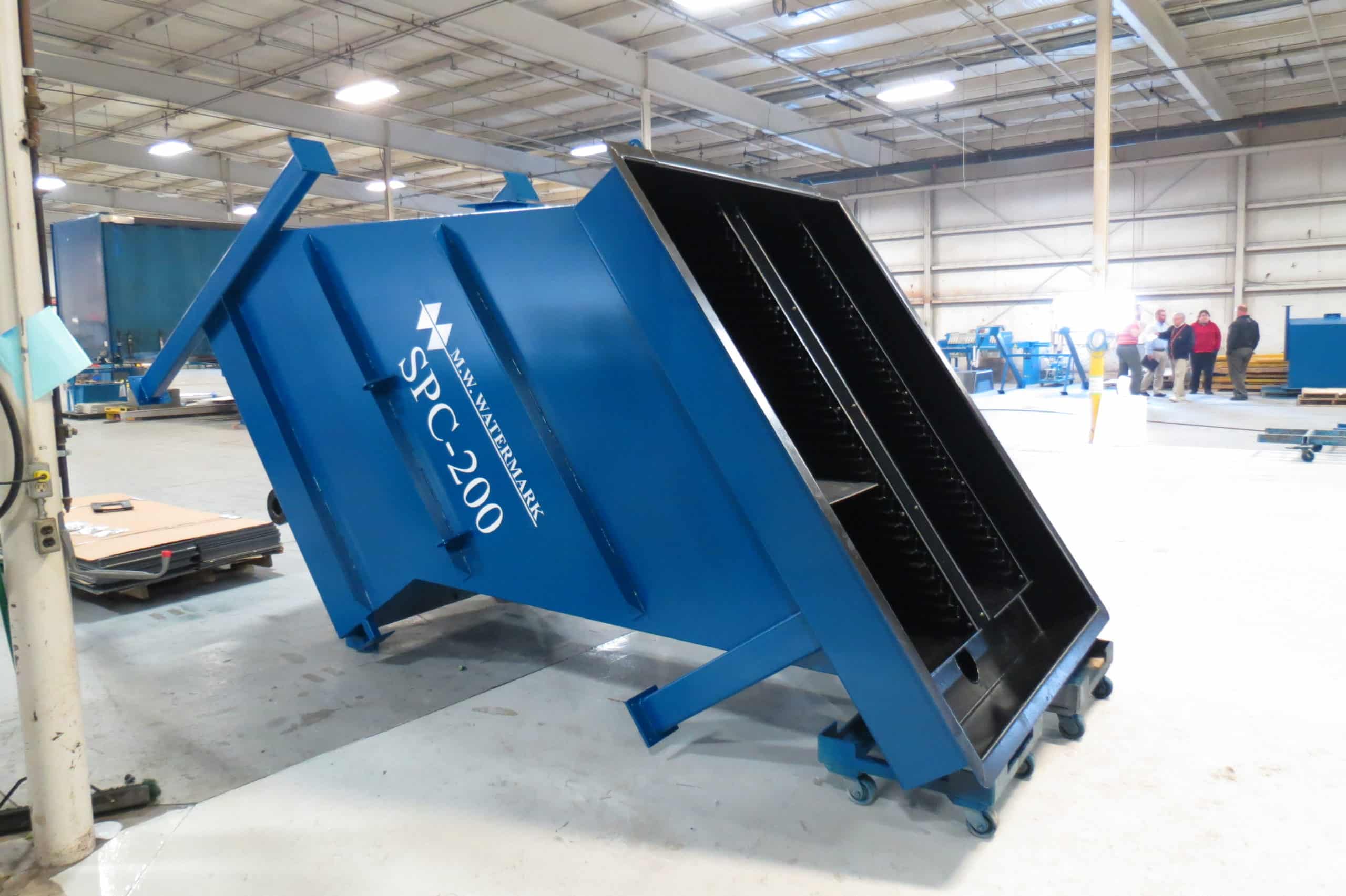
Tnemec Series 61 coating, which is generically referred to as Cycloaliphatic Amine Epoxy, is a tightly cross-linked epoxy with excellent corrosion and chemical resistance. Principally used for immersion service, including fuel and crude oil storage, chemical containment and wastewater treatment. Tnemec coating is not suitable for direct or indirect food contact.
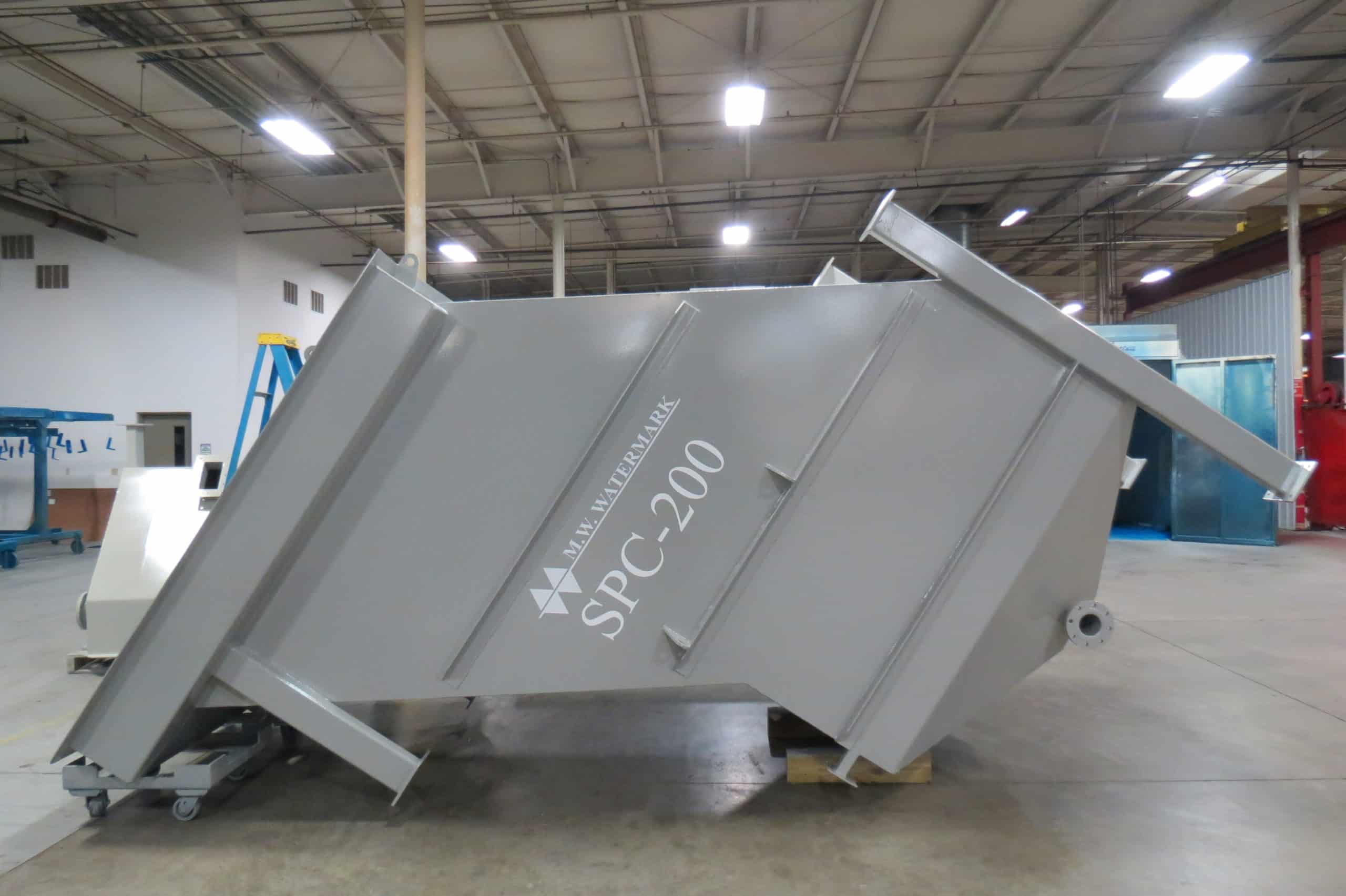
M.W. Watermark SPC-200 Clarifier with Tnemec Series 61 Exterior & Interior Coating
Contact M.W. Watermark for a list of Tnemec Series 61 compatible chemicals along with maximum temperatures for each.
About M.W. Watermark
M.W. Watermark wants to make a difference. We are passionate about the world’s water. We are innovative, focused on customer service and always try to exceed expectations. We are an environmentally conscious company with people who are energized, encouraged and inspired to make a difference in the water business, and as a result, make a positive difference to our planet by helping to keep our shared, finite water supply clean and usable for generations to come. We build amazing, custom water and wastewater treatment equipment. We also specialize in rebuilding used water treatment equipment. Together, we can make a difference.
M.W. Watermark is a trademark owned by M.W. Watermark, L.L.C. All rights reserved.
Product names, logos, brands, and other trademarks featured or referred to within this document are property of their respective trademark holders. These trademark holders are not affiliated with M.W. Watermark in any way.
M.W. Watermark strives for continuous improvement in quality and efficiency in our operations. We work hard to provide the best value for our customers.
Part of this effort involves coming up with innovative ideas to streamline our manufacturing processes to get equipment and parts to our customers as quickly and as cost-effectively as possible, while at the same time keeping to a high standard of quality. Another part of this effort involves offering services to help you reduce costs and make your equipment run more efficiently.
Filter cloths serve as the front line in the dewatering process. A filter press runs at its peak efficiency when cloths are installed correctly and are in good condition.
Filter Cloths Installation
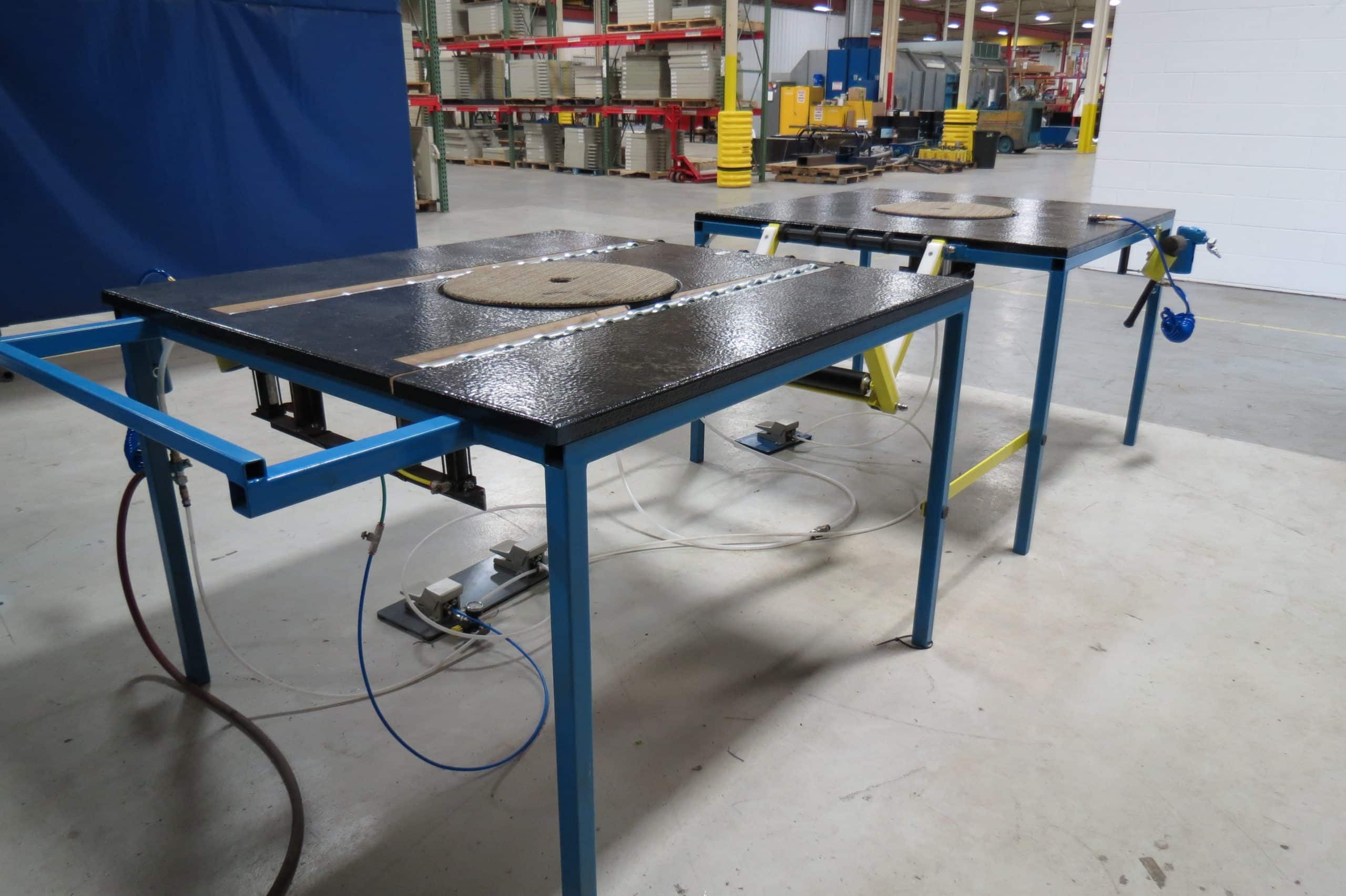
M.W. Watermark has developed an innovative system that enables us to install filter cloths and gasketing into filter plates with quick turnaround times.
We see this innovation as an extension of our Filter Cloth Manufacturing Process, where our Cloth Department utilizes two laser cutting tables to cut and sew filter cloths to customer specifications – guaranteeing a perfect fit with short production timelines.
Visit our Filter Cloth Webpage and watch our Filter Cloth Manufacturing and Installation Overview videos.
M.W. Watermark wants to make a difference. We are passionate about the world’s water. We are innovative, focused on customer service and always try to exceed expectations. We are an environmentally conscious company with people who are energized, encouraged and inspired to make a difference in the water business, and as a result, make a positive difference to our planet by helping to keep our shared, finite water supply clean and usable for generations to come. We build amazing, custom water and wastewater treatment equipment. We also specialize in rebuilding used water treatment equipment. Together, we can make a difference.
M.W. Watermark is a trademark owned by M.W. Watermark, L.L.C. All rights reserved.
Product names, logos, brands, and other trademarks featured or referred to within this document are property of their respective trademark holders. These trademark holders are not affiliated with M.W. Watermark in any way.
M.W. Watermark offers several options for filter press controls. Using the right controls for your particular filter press application is an important consideration to ensure your press is running at its peak efficiency – minimizing downtime and increasing the life of your equipment.
AFPCS: Filter Press Controls for Use with AOD Feed Pumps
The M.W. Watermark Automatic Feed Pump Control System (AFPCS) is used in conjunction with air-operated diaphragm (AOD) feed pumps to automatically increase the feed pump pressure during the filtration cycle. High initial feed pump pressures can build a very tightly packed, impermeable layer of solids on the filter cloth, restricting the flow of slurry, increasing filtration cycle times, and ultimately the density of the cake. Reduced initial feed pressure allows a soft layer of slurry particles to be deposited on the filter cloth. Because this layer becomes the filtering media, the filterability of the incoming slurry is enhanced.
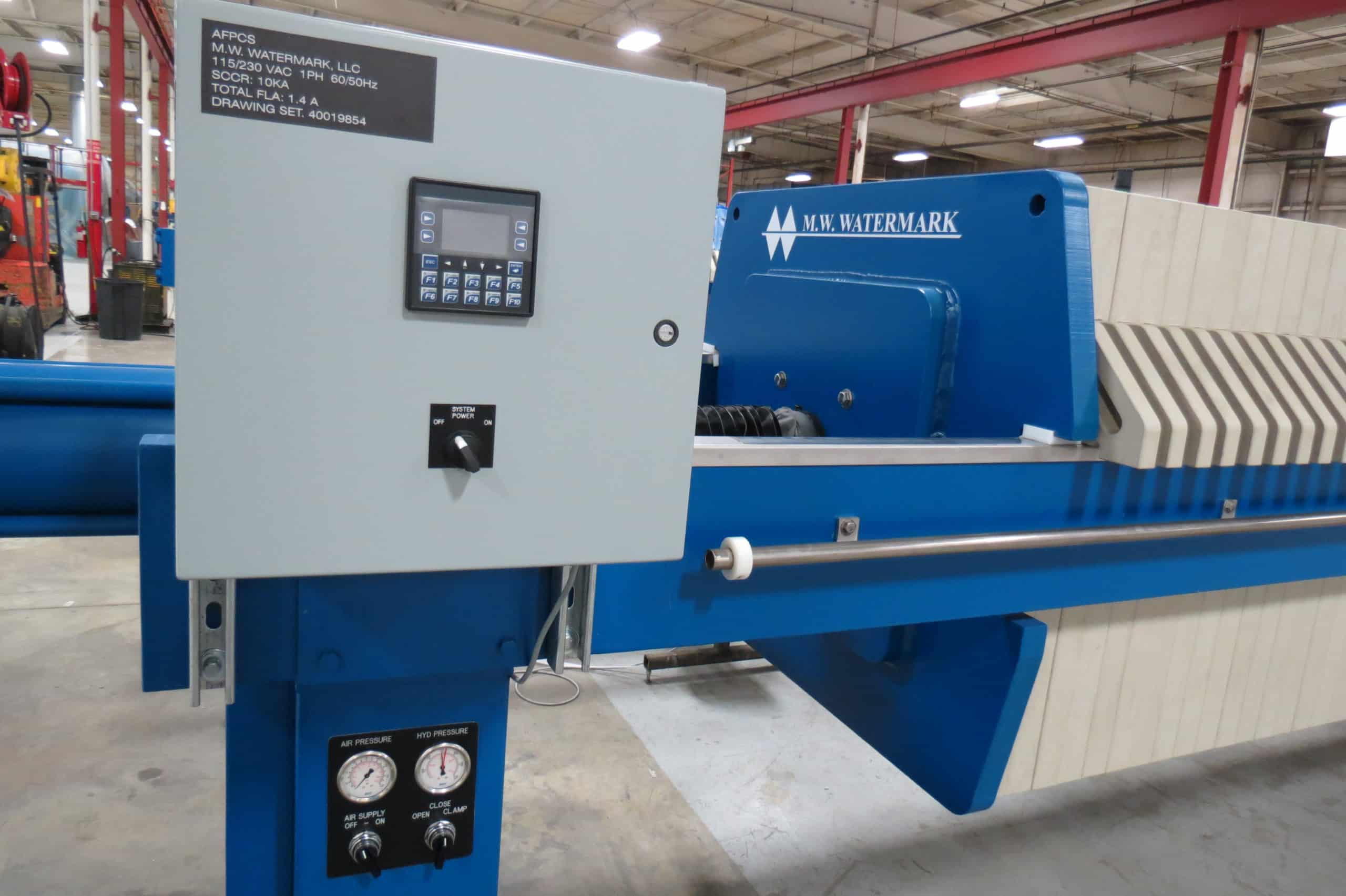
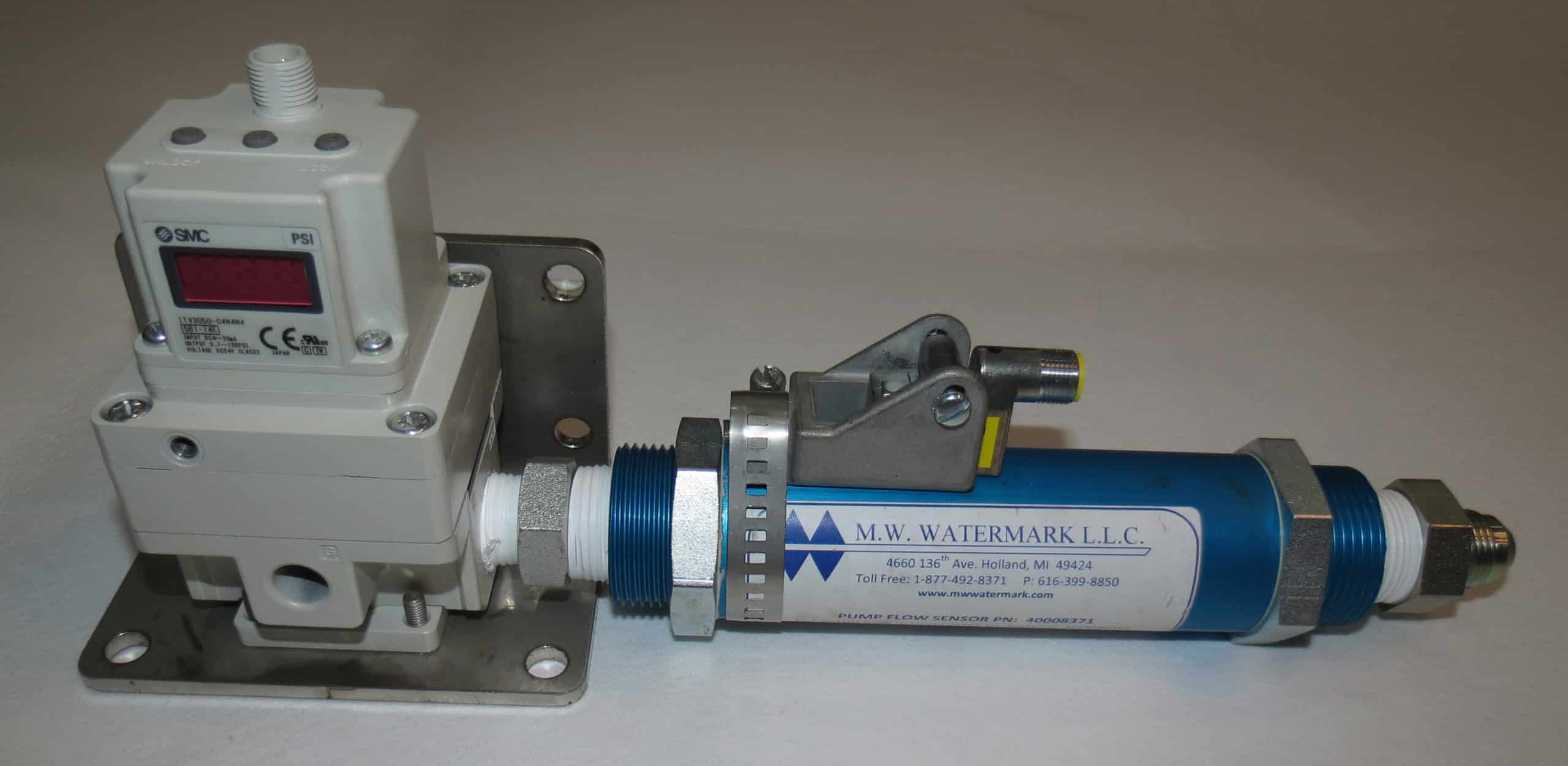
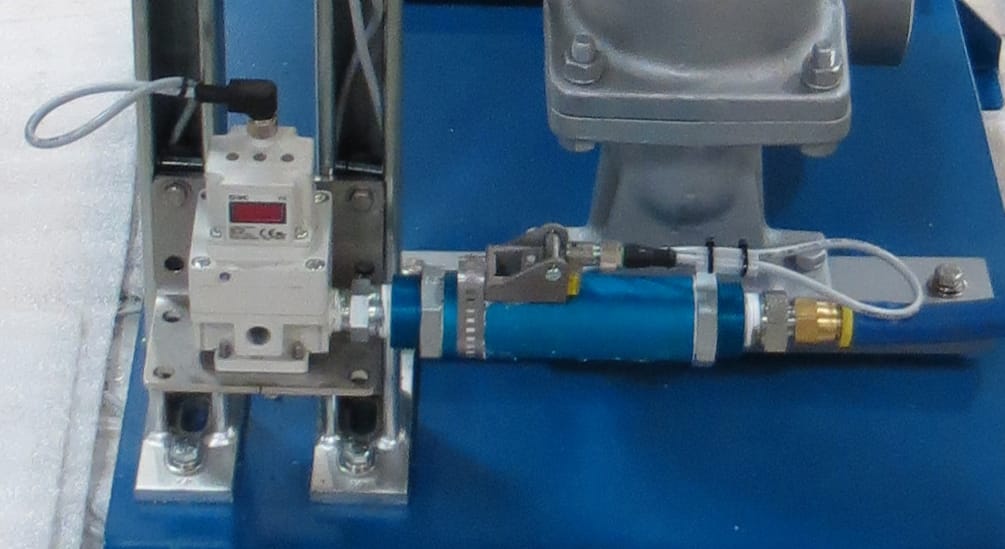
M.W. Watermark 1,000mm Filter Press with Automatic Feed Pump Control System (AFPCS)AFPCS Pump Pressure Regulator and Pump Air Sensor (click image to zoom)AFPCS Pump Pressure Regulator and Pump Air Sensor Mounted to a Feed Pump Skid
The AFPCS automatically increases the feed pressure in four stages throughout the fill cycle. These stages and pressures are fully adjustable to suit the type of slurry and the solids concentration. Cycle completion is determined either by adjustable times (feed by time) or by monitoring the feed pump flow sensor (feed by flow), located at the feed pump, during the final pressure stage.
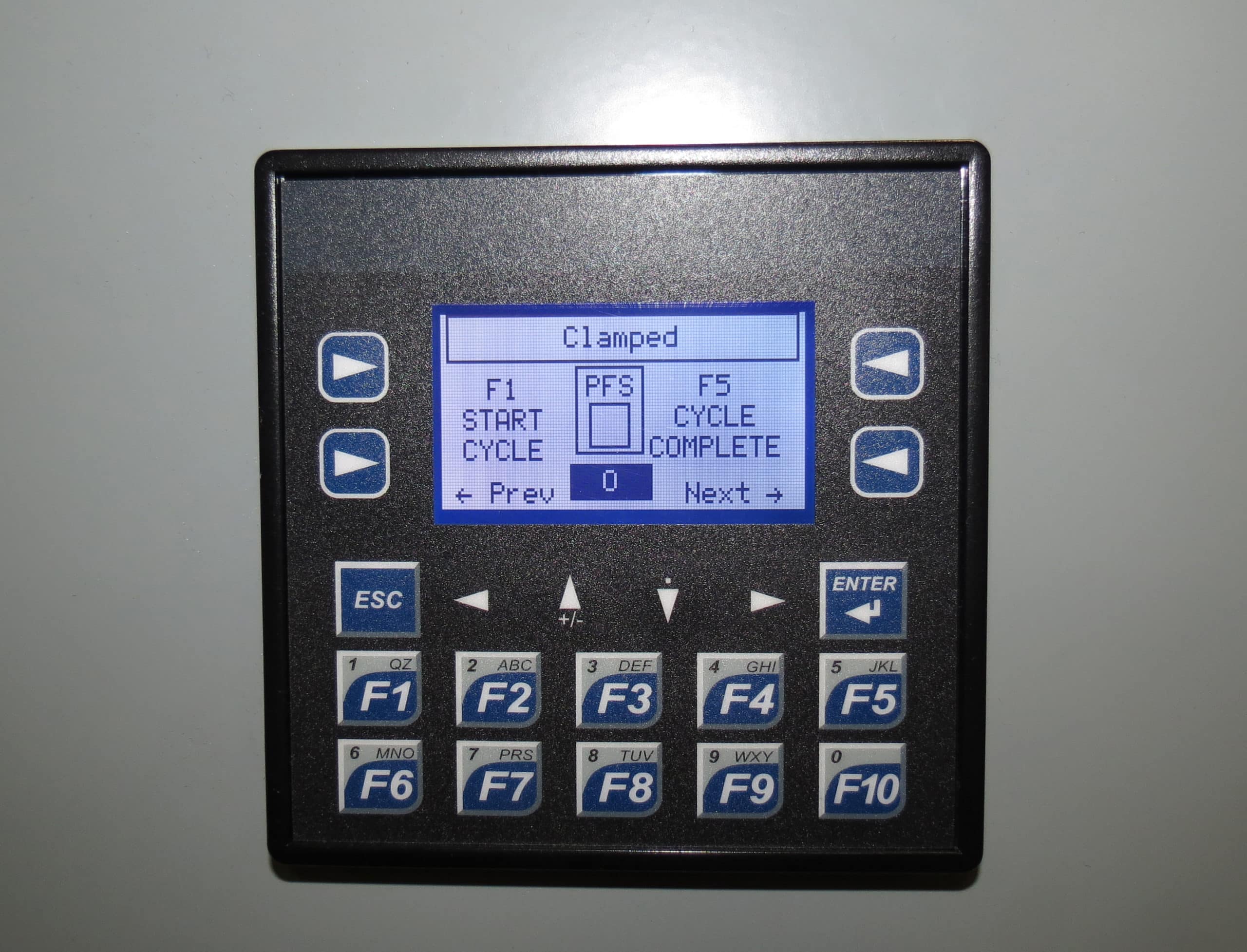
The M.W. Watermark AFPCS also incorporates a low hydraulic pressure safety shut down device. If insufficient hydraulic clamping pressure is present, the AFPCS system will not start, or shuts down, eliminating possible leaking from between the filter plates and the potential to start the feed pump when the press is not fully closed and clamped. The AFPCS features power ON, START cycle and STOP cycle functions. The controller also indicates when the cycle is complete.
Digitally Programmable AFPCS ControllerAFPCS Pump Pressure Regulator and Pump Air Sensor Kit
AFPCS Features
• Optional on New Filter Presses
• Retro-Fit to any Filter Press
• Feed by Flow or Time
• Digitally Programmable Controller
• Start, Stop and Cycle Complete
• Pre-wired and Tested
• Pump Air Pressure Regulator
• Pump Flow Sensor
• Cycle counter
• 16” x 16” x 8” NEMA 4 Enclosure
• 120VAC / 1Φ / 60 Hz / 1 Amp
Key Takeaways
Automatic Feed-Pump Controls allow your filter press to run at its optimum efficiency – creating dryer filter cakes, reducing disposal costs, reducing filtration time, and increasing the life of your filter cloths and feed pumps. Typical payback is less than one year.
Contact M.W. Watermark today to learn more about filter press controls and if an AFPCS is right for your dewatering project.
About M.W. Watermark
M.W. Watermark wants to make a difference. We are passionate about the world’s water. We are innovative, focused on customer service and always try to exceed expectations. We are an environmentally conscious company with people who are energized, encouraged and inspired to make a difference in the water business, and as a result, make a positive difference to our planet by helping to keep our shared, finite water supply clean and usable for generations to come. We build amazing, custom water and wastewater treatment equipment. We also specialize in rebuilding used water treatment equipment. Together, we can make a difference.
M.W. Watermark is a trademark owned by M.W. Watermark, L.L.C. All rights reserved.
Product names, logos, brands, and other trademarks featured or referred to within this document are property of their respective trademark holders. These trademark holders are not affiliated with M.W. Watermark in any way.
Since filter presses are useful across a wide range of industries and applications—chemical processing, lime softening, produced water treatment, concrete wastewater treatment, metal finishing, laundry and car wash wastewater recycling, and many more—it is important to know a little more about the basics. Product knowledge means that the right filter press will be utilized for the right application.
What Is a Filter Press?
To put it simply, filter presses use pressure filtration to separate solids from liquids in industrial and municipal applications. Each filter press is designed based on the amount and nature of the slurry that needs to be dewatered. These factors then affect the size of the press and filter plates, the number of plates needed, the types of plates and filter cloths being utilized, and the materials of construction – that is, the type of manifold, coating, etc.
The cycle time needed to dewater the slurry, or the semi-liquid mixture with fine particles, can be anywhere from a few minutes to more than six hours, depending on the process and application. Generally, a slurry is pumped into the filter press and dewatered under pressure. Similar to a kitchen strainer, filter cloths serve to trap the particles from the slurry as the mixture moves through the press. The result is two separate components: filtered liquid, typically water (filtrate) and a filter cake.
The water can be recycled, helping to preserve a limited resource, and the cake discharge needs to be disposed of properly, depending on the components and consistency of the waste that is in the cake. In some cases, the cake is actually the product.
The Four Main Components of a Filter Press
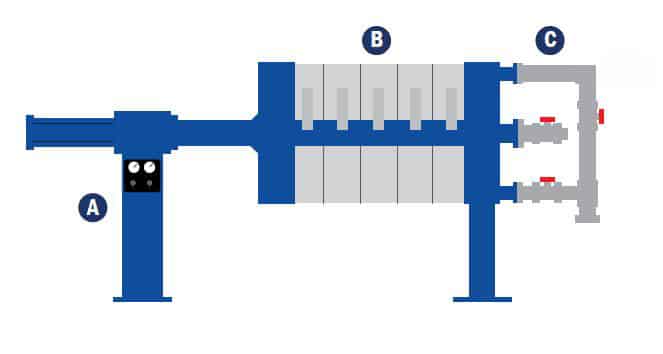
Frame: The steel frame acts as a clamping device for the filter plates. (A)
Filter Plates: A filter cake forms in the chambers between the filter plates. (B)
Manifold: Our standard manifold consists of piping and valves which control the slurry inlet and connect the four corner filtrate discharge ports into a common discharge pipe. (C)
Filter Cloth: A cloth filter that is attached to both sides of a filter plate. Solids build up on the cloth to form a filter cake, separating liquids from solids.
How Does a Filter Press Work?
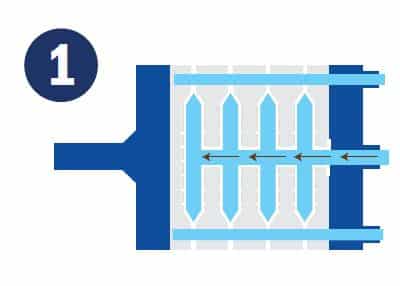
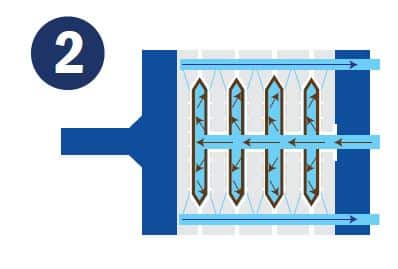
Slurry is pumped into the filter press. The solids are distributed evenly during the feed (fill) cycle. Solids begin to build on the filter cloth, trapping the ensuing particles and building a filter cake. The filter cake acts as a depth filter for solid/liquid separation. Filtrate exits the plates through the corner ports into the manifold.The filtrate exits the press through the filtrate outlet. As the filter press feed pump builds pressure, the solids build within the chambers until they are completely full of solids, forming a filter cake.Once the chambers are full, the fill cycle is complete and the filter press is ready to be emptied. This is accomplished by separating the filter plates from each other.
Discovering the Right Filter Press
Many different factors contribute to the overall success of a filter press. An ideal way to determine which filter press model is optimal for a specific application is to send a slurry sample to M.W. Watermark’s in-house laboratory. In the laboratory, technicians will analyze the sample to determine the most effective feed pressure, filter cloths, type of filter press, and whether any additional chemicals would assist the process.
M.W. Watermark partners with clients to navigate them through each stage of this process. Custom water and wastewater treatment filter presses are versatile and can meet the needs of any customer. Contact an M.W. Watermark Sales and Service team member to discuss your specific application and learn if a filter press is the right solution for you.
About M.W. Watermark
M.W. Watermark wants to make a difference. We are passionate about the world’s water. We are innovative, focused on customer service and always try to exceed expectations. We are an environmentally conscious company with people who are energized, encouraged and inspired to make a difference in the water business, and as a result, make a positive difference to our planet by helping to keep our shared, finite water supply clean and usable for generations to come. We build amazing, custom water and wastewater treatment equipment. We also specialize in rebuilding used water treatment equipment. Together, we can make a difference.
M.W. Watermark is a trademark owned by M.W. Watermark, L.L.C. All rights reserved.
Product names, logos, brands, and other trademarks featured or referred to within this document are property of their respective trademark holders. These trademark holders are not affiliated with M.W. Watermark in any way.
When you want to invest in highly effective wastewater treatment equipment but cost is a key concern, rebuilt filter presses from M.W. Watermark may be the optimal solution. We’re committed to selling only top-quality equipment to our customers. We handle all rebuilding in-house. All of our machines go through a rigorous step-by-step overhaul and testing process before they are listed for sale on our website.
Businesses today must operate at high efficiency while keeping costs low. We offer the flexibility of either renting or purchasing our refurbished equipment to allow you to achieve dependable results while maintaining a reasonable budget.
We perform the following work when rebuilding used filter presses:
Complete any needed structural repairs
Overhaul hydraulic and mechanical systems
Power wash filter plates
Replace all filter cloths and gaskets with new parts
Sand-blast and repaint for a clean, professional appearance
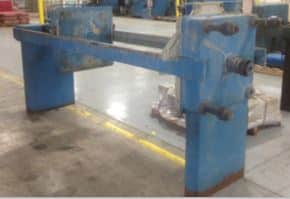
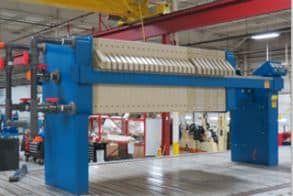
Before…After
Visit our website to see a listing of currently available rebuilt equipment.
If you are not finding what you are looking for on our website, please let us know. We have used equipment arriving at our shop on a regular basis that may not yet be listed.
Contact us today to discuss your particular application, and find out if a refurbished filter press is the best option for you.
About M.W. Watermark
M.W. Watermark wants to make a difference. We are passionate about the world’s water. We are innovative, focused on customer service and always try to exceed expectations. We are an environmentally conscious company with people who are energized, encouraged and inspired to make a difference in the water business, and as a result, make a positive difference to our planet by helping to keep our shared, finite water supply clean and usable for generations to come. We build amazing, custom water and wastewater treatment equipment. We also specialize in rebuilding used water treatment equipment. Together, we can make a difference.
M.W. Watermark is a trademark owned by M.W. Watermark, L.L.C. All rights reserved.
Product names, logos, brands, and other trademarks featured or referred to within this document are property of their respective trademark holders. These trademark holders are not affiliated with M.W. Watermark in any way.
What makes the Oil Coalescing Separator such an efficient tool is its ability to remove oils from water without any moving parts. The unique M.W. Watermark coalescing media placed in the path of the wastewater stream is the reason why it works so well. As the oil and water flow through the coalescing media, oil droplets impinge on the media surface and coalesce.
The coalesced oil breaks free from the coalescing media and rises to the surface of the water in the separation chamber. The separated oil then decants into an isolated oil chamber where it can be removed manually or automatically via a transfer pump. Virtually oil free water travels under an oil reservoir baffle, over an adjustable weir and into a clean water effluent chamber. The water is gravity discharged from the effluent chamber.
M.W. Watermark OCS-50
The M.W. Watermark Oil Coalescing Separator is designed to remove non-emulsified oils, diesel, gasoline, and other fuels from a waste stream, resulting in an effluent quality of 10mg/l or less of contaminants 20 microns and larger.
M.W. Watermark offers a full line of Oil Coalescing Separators. Our OCS models range from 10 gpm to 5,000 gpm. All of our high-quality OCS models are assembled in the U.S.A. Pilot units are available for rental or purchase.
M.W. Watermark wants to make a difference. We are passionate about the world’s water. We are innovative, focused on customer service and always try to exceed expectations. We are an environmentally conscious company with people who are energized, encouraged and inspired to make a difference in the water business, and as a result, make a positive difference to our planet by helping to keep our shared, finite water supply clean and usable for generations to come. We build amazing, custom water and wastewater treatment equipment. We also specialize in rebuilding used water treatment equipment. Together, we can make a difference.
M.W. Watermark is a trademark owned by M.W. Watermark, L.L.C. All rights reserved.
Product names, logos, brands, and other trademarks featured or referred to within this document are property of their respective trademark holders. These trademark holders are not affiliated with M.W. Watermark in any way.
Our nation’s rivers and lakes are invaluable public resources, essential to every aspect of our lives and livelihood. It is so fundamental that the United Nations passed a resolution recognizing it as a basic human right, a prerequisite for the recognition of all other rights. As the global population increases, so too does the demand for this indispensable building block of life. Freshwater supplies across the country, as around the world, are being stressed to a breaking point as industrial, agricultural, and municipal users all compete in the face of increasing scarcity. Thankfully, engineers and scientists are rising to the challenge with wastewater treatment equipment that is increasingly sophisticated, efficient, and effective.
A Brief History of Wastewater Treatment
Managing sewage effectively is an unsung hallmark of advanced civilization. The oldest flush toilets known to archaeologists are those at the palaces of early Minoan kings on the island of Crete around 3000 BC. The Indus Valley Culture’s cities of Harappa and Mohenjo-Daro had vast networks of brick canals and even flush tanks fed by aqueducts. But the waste from these ancient cities was only conveyed to the nearest large body of water. Wastewater treatment equipment wasn’t put in place until the 1890’s in the United States, after concern for the pollution in our nation’s waterways. The earliest techniques involved chemical treatment. In the 1970s, the Clean Water Act sought to expand some of the best practices already in place for treating human waste and industrial polluters.
Untreated sewage, stormwater runoff, and industrial wastewater pose as serious health risks. Chemicals that enter the river can harm in-stream species and also seep into the connected groundwater. When the chemical-laden water evaporates and becomes part of the hydrologic cycle, it falls back to earth, possibly as acid rain, and can damage crops as well as human health. In response to the necessity and action-forcing legislation like the Clean Water Act, wastewater treatment equipment is now required for any facility to discharge into the waters of the United States. In addition, the law requires dischargers to implement the “best available technology,” ensuring that the protection afforded by the equipment is always improving.
M.W. Watermark is proud to serve as a comprehensive resource for all of your wastewater treatment equipment, parts and service needs. We manufacture filter presses, slant plate clarifiers, sludge dryers, DAFs, Oil Coalescing Separators, polymer blenders and other related equipment – in a variety of sizes and options.
Contact our team of experts today to discuss your solids/liquid separation needs and find out which wastewater treatment solution is right for you.
About M.W. Watermark
M.W. Watermark wants to make a difference. We are passionate about the world’s water. We are innovative, focused on customer service and always try to exceed expectations. We are an environmentally conscious company with people who are energized, encouraged and inspired to make a difference in the water business, and as a result, make a positive difference to our planet by helping to keep our shared, finite water supply clean and usable for generations to come. We build amazing, custom water and wastewater treatment equipment. We also specialize in rebuilding used water treatment equipment. Together, we can make a difference.
M.W. Watermark is a trademark owned by M.W. Watermark, L.L.C. All rights reserved.
Any third party trademarks referenced on this site are the trademarks of their respective owners, and M.W. Watermark makes no claim to such marks and is not affiliated with such companies.
Water is arguably Earth’s most precious natural resource. Conserving and protecting the health of this vital fluid is everyone’s responsibility and an issue of critical importance for water-intensive industries. Just as businesses depend on their supply of water, water depends on its users to keep it flowing cleanly.
By using industrial filtration equipment to reduce, reuse, and recycle water, many industries can take better care of the planet, reduce costs and waste, improve operations, and boost their bottom line. Industrial filtration can allow businesses to safely reuse greywater, which is essentially any household wastewater that does not come from the toilet.
Applications for Industrial Filtration Equipment
Car washes and industrial laundry facilities, for example, use water in nearly every phase of work. Filter presses remove the dirt and particulate matter from the greywater that these businesses produce daily, allowing them to recycle about half of the water used, and the soap as well! The filtered water can then clean yet more clothes and cars for more clients, simultaneously reducing both the strain on freshwater supply and the cost of doing business.
Click to Watch Car Wash Video on our Website
Another excellent application of industrial filtration equipment for water treatment is lime softening. This process uses lime (Ca(OH)2) and filter presses to deionize process water and settle out calcium, magnesium, and other contaminants, including heavy metals. The resulting purified water can then be returned to the environment, reused for irrigation, or channeled back into the industry’s water supply for reuse. The recycling loop completes when filter cake, a byproduct rich in calcium, is repurposed as agricultural fertilizer. This reuse spreads the benefits of using industrial filtration equipment across even more industries and populations.
Mining and metal finishing are also very water-intensive sectors that can benefit from industrial filtration equipment. Increasingly strict EPA regulations aim to eliminate environmental contamination from heavy metals and other toxins that these activities produce in greywater. Using custom-fit filter presses and clarifiers, these industries remove pollutants, meet federal and state regulations, and become more eco-friendly in the process.
Businesses that invest in industrial filtration equipment to protect our water supply help save water, money, energy, and more. Environmentally-conscious industrial production cycles also ensure their own futures, since work and life both need clean, fresh water to survive and to thrive.
M.W. Watermark is a leading manufacturer of industrial filtration equipment, including filter presses, slant plate clarifiers, sludge dryers, DAFs, oil coalescing separators, polymer blenders and more.
Contact us today to discuss your application. Our team of experts can help assess the best solution for your dewatering project.
About M.W. Watermark
M.W. Watermark wants to make a difference. We are passionate about the world’s water. We are innovative, focused on customer service and always try to exceed expectations. We are an environmentally conscious company with people who are energized, encouraged and inspired to make a difference in the water business, and as a result, make a positive difference to our planet by helping to keep our shared, finite water supply clean and usable for generations to come. We build amazing, custom water and wastewater treatment equipment. We also specialize in rebuilding used water treatment equipment. Together, we can make a difference.
M.W. Watermark is a trademark owned by M.W. Watermark, L.L.C. All rights reserved.
Product names, logos, brands, and other trademarks featured or referred to within this document are property of their respective trademark holders. These trademark holders are not affiliated with M.W. Watermark in any way.
Membrane microfiltration is a technology that is used in wastewater treatment, solvent recovery, gas separation, metal and catalyst recovery and other industrial processes. As the name suggests, this type of filtration employs a porous membrane that removes microscopic contaminants. Related membrane filtration technologies like nanofiltration and ultrafiltration use the same principles to target particles of different sizes.
Pressurized Filtration
Systems that rely on gravity to push fluids through membrane microfiltration tend to be too slow for industrial applications. Instead, a low pressure is used to push water through the membrane. While dead-end filters catch contaminants with a filter wall intersecting the direction of flow, an alternative called crossflow filtration is more common with large scale industries. Tubular crossflow systems divide the main flow into smaller cylindrical filters, collecting contaminants as the fluid changes directions through the filters. Because of the increased surface area available for simultaneous filtration, crossflow is considered more efficient for higher volumes of water.
Membrane Microfiltration Prevents Chemical Pollution and Contamination
Wastewater treatment that is not done correctly can lead to the costly and potentially hazardous release of contaminants, possibly out into the environment or onto lawns. Over time, chemicals accidentally released back into the environment have the potential to contaminate water reservoirs and other natural resources. Because it uses a physical rather than chemical means of separation, membrane filtration helps to get rid of not only chemicals but also microorganisms such as bacteria and viruses. Close monitoring and maintenance of a water filtration system is important to ensure that the resulting material is appropriately treated.
Membrane microfiltration is effective for the removal of the intestinal parasite Cryptosporidium, which has an outer shell that helps it survive common methods of chemical disinfection like chlorine. However, the cyst that protects Cryptosporidium is about 25 times larger than the pores of a typical microfilter. Giardia, another well-known intestinal parasite resistant to chlorine, is also efficiently removed with membrane microfiltration. In addition to microscopic pathogens, membrane microfiltration is appropriate for the removal of suspended solids, particulate matter and turbidity.
In its various applications, membrane microfiltration plays an important role in ensuring the quality of treated water. Proper filtration promotes environmental wellness by preventing soil and water pollution.
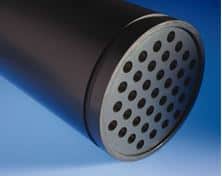
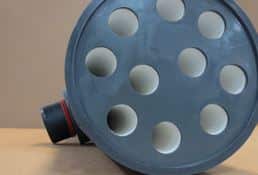
M.W. Watermark is proud to be an official distributor of the Porex® Tubular Membrane Module™. The M.W. Watermark/Porex® Tubular Membrane Module™ is designed to fit new and existing tubular membrane filtration systems.
Contact a member of our Sales and Service team for a quote.
About M.W. Watermark
M.W. Watermark wants to make a difference. We are passionate about the world’s water. We are innovative, focused on customer service and always try to exceed expectations. We are an environmentally conscious company with people who are energized, encouraged and inspired to make a difference in the water business, and as a result, make a positive difference to our planet by helping to keep our shared, finite water supply clean and usable for generations to come. We build amazing, custom water and wastewater treatment equipment. We also specialize in rebuilding used water treatment equipment. Together, we can make a difference.
M.W. Watermark is a trademark owned by M.W. Watermark, L.L.C. All rights reserved.
Product names, logos, brands, and other trademarks featured or referred to within this document are property of their respective trademark holders. These trademark holders are not affiliated with M.W. Watermark in any way.
Water recycling is a viable option in areas with a limited clean water supply. Sadly, in most areas, potable reuse is seen as “toilet-to-tap,” stigmatizing the concept. Despite the stigma, there are several benefits to using recycled water.
Environmental Benefits
Potable reuse provides environmental benefits for the area. Ecosystems that are already stressed by the water usage can suffer from deterioration of water quality. Recycling the water in the area helps to increase flow in the ecosystem. It helps plants, fish, and wildlife live, grow, and reproduce.
Areas that participate in water recycling also decrease discharge in sensitive areas like streams, oceans, and estuaries. Wastewater flowing into a natural system requires that area to be treated to avoid contaminating the entire body of water. For oceans, that could require turning a salt marsh into a brackish marsh. Doing this destroys habitats. By turning to potable reuse, this sensitive habitat can remain intact and reduce strain on the area’s water supply.
Also, recycling can help reduce the amount of pollution that enters the local water table. When the water goes through the recycling center, contaminants are filtered out to make it safe for human consumption. These contaminants are safely disposed of without discharging them into the local bodies of water.
Water Recycling for a Drought-Proof Water Supply
Many areas are faced with not being able to provide enough water for their residents. The local water table is stressed because of the conditions. Water recycling takes the water that is already available and recycles it so that it can be reused again. This allows areas that are plagued by droughts to provide this much-needed resource to the people who need it most.
Safe, Sustainable Supplies
Homes and industries in areas that use potable reuse are less reliant on tapping into local bodies of water. They have a sustainable supply of water that can constantly be cleaned and reused. Not only is water recycling good for household use, but it can also provide industries and farms the much-needed resource to produce goods and food needed to sustain the area’s economy.
Potable use is not something that should be frowned upon. Instead, it is an option that should be considered and used in most urban areas.
M.W. Watermark Products Overview Video – Click to Watch on Website
About M.W. Watermark
M.W. Watermark wants to make a difference. We are passionate about the world’s water. We are innovative, focused on customer service and always try to exceed expectations. We are an environmentally conscious company with people who are energized, encouraged and inspired to make a difference in the water business, and as a result, make a positive difference to our planet by helping to keep our shared, finite water supply clean and usable for generations to come. We build amazing, custom water and wastewater treatment equipment. We also specialize in rebuilding used water treatment equipment. Together, we can make a difference.
M.W. Watermark is a trademark owned by M.W. Watermark, L.L.C. All rights reserved.
Product names, logos, brands, and other trademarks featured or referred to within this document are property of their respective trademark holders. These trademark holders are not affiliated with M.W. Watermark in any way.
The M.W. Watermark Continuous Sludge Dryer has been designed with several improvements in efficiency and simplicity over other continuous dryers, with a drop-in footprint for compatibility and ease of installation.
M.W. Watermark Continuous Sludge Dryers – Built in our Shop and Ready to Ship
These improved features have been designed with our customers’ requirements in mind, and include the following:
User-Friendly PLC with full-color touch screen and fault alarms.
Stainless steel cake hopper.
Easy external access to high-temperature bearings.
Over-sized extruder gearbox with AC drive and inverter duty motor.
Durable stainless steel construction of all wetted components.
User-Friendly PLC Touch Screen with Fault AlarmsStainless Steel Cake HopperOver-Sized Extruder Gearbox with AC Drive and Inverter Duty MotorDurable Stainless Steel Construction of All Wetted Components
Our Continuous Sludge Dryer is Available in Two Sizes
The M.W. Watermark Continuous Sludge Dryer is available in two models to best fit your capacity needs: The DM-200G and the DM-380G. At full capacity, the DM-200G can process up to three cubic feet of material in an hour, while the larger DM-380G can process double that, or six cubic feet. These machines are designed to process metal hydroxide plating wastes, and, when used in conjunction with your filter press, are used to dry filter cakes and bring them from 30% solids to up to 75% solids.*
*Typical results. Actual results may vary.
A Pair of Completed M.W. Watermark Continuous Sludge Dryers – DM-200GConfiguring a Wet Scrubber for a DM-380G
M.W. Watermark also offers maintenance, parts and repair services for our own line of sludge dryers and as well as models from other suppliers. We will also continue to offer aftermarket support for other brands of dryers.
Contact a member of our Sales and Service Team for a quote.
About M.W. Watermark
M.W. Watermark wants to make a difference. We are passionate about the world’s water. We are innovative, focused on customer service and always try to exceed expectations. We are an environmentally conscious company with people who are energized, encouraged and inspired to make a difference in the water business, and as a result, make a positive difference to our planet by helping to keep our shared, finite water supply clean and usable for generations to come. We build amazing, custom water and wastewater treatment equipment. We also specialize in rebuilding used water treatment equipment. Together, we can make a difference.
M.W. Watermark is a trademark owned by M.W. Watermark, L.L.C. All rights reserved.
Any third party trademarks referenced on this site are the trademarks of their respective owners, and M.W. Watermark makes no claim to such marks and is not affiliated with such companies.