Using Filter Presses to Recycle Flowback and Produced Water

What is Hydraulic Fracturing?

Hydraulic fracturing (informally referred to as “fracking”) is an oil and gas well development process that involves injecting water, chemicals and additives (known as proppants) under high pressure into a shale rock formation. To keep fissures and fractures open, proppants such as sand or ceramics are commonly used. This process is intended to create new fractures in the rock as well as increase the size, extent and connectivity of existing fissures to reach oil and gas deposits. (Source: USGS.gov).

The hydraulic fracturing process requires the management of a great deal of water for the extraction of oil and gas. First, a substantial amount of water is used for the initial injection process. According to the USGS, water use can range from 1.5 million to about 16 million gallons per hydraulically fractured well depending on the nature of the rock formation and other factors. Next, the issues of flowback and produced water must be considered.

Flowback Versus Produced Water

Flowback water is a combination of the water, chemicals and proppants pumped into the ground that return to the surface over time as a result of pressure. Most of the flowback occurs in the first seven to ten days, while the rest can occur over a three to four week period. The flowback can be anywhere from 20 to 40 percent of the volume initially injected into the well. The remaining fluid is absorbed into the rock formation. (Source: idl.idaho.gov).

At some point in time, the water recovered from the well makes a transition from “flowback” to “produced” water. Produced water is composed of the minerals, petroleum residue, salt and other contaminants already present in the ground.

While flowback water can be considerable, it is the produced water that creates a much larger challenge for producers. On average in the U.S., between five and six barrels of water are produced for every barrel of oil that comes out of the ground. The Permian Basin in West Texas produces an even greater amount of water, at six to eight barrels of water per barrel of crude. This is equivalent to over 1,000 Olympic-size swimming pools full of water coming out of the Permian Basin alone each day! (Source: rbnenergy.com).

When collected from a well, the combined flowback and produced water contain a high amount of contaminants along with the original proppants. Producers must first clean and then either recycle or dispose of the water in a safe, environmentally responsible manner. Because of the sheer volume of water resulting from hydraulic fracturing operations, along with the need for a substantial amount of water on the front end of the process, many companies are now treating this water for reuse.

The Role of Filter Presses

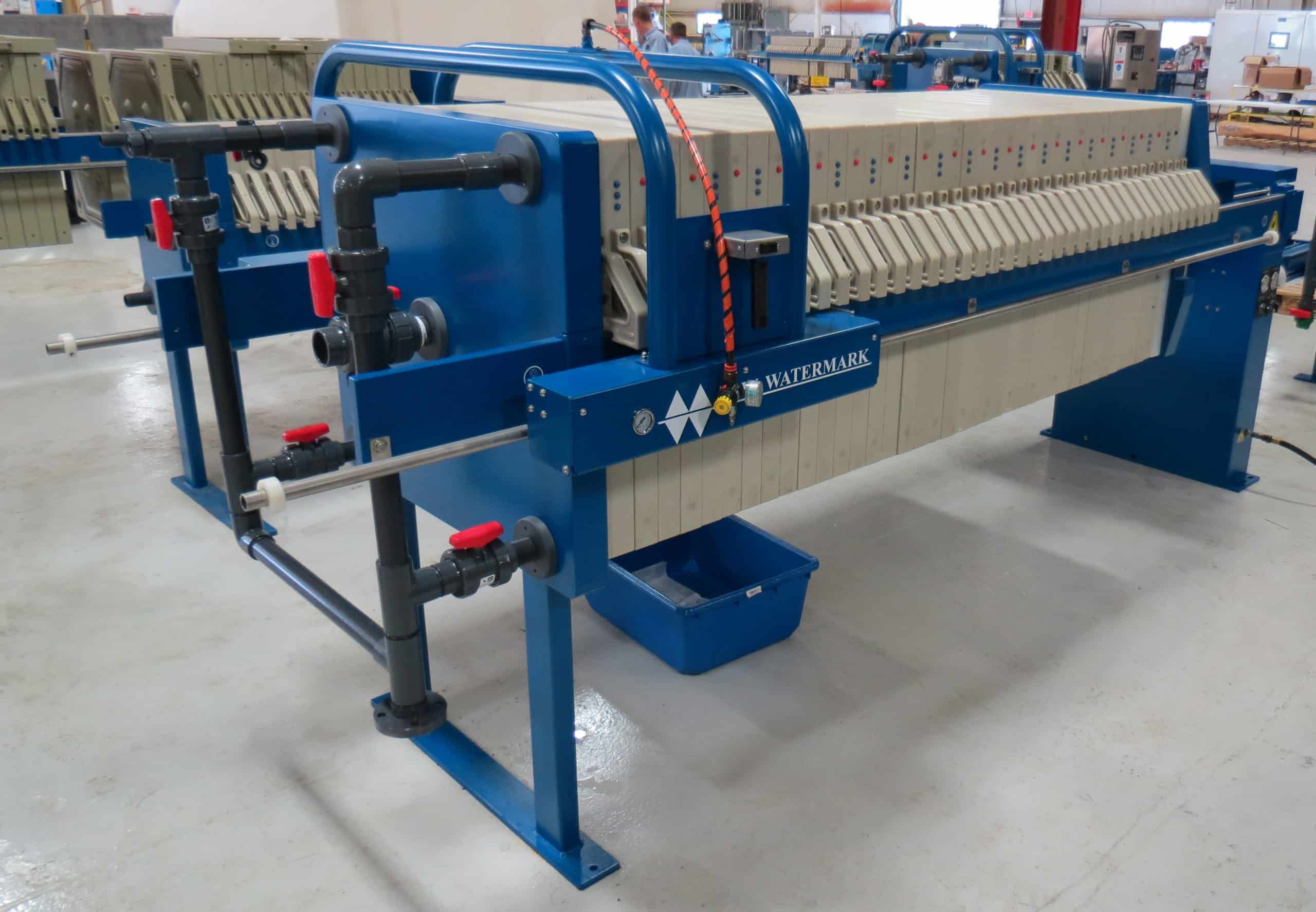
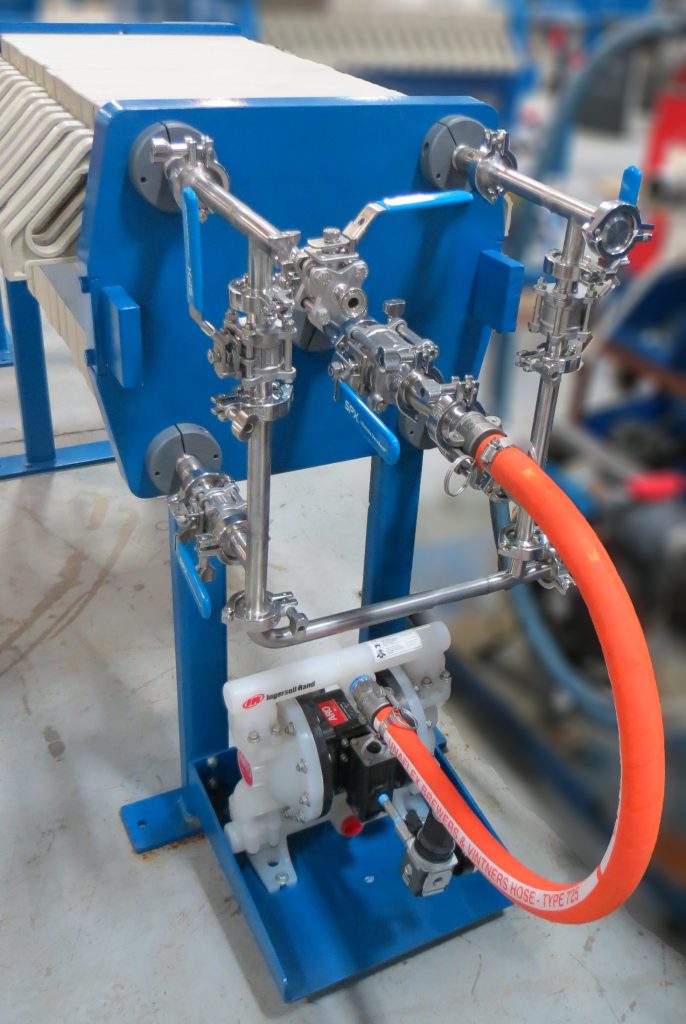
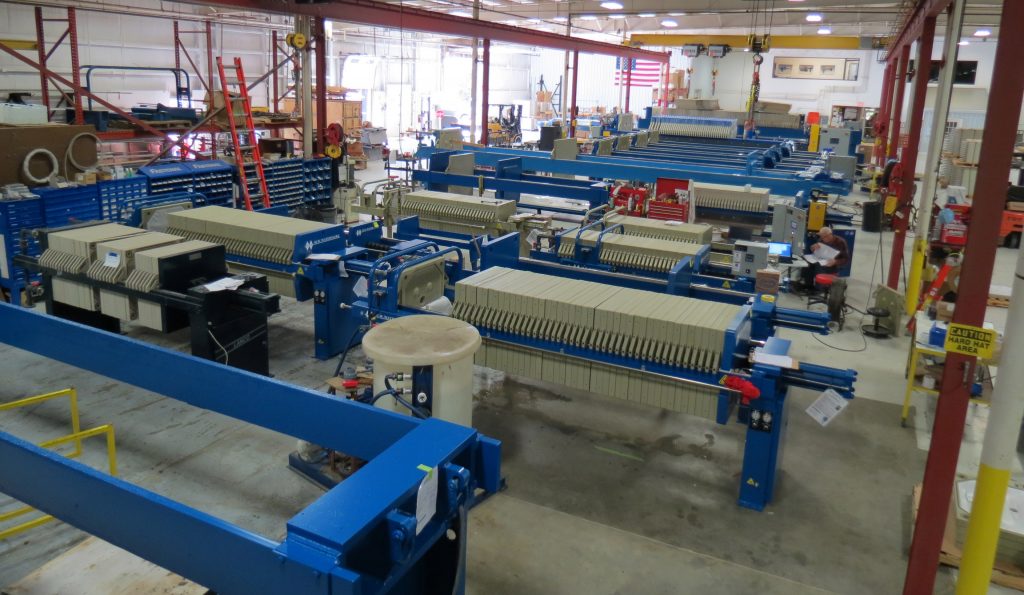
Filter presses are often used as part of the water treatment process, separating the solids that are precipitated out of the water. A filter press can capture the majority of the particulate matter, and then the clean water can be routed back to the beginning of the process.
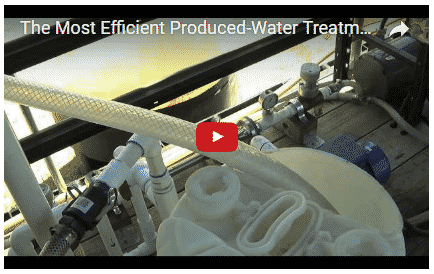
Oilfield Recovery Services Video - Produced Water Treatment System Using an M.W. Watermark Filter Press
Click to see how an M.W. Watermark filter press is used in a produced water treatment process. (Directs to webpage where the video is located).

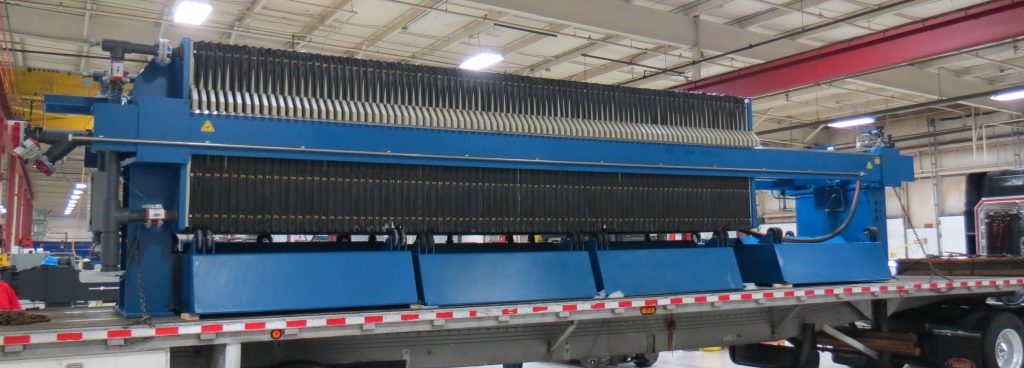
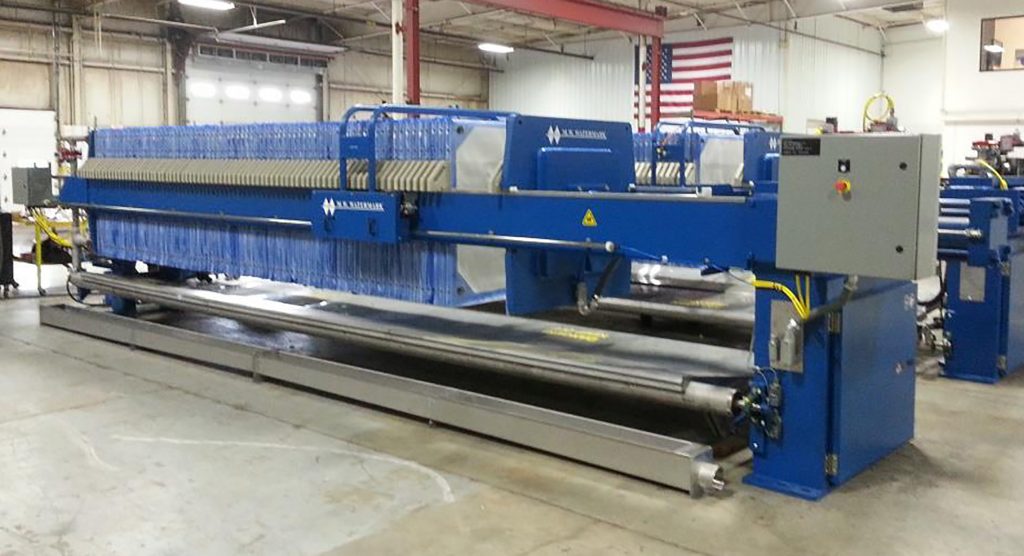
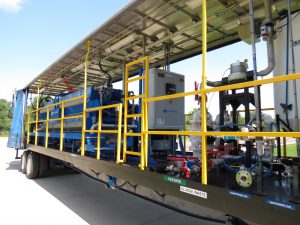
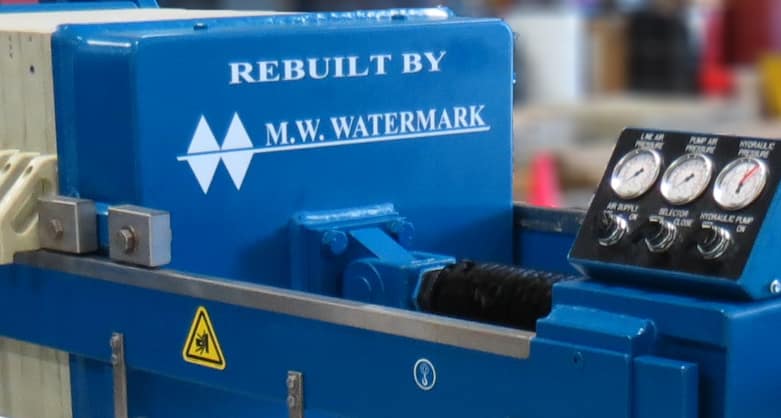
M.W. Watermark™ is a leading filter press manufacturer, with expertise in building the large format filter presses used in the mining and energy industries, including mobile trailer-mounted filter press units.

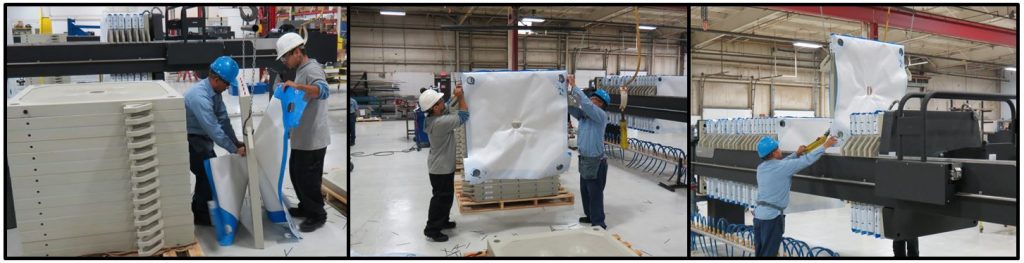
M.W. Watermark also makes custom filter cloths with short lead times for virtually all makes and models of filter presses. Cloths can be sewn to the exact specifications of your filter press, providing for a perfect fit.
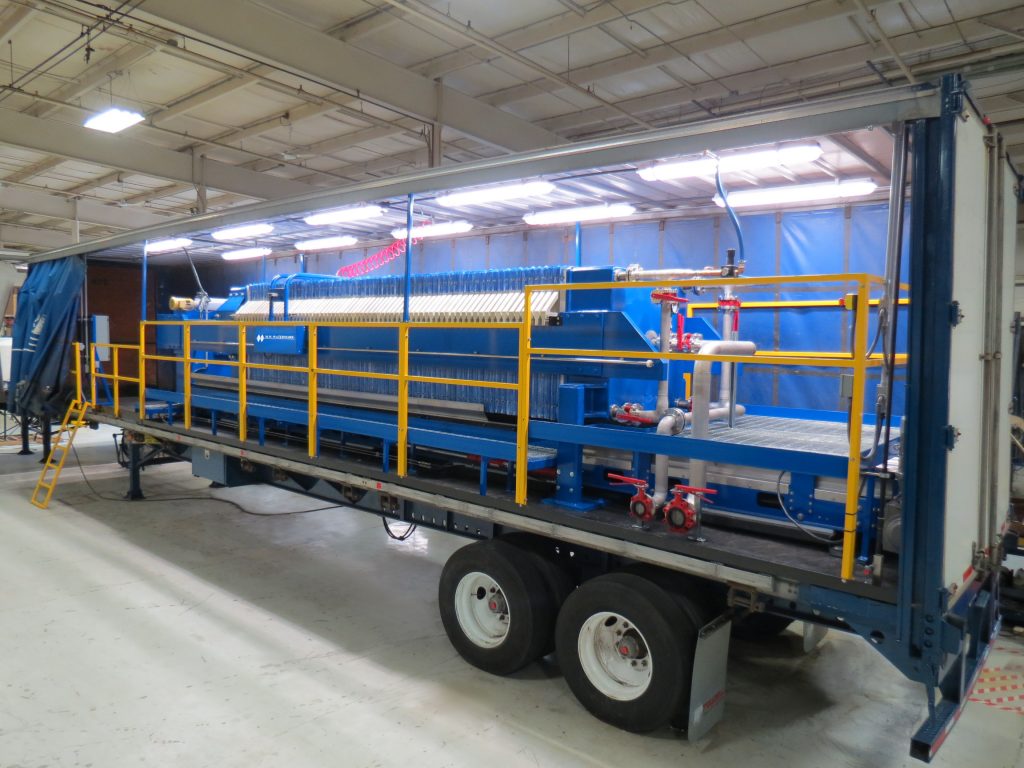
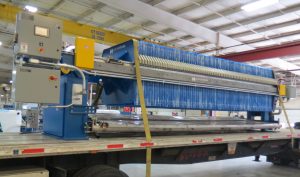
M.W. Watermark 1200mm Mobile Trailer-Mounted Filter Press - Available for Rental or Purchase
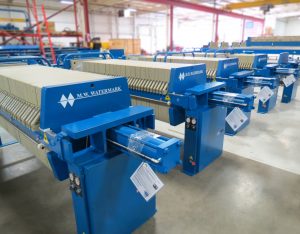
M.W. Watermark 1200mm mobile trailer-mounted filter press.
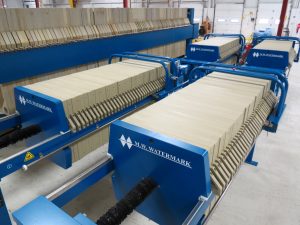
M.W. Watermark manufactures large format filter presses. We also cut and sew specialty filter cloths in-house.
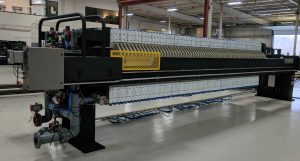
M.W. Watermark 1500mm Filter Press - Brine Solution from Produced Water Recovery Application.
M.W. Watermark 1500mm filter press – built for a brine solution from a produced water recovery application.

Contact an M.W. Watermark Sales and Service Team member to learn more.

About M.W. Watermark

M.W. WATERMARK wants to make a difference. We are passionate about the world’s water. We are innovative, focused on customer service and always try to exceed expectations. We are an environmentally conscious company with people who are energized, encouraged and inspired to make a difference on our planet by helping to keep our shared, finite water supply clean and usable for generations to come. We build amazing, custom water and wastewater treatment equipment. Together, we can make a difference.

© 2021 M.W. Watermark, L.L.C.
M.W. Watermark is a trademark owned by M.W. Watermark, L.L.C. All rights reserved.
Any third party trademarks referenced on this site are the trademarks of their respective owners, and M.W. Watermark makes no claim to such marks and is not affiliated with such companies.

How a Commercial Vehicle Wash Can Reuse Water and Save Money

Each time you wash your car, wastewater is created – it’s unavoidable. However, using a commercial vehicle wash (either automatic or self-serve) rather than washing your car at home can help save water thanks to water recycling processes integrated into modern washing systems.

Automatic Car Wash Water Consumption

While it might seem like automatic car wash systems use excessive amounts of water, updated technology has made it considerably easier for owners to use water reclamation systems. These systems are designed to cleanse used water of debris, making it suitable for reuse. This helps minimize the amount of freshwater lost during each wash cycle – something that is simply not plausible during an at-home car wash.

While the average amount of water used by automatic car washes fluctuates, the water reclamation systems used in many washes help keep numbers quite low. According to the International Car Wash Association’s report, Water Conservation in the Professional Car Wash Industry, on a gallon-per-vehicle (gpv) basis, professional car washes use between 30 gpv for in-bay automatics to 70 gpv for frictionless conveyor car washes. However, the actual amount of water lost can be much less, depending on several factors, like the car wash design and season.

M.W. Watermark filter presses can be used to recycle car wash wastewater
Click to view our Recycle and Save infographic.

Self-Serve Car Wash Water Consumption

According to the Southwest Car Wash Association, a self-service car wash uses roughly 17-18 gallons of water per car – which is in stark contrast to the average 100 gallons or more of water used in standard home car washes as cited by the Western Car Wash Association. This is likely because, as a business, commercial washes are faced with not only the rising cost of fresh water, but also disposal costs along with rigid environmental regulations. To run their operations more efficiently while complying with regulations, wash owners can integrate a wastewater reclamation system.

Environmental Responsibility

Aside from repurposing valuable water, water reclamation systems used in car washes reduce disposal costs while helping to prevent detergents and other chemicals from polluting the environment. One method of water reclamation involves using a filter press, which is available through M.W. Watermark™. Designed to remove solids from wash water while allowing soaps to be reused, our filter presses offer an easy opportunity to reduce the environmental footprint of your wash while maximizing its efficiency.

Contact M.W. Watermark today to learn more about car wash wastewater recycling equipment.

About M.W. Watermark

M.W. WATERMARK wants to make a difference. We are passionate about the world’s water. We are innovative, focused on customer service and always try to exceed expectations. We are an environmentally conscious company with people who are energized, encouraged and inspired to make a difference on our planet by helping to keep our shared, finite water supply clean and usable for generations to come. We build amazing, custom water and wastewater treatment equipment. Together, we can make a difference.
© 2021 M.W. Watermark, L.L.C.
M.W. Watermark is a trademark owned by M.W. Watermark, L.L.C. All rights reserved.
Any third party trademarks referenced on this site are the trademarks of their respective owners, and M.W. Watermark makes no claim to such marks and is not affiliated with such companies.

Slant Plate vs. Low Profile Clarifier


SLANT PLATE CLARIFIERS (SPC
)

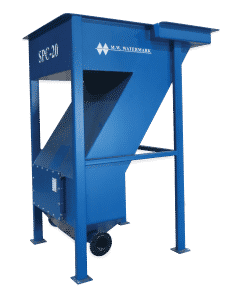
M.W. Watermark Slant Plate Clarifier (SPC)

Slant plate clarifiers (also referred to as “inclined plate clarifiers”) have been used in industrial wastewater treatment processes to provide efficient solids removal across a wide range of applications.

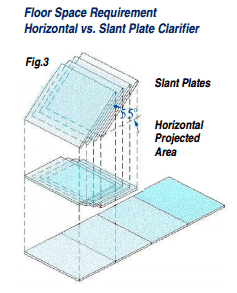
One of the main advantages of SPCs over conventional horizontal clarifiers is the use of a series of inclined plates. This inclined plate design allows the settling area to be as much as 10 times more than the actual floor space occupied by the clarifier.

This helps you to achieve the maximum square footage out of your production floor space, which translates into greater efficiencies and cost savings for your operation.

M.W. Watermark Slant Plate Clarifier Floor Space Requirement Diagram

Another advantage of SPCs over traditional clarifiers is the general lack of moving parts. Oftentimes the only electrical/mechanical components are the influent pump and flash/flocculation tank mixers. This translates into less chance for mechanical failure, a safer environment and cost savings in energy.

Learn more about slant plate clarifiers.


LOW PROFILE CLARIFIERS (LPC)

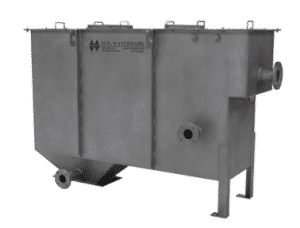
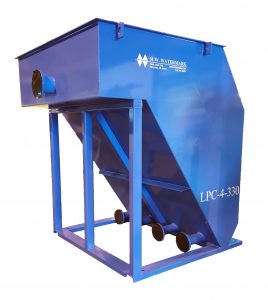
M.W. Watermark Low Profile Clarifier: LPC-4-330

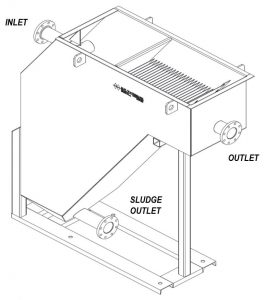
The low profile clarifier design also utilizes inclined plates to achieve a significant reduction in floor space. The LPC design increases in width as the design flow rate increases, without increasing the height of the tank. Because the height of the tank does not change, the LPC is ideal for low ceiling installations.

The LPC can also handle flow rates up to 1,100 GPM, which makes it ideally suited for low profile applications.

LOW PROFILE CLARIFIER PRODUCT FEATURES

  • Standard models up to 300 GPM (LPC-4 Series) and up to 1,100 GPM (LPC-8 Series).
  • Compact size minimizes floor space requirements.
  • Heavy duty steel construction, welds are dye penetrant tested.
  • Carbon steel units are sandblasted and two coats of epoxy applied to ensure full coverage and superior chemical resistance.
  • 1/8″ polypropylene plates standard.
  • Sludge outlet flanges.
  • Access hatches standard.

LOW PROFILE CLARIFIER OPTIONS

In addition to the standard features, our low profile clarifiers can also be equipped with:

  • Chemical Addition Tanks (CAT) – Chemical pre-treatment for optimal solids removal. Tanks include mixers, chemical pumps and NEMA 4X UL-508A labeled panel.
  • Influent feed, sludge discharge and effluent pumps.
  • Custom designs available.
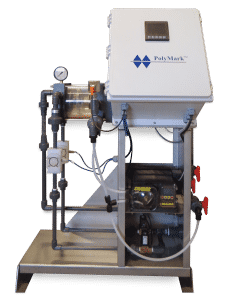
  • PolyMark™ polymer delivery systems.
Low Profile Clarifier (LPC) Diagram
M.W. Watermark offers two series of low profile clarifiers, depending on ceiling height and design flow needs.

The LPC-4 Series offers a design flow maximum ranging from 30 to 300 GPM. – Download brochure

The LPC-8 Series ranges from 165 to 1,100 GPM. – Download brochure

Learn more about our low profile clarifiers. 


WHICH TYPE OF CLARIFIER IS BEST SUITED FOR MY OPERATION?

Both M.W. Watermark’s slant plate and low profile clarifier series are designed to be tough and dependable, while at the same time being sensitive to tight budgets and maximizing production space.

Generally, the type and size of clarifier needed depends on the specific application and location, including design flow needs, floor space and ceiling height.

M.W. Watermark has a team of experts on staff that can work with you to recommend the best solution for your particular application. Contact us today!


About M.W. Watermark

M.W. WATERMARK wants to make a difference. We are passionate about the world’s water. We are innovative, focused on customer service and always try to exceed expectations. We are an environmentally conscious company with people who are energized, encouraged and inspired to make a difference on our planet by helping to keep our shared, finite water supply clean and usable for generations to come. We build amazing, custom water and wastewater treatment equipment. Together, we can make a difference.
© 2021 M.W. Watermark, L.L.C.
M.W. Watermark is a trademark owned by M.W. Watermark, L.L.C. All rights reserved.
Any third party trademarks referenced on this site are the trademarks of their respective owners, and M.W. Watermark makes no claim to such marks and is not affiliated with such companies.

Top Sources of Industrial Wastewater

A Look at Wastewater-Heavy Industries

Almost all industries produce some form of wastewater. Equipment designed for solid-liquid separation, such as a filter press, provides for the reuse of water and cost-effective disposal of dewatered solids. Here are some wastewater-heavy industries in the U.S. today.

Pulp and Paper

Paper manufacturing is an energy-and water-intensive industry. From biochemical oxygen demand (BOD) to chemical oxygen demand (COD), solids to chlorinated organic compounds, the pulp and paper industry generates a high volume of wastewater.

Mines and Quarries

Mining of metallic ores and precious metals can produce wastewater contaminated by rock particles, metals, acids and salts, as well as hydraulic oils.

M.W. Watermark 1200mm filter press. Built for a neutralized mine wastewater application.

Oil and Gas

Hydraulic fracturing, or fracking, produces large volumes of wastewater as a process for extracting shale gas. The wastewater may contain high concentrations of dissolved solids, radionuclides and metals.

M.W. Watermark 1200mm trailer-mounted filter press. Built for produced water recovery.

Iron and Steel

The most common pollutants in the iron and steel sector are BOD, COD, oil, metals, acids, phenols and cyanide.

M.W. Watermark 1200mm filter press manufactured for sand filter backwash dewatering.

Food Industry

Wastewater produced as a by-product of the food industry is often biodegradable and nontoxic. However, it may contain high concentrations of BOD, suspended solids (SS) and even pesticides.

M.W. Watermark 800mm filter press with a semi-automatic plate shifter. Application: Egg production wastewater.

Chemicals

Using complex organic chemicals, the chemicals industry can generate wastewater contaminated by COD, organic chemicals, heavy metals, SS and cyanide.

M.W. Watermark 1200mm filter press with diaphragm squeeze plates and EnduroLiner™ chemical resistant coating. Manufactured for nickel carbonate filtration and washing.

Treating Industrial Wastewater

Since wastewater contaminants vary by industry, there are various approaches for separating solids from liquids for efficient disposal of waste and the reuse of water. Visit our Industries and Applications webpage to see more examples of wastewater-intensive industries and the types of equipment that is utilized.

Also, be sure to contact a member of our Sales and Service Team to learn more. M.W. Watermark can work with you to recommend the best equipment for your particular application.

M.W. Watermark offers wastewater treatment equipment across a wide range of industrial applications
M.W. Watermark offers wastewater treatment equipment across a wide range of industrial applications.
About M.W. Watermark

M.W. WATERMARK wants to make a difference. We are passionate about the world’s water. We are innovative, focused on customer service and always try to exceed expectations. We are an environmentally conscious company with people who are energized, encouraged and inspired to make a difference on our planet by helping to keep our shared, finite water supply clean and usable for generations to come. We build amazing, custom water and wastewater treatment equipment. Together, we can make a difference.
© 2021 M.W. Watermark, L.L.C.
M.W. Watermark is a trademark owned by M.W. Watermark, L.L.C. All rights reserved.
Any third party trademarks referenced on this site are the trademarks of their respective owners, and M.W. Watermark makes no claim to such marks and is not affiliated with such companies.

Filter Press Dewatering Techniques Resulting in a Product

A look at how filter presses are being used across some of the most prevalent industries today

A filter press is commonly used across industries for wastewater treatment to dewater solids prior to disposal. However, in some cases the separated solid or liquid is the actual product.

Below are a few examples in the food, chemical, mining and paper industries where M.W. Watermark has manufactured filter presses to meet this type of customer requirement.

Food Industry

M.W. Watermark 470mm filter press with food grade manifold built for polishing canola and flax seed oils (edible oils).
M.W. Watermark 470mm filter press with food grade manifold built for polishing canola and flax seed oils.(Product is liquid).
(more…)

Mobile Filter Press Units for Rental

If portability is a factor in your solid-liquids separation project, then a trailer-mounted filter press from M.W. Watermark™ may be the best option.

Many of our customers have found that a mobile filter press can serve as the ideal choice for dewatering a slurry and managing sludge in a remote location.

M.W. Watermark offers mobile units as part of our rental fleet.
(more…)

M.W. Watermark Filter Presses: Made with Pride in the U.S.A

M.W. Watermark specializes in the design, manufacture and rebuilding of high-quality municipal and industrial water treatment equipment, including filter presses, as well as supplying parts and service to keep the world’s water supply clean and usable for generations to come.

Our facility is located in Holland, Michigan, U.S.A. Working with customers around the globe, we pride ourselves on our ability to provide a quick turnaround time on high-quality equipment and aftermarket parts. Over the years, our business has grown to become the North American leader in filter press manufacturing.

M.W. Watermark Filter Presses with Semi-Automatic Plate Shifters - Manufactured In the U.S.A. M.W. Watermark Filter Presses - Manufactured In the U.S.A.
(more…)

How to Determine the Size of Filter Press Needed for Your Application

M.W. Watermark 800mm Filter Press

A filter press is a piece of batch operation, fixed volume equipment ranging from .01-600 cubic feet that separates liquids and solids using pressure filtration. A slurry is pumped into the filter press and dewatered under pressure. (A slurry is a semi-liquid mixture, typically composed of fine particles suspended in water).

A filter press can be used for process, water and wastewater treatment in a variety of industries and applications. In most applications, filter presses are used for dewatering solids prior to disposal. However, in some cases the separated solid or liquid is the actual product.

Because filter presses are used across so many applications, there is no “one size fits all” when it comes to determining filter press sizing requirements.

Fortunately, over the history of commercial businesses and municipalities utilizing filter presses for a multitude of applications, two basic and reliable mathematical formulas have been developed to cover most situations.

The first formula covers most “standard” slurries. The second formula covers slurries composed of metal hydroxides, which are often found in wastewater from metal plating and finishing operations.
(more…)

The M.W. Watermark Oil Coalescing Separator Across Industries

The M.W. Watermark™ Oil Coalescing Separator (OCS) is a powerful piece of equipment that can be highly effective across a variety of industries and applications.

Our OCS units are designed to remove free non-emulsified oils, diesel, gasoline and fuels from a waste stream, resulting in an effluent quality of 10 mg/l or less of contaminants 20 microns and larger.

Read on, and we’ll explain a few of the most notable ways in which our customers can employ the M.W. Watermark OCS.

M.W. Watermark Oil Coalescing Separator (OCS); Oil Water Separator
M.W. Watermark Oil Coalescing Separator (OCS)
(more…)

Making a Difference in our Workplace with Energy Efficient Lighting

M.W. Watermark team members know that making a difference in the world starts close to home.

Each year, the Watermark leadership team sets enthusiastic goals for community outreach projects, charity work and fundraising. This year, staff members have stepped up to make suggestions on how we can also make a difference right here in our workplace. In fact, one of our engineers, Reed, was interested in researching what we could do to save energy in our daily operations.
(more…)

How to Order the Right Size and Type of Filter Cloths to Suit Your Filter Press

Outfitting your filter press with the correct filter cloths is essential for effective performance. The cloth itself plays a fundamental role in the filtration process, serving as the starting point for the filter cake that will eventually do most of the filtering. With that in mind, it’s crucial to determine your filter cloth’s needed size and type of material in order to make the most of your filter press.

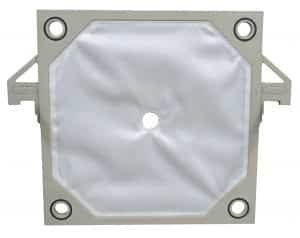
M.W. Watermark Gasketed (CGR) Filter Cloth and Filter Plate
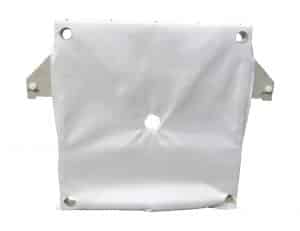
M.W. Watermark Non-Gasketed (NG) Filter Cloth and Filter Plate

M.W. Watermark Template Forms Make Ordering Filter Cloths Easy

(more…)

Celebrating 15 Years of Making a Difference: 2003-2018

Who Is M.W. Watermark™?

M.W. Watermark™ is a leading manufacturer and supplier of water and wastewater equipment, parts and service. We’ve grown into a leader in the industry and our product offering has expanded significantly.

M.W. Watermark now manufactures and sells new and rebuilt filter presses, clarifiers, sludge dryers, polymer blenders, oil coalescing separators and DAFs – and also manufactures custom filter press cloths in-house. This is in addition to providing parts and service for all these different types of equipment.

M.W. Watermark™ is a leading manufacturer and supplier of water and wastewater equipment, parts and service.
Since our humble beginnings in 2003, our manufacturing operations have expanded significantly.

Why the Big Celebration?

(more…)

Benefits of PVDF Composite Membranes in Microfiltration

The Microfiltration Process

Microfiltration plays a fundamental role in removing bacteria and other contaminants from fluids. The microfiltration process, which is often used in beverage treatment and several other industrial processes, involves the use of filtration membranes with pores that vary in size based on the specific application. Another variable that should be considered, however, is the material from which these membranes are made.

Our premier microfiltration products, M.W. Watermark™/Porex® Tubular Membrane Modules™, are available with PE and PVDF substrates and equipped with PVDF composite membranes. Here, we’ll explore the benefits of PVDF in microfiltration.

M.W. Watermark™/Porex® Tubular Membrane Microfiltration Modules™
(more…)

Before and After: Filter Press Repair and Rebuilding Services

M.W. Watermark™ offers many services to help you reduce your costs and make your water and wastewater equipment run more efficiently.

Complete Repair and Rebuilding Services

We offer repairs or a complete rebuilding service of used filter presses that is second-to-none. State-of-the-art machinery and tooling are used to bring your parts and equipment back to “like-new” condition. Metal fabrication and painting, mechanical, electrical, hydraulics – we can do it all.

M.W. Watermark Can Rebuild Your Filter Press; We Also Offer Rebuilt Filter Presses for Rental or Purchase

We use the same standards to repair and rebuild equipment as we do to build new, so you can be assured that you are getting quality equipment that you can rely on.

Filter Press Rebuilding Check-List

We perform the following work when rebuilding used filter presses:
(more…)

Signs of Wear in Wastewater Treatment Equipment

High-quality filtration equipment is essential to a wide range of industries, from hydraulic fracturing (produced water) to industrial laundry. And while filter presses are ordinarily built to last, everyday use is sure to take a toll on even the toughest machines. That’s why it’s important to look out for signs of wear in wastewater equipment, such as filter presses and clarifiers.

M.W. Watermark Manufactures and Rebuilds Wastewater Treatment Equipment in Holland, Michigan, U.S.A.

What Are Some Signs of Wear in Wastewater Treatment Equipment?

(more…)

Fastest Growing Filtration Industries and Applications

Three Booming Industries Where Filtration Technology is Playing a Major Role

Industrial filtration technology plays a fundamental role in a diverse range of industries by helping remove solids or other impurities from water and other fluids. But as times change, so too do the industries in which innovative filtration equipment from M.W. Watermark™ can be put to use. Here, we’ll explore a range of up-and-coming industries where we expect our filter presses and other types of water and wastewater treatment equipment to find a home.
(more…)

Top Uses for Recycled Wastewater

Across numerous industries, high-quality filtration equipment, like M.W. Watermark’s renowned filter press, is used to treat wastewater before it’s reused. But where exactly might this water go once it’s treated? Here, we’ll explore five common uses for recycled wastewater.

M.W. Watermark - Top 5 Uses for Recycled Wastewater
(more…)

New and Improved: M.W. Watermark™ AFPCS

In addition to automatically increasing the feed pump pressure during the filtration cycle, the new and improved M.W. Watermark™ Automatic Feed Pump Control System (AFPCS) also controls air-blow even-fill manifolds with the option to control double air-blow. This effectively combines multiple filter press functions in a simple control box – for a cost effective solution that is also expandable.

M.W. Watermark AFPCS Controller - New and Improved - November 2018
Digitally Programmable Controller

How the AFPCS Maximizes Filtration Efficiency

(more…)

M.W. Watermark™ Now Offers Rebuild Kits for Filter Press Hydraulics

M.W. Watermark™ now offers complete rebuild kits for 630mm and 800mm filter press hydraulic systems.

Our kits are designed to retrofit filter presses with air-operated hydraulics from both M.W. Watermark and many other manufacturers.

Oftentimes, a single hydraulic system component will need to be replaced due to normal wear and tear.

However, if more than one part is not functioning correctly, or if your filter press is in need of a rebuild, then our comprehensive retrofit hydraulic kits may be the ideal solution.
(more…)